Neapolitan / Vesuvian ceramics

Local souvenir

Neapolitan / Vesuvian ceramics

Napoli
€40-€200 artigianato

Local souvenir · Napoli

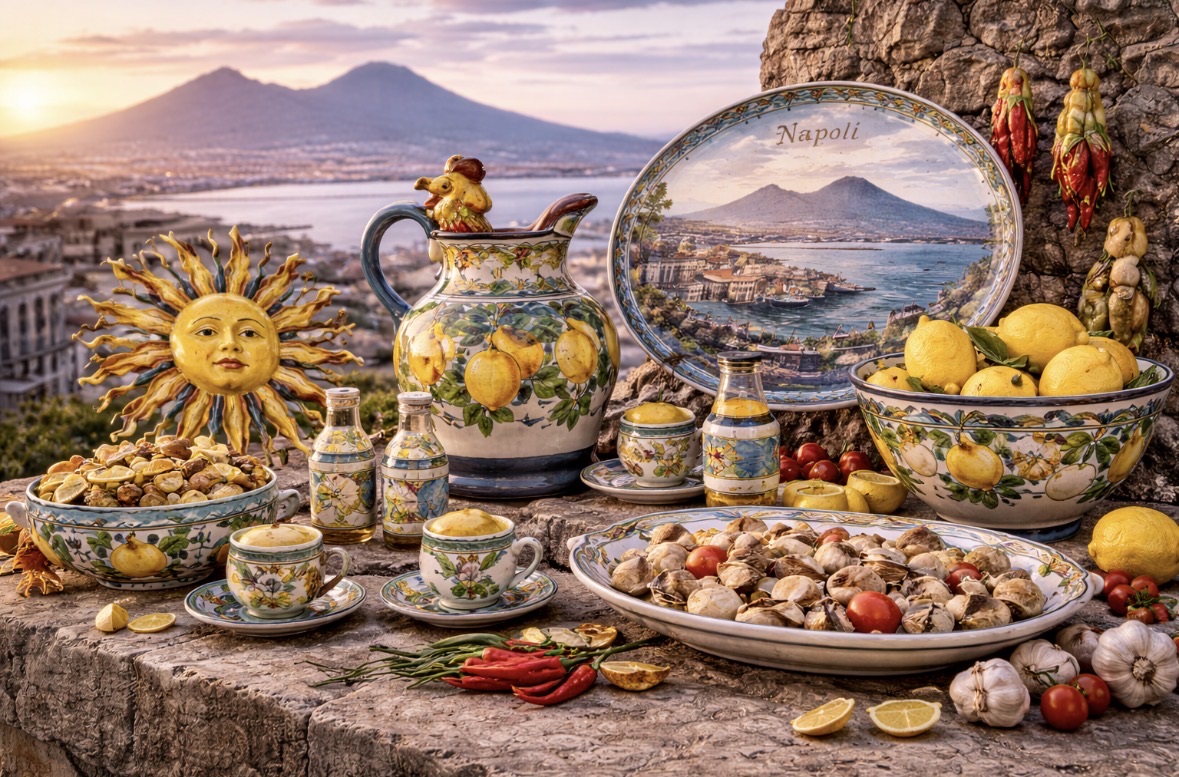
They include plates, vases, cups, decorative riggiole tiles, small panels, and tableware. Traditional ceramics use glazed terracotta and maiolica, with warm colors: yellow, copper green, blue, and ochre. The most typical motifs depict flowers, grapes, lemons, seaside scenes, Vesuvian landscapes, and geometric patterns. Porcelain in the Capodimonte tradition is lighter and more refined, with floral decorations, mythological scenes, and sculpted reliefs. Each piece is hand-painted, with slight variations that make it one of a kind. It is an object that tells the story of Napoli through its earth and its fire. Travelers choose it to recognize, in the materials themselves, the deep bond between the city, the volcano, and the domestic arts. It is ideal for those seeking a keepsake that combines everyday use with cultivated memory, without ever becoming mere decoration.

Editorial team: Trouvenir

Published: 14 gennaio 2026

Updated: 13 febbraio 2026

"

Raccontano la Napoli della materia vulcanica trasformata in linguaggio decorativo. Queste ceramiche rivelano una cultura che ha tradotto l’energia del territorio in forme stabili e colorate. I motivi figurativi e i contrasti cromatici esprimono una sensibilità visiva legata al paesaggio vesuviano. In esse si riconosce una città che affida all’artigianato la mediazione tra natura e rappresentazione.

Trouvenir recommends

Description

They include plates, vases, cups, decorative riggiole tiles, small panels, and tableware. Traditional ceramics use glazed terracotta and maiolica, with warm colors: yellow, copper green, blue, and ochre. The most typical motifs depict flowers, grapes, lemons, seaside scenes, Vesuvian landscapes, and geometric patterns. Porcelain in the Capodimonte tradition is lighter and more refined, with floral decorations, mythological scenes, and sculpted reliefs. Each piece is hand-painted, with slight variations that make it one of a kind. It is an object that tells the story of Napoli through its earth and its fire. Travelers choose it to recognize, in the materials themselves, the deep bond between the city, the volcano, and the domestic arts. It is ideal for those seeking a keepsake that combines everyday use with cultivated memory, without ever becoming mere decoration.

"

Raccontano la Napoli della materia vulcanica trasformata in linguaggio decorativo. Queste ceramiche rivelano una cultura che ha tradotto l’energia del territorio in forme stabili e colorate. I motivi figurativi e i contrasti cromatici esprimono una sensibilità visiva legata al paesaggio vesuviano. In esse si riconosce una città che affida all’artigianato la mediazione tra natura e rappresentazione.

Why it is special
History and origin

The ceramic tradition in the Neapolitan area developed in different forms between the 17th and 19th centuries, intertwining popular production with refined manufacture. In the 18th century the Real Fabbrica di Capodimonte was founded, commissioned by Carlo di Borbone, making Napoli one of Europe’s great centers of artistic porcelain. At the same time, in the Vesuvian area, workshops producing maiolica and terracotta spread, closely tied to building and household use: plates, jars, riggiole, and painted tiles for floors and kitchens. These ceramics accompanied everyday life in the city and in the Vesuvian towns, transforming volcanic material into objects of art and home.

Cultural significance

These ceramics tell the story of a Napoli built from its raw materials. They speak of a city that transformed the clay of Vesuvio into everyday beauty, blending refined art with popular craftsmanship. They symbolize a culture that does not separate palace from kitchen, museum from home. In every plate or tile lives the Neapolitan idea that even the most practical object can become a story, when it is shaped by the right hands.

The message

"

The message che porta con sé riguarda il valore della trasformazione controllata. Regalare questo oggetto significa riconoscere l’importanza di dare forma a forze potenti con misura. È un gesto che afferma la fiducia nella tecnica come strumento di equilibrio. Suggerisce che la cultura nasce dalla capacità di convertire l’energia in ordine.

FAQs

Che cosa rende autentico Neapolitan / Vesuvian ceramics?

These ceramics tell the story of a Napoli built from its raw materials. They speak of a city that transformed the clay of Vesuvio into everyday beauty, blending refined art with popular craftsmanship. They symbolize a culture that does not separate palace from kitchen, museum from home. In every plate or tile lives the Neapolitan idea that even the most practical object can become a story, when it is shaped by the right hands.

Dove trovare Neapolitan / Vesuvian ceramics a Napoli?

Artisan ceramic workshops Historic shops in the Vesuvian area Museum spaces and workshops linked to the Capodimonte tradition

Quanto costa Neapolitan / Vesuvian ceramics?

€40-€200

Perche scegliere Neapolitan / Vesuvian ceramics come regalo?

The message che porta con sé riguarda il valore della trasformazione controllata. Regalare questo oggetto significa riconoscere l’importanza di dare forma a forze potenti con misura. È un gesto che afferma la fiducia nella tecnica come strumento di equilibrio. Suggerisce che la cultura nasce dalla capacità di convertire l’energia in ordine.

Other souvenirs in Napoli

Learn more

Where to find it

Artisan ceramic workshops Historic shops in the Vesuvian area Museum spaces and workshops linked to the Capodimonte tradition

✦ Botteghe locali a Napoli ✦

I migliori negozi per trovare Neapolitan / Vesuvian ceramics

Piccoli negozi, laboratori e punti vendita dove il souvenir mantiene un legame chiaro con il territorio.

1 shops consigliate 1 con coordinate disponibili
1 shops in mappa Apri mappa ↗
Limonè
Storico Direct producer of limoncelloLocated in Naples city center

Limonè

Piazza San Gaetano, 72, 80138 Napoli NA, Italy

The store "Limonè" at Piazza San Gaetano, 72, 80138 Napoli NA, Italy, explicitly states on its website and in various descriptions that it sells Limoncello. It is described as a handmade product following an ancient family recipe, using local lemons from the Campi Flegrei area, and is presented as their most famous liqueur. While the exact name "Limoncello del Golfo" is not used, the strong emphasis on its Neapolitan origin and traditional production makes it a clearly equivalent local product.

Directions Google Place
App Trouvenir

Porta Neapolitan / Vesuvian ceramics a casa con l'aiuto dell'app

Scarica Trouvenir per confrontare shops, trovare souvenir locali a Napoli e salvare idee regalo in viaggio.

App Store Google Play Scarica Trouvenir