 €40-€200
Neapolitan / Vesuvian ceramics
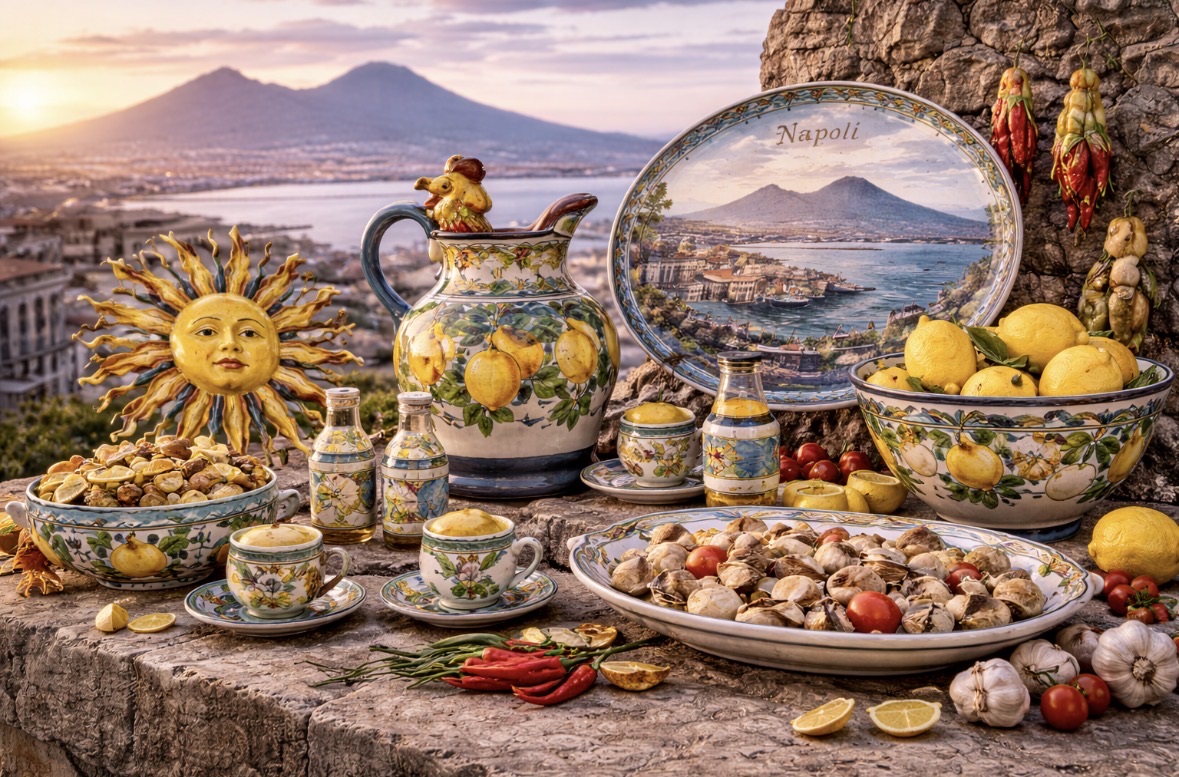
They include plates, vases, cups, decorative riggiole tiles, small panels, and tableware. Traditional ceramics use glazed terracotta and maiolica, with warm colors: yellow, copper green, blue, and ochre. The most typical motifs depict flowers, grapes, lemons, seaside scenes, Vesuvian landscapes, and geometric patterns. Porcelain in the Capodimonte tradition is lighter and more refined, with floral decorations, mythological scenes, and sculpted reliefs. Each piece is hand-painted, with slight variations that make it one of a kind. It is an object that tells the story of Napoli through its earth and its fire. Travelers choose it to recognize, in the materials themselves, the deep bond between the city, the volcano, and the domestic arts. It is ideal for those seeking a keepsake that combines everyday use with cultivated memory, without ever becoming mere decoration.
Verified shops arrive in the app
Cultural significance
These ceramics tell the story of a Napoli built from its raw materials. They speak of a city that transformed the clay of Vesuvio into everyday beauty, blending refined art with popular craftsmanship. They symbolize a culture that does not separate palace from kitchen, museum from home. In every plate or tile lives the Neapolitan idea that even the most practical object can become a story, when it is shaped by the right hands.
Origin story
The ceramic tradition in the Neapolitan area developed in different forms between the 17th and 19th centuries, intertwining popular production with refined manufacture. In the 18th century the Real Fabbrica di Capodimonte was founded, commissioned by Carlo di Borbone, making Napoli one of Europe’s great centers of artistic porcelain. At the same time, in the Vesuvian area, workshops producing maiolica and terracotta spread, closely tied to building and household use: plates, jars, riggiole, and painted tiles for floors and kitchens. These ceramics accompanied everyday life in the city and in the Vesuvian towns, transforming volcanic material into objects of art and home.
Where to find Neapolitan / Vesuvian ceramics in Napoli
Artisan ceramic workshops Historic shops in the Vesuvian area Museum spaces and workshops linked to the Capodimonte tradition
Get the full verified list — map, hours, reviews — for Neapolitan / Vesuvian ceramics in Napoli.
More authentic souvenirs of Napoli


Go deeper on Neapolitan / Vesuvian ceramics
Unlock the full editorial dossier, certified shops with maps and opening hours, and related cultural paths.
- Certified shops nearby
- Full origin story
- Related souvenirs & paths
Free · iOS and Android · No subscription
Questions about Neapolitan / Vesuvian ceramics
What makes Neapolitan / Vesuvian ceramics authentic?
These ceramics tell the story of a Napoli built from its raw materials. They speak of a city that transformed the clay of Vesuvio into everyday beauty, blending refined art with popular craftsmanship. They symbolize a culture that does not separate palace from kitchen, museum from home. In every plate or tile lives the Neapolitan idea that even the most practical object can become a story, when it is shaped by the right hands.
Where to find Neapolitan / Vesuvian ceramics in Napoli?
Artisan ceramic workshops Historic shops in the Vesuvian area Museum spaces and workshops linked to the Capodimonte tradition
How much does Neapolitan / Vesuvian ceramics cost?
€40-€200
Why choose Neapolitan / Vesuvian ceramics as a gift?
Il messaggio che porta con sé riguarda il valore della trasformazione controllata. Regalare questo oggetto significa riconoscere l’importanza di dare forma a forze potenti con misura. È un gesto che afferma la fiducia nella tecnica come strumento di equilibrio. Suggerisce che la cultura nasce dalla capacità di convertire l’energia in ordine.
Take Trouvenir with you
iOS and Android. Free with a one-time Premium option. No subscription.