Seven things to take home from Genoa
3 min read
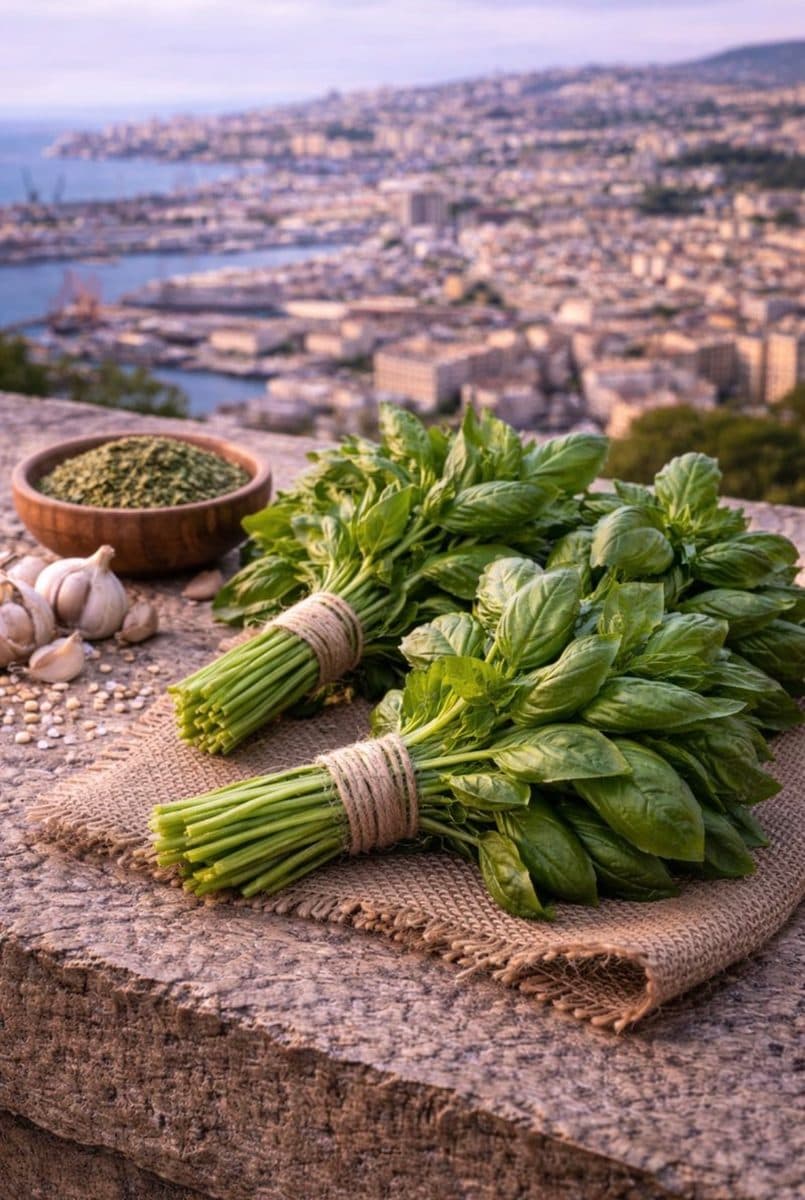
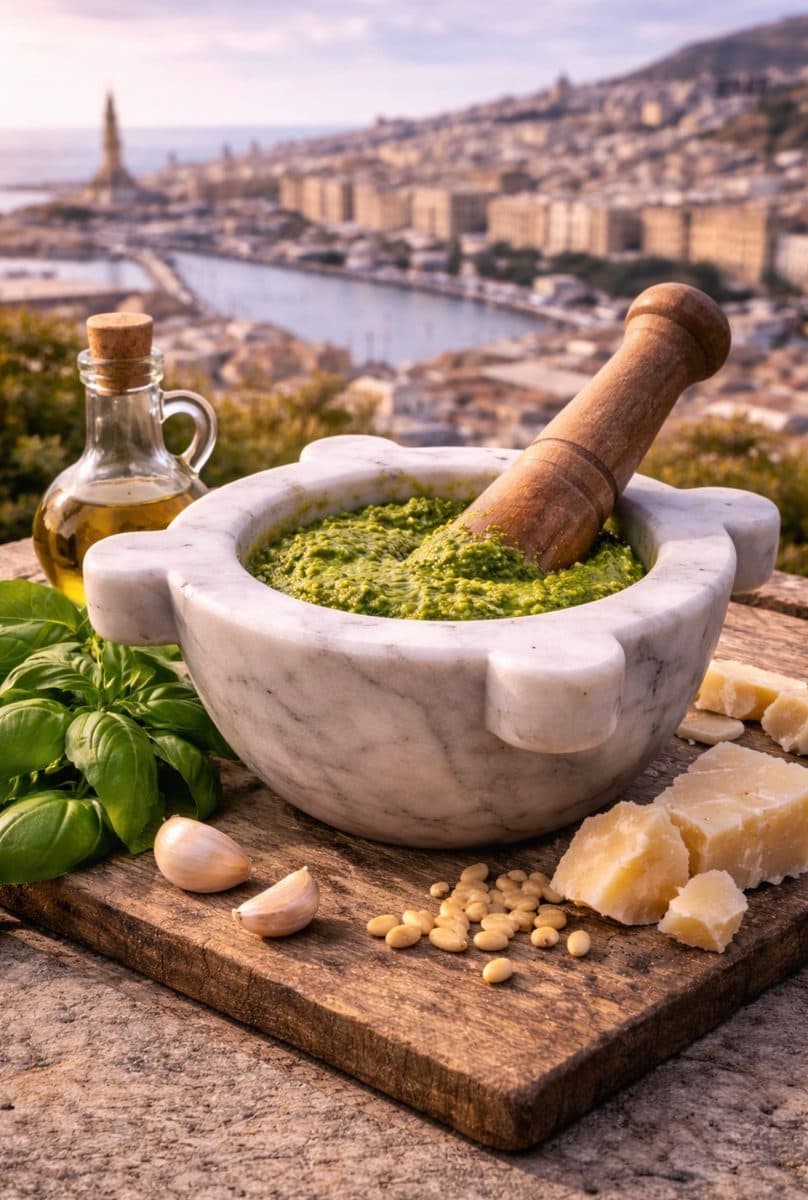
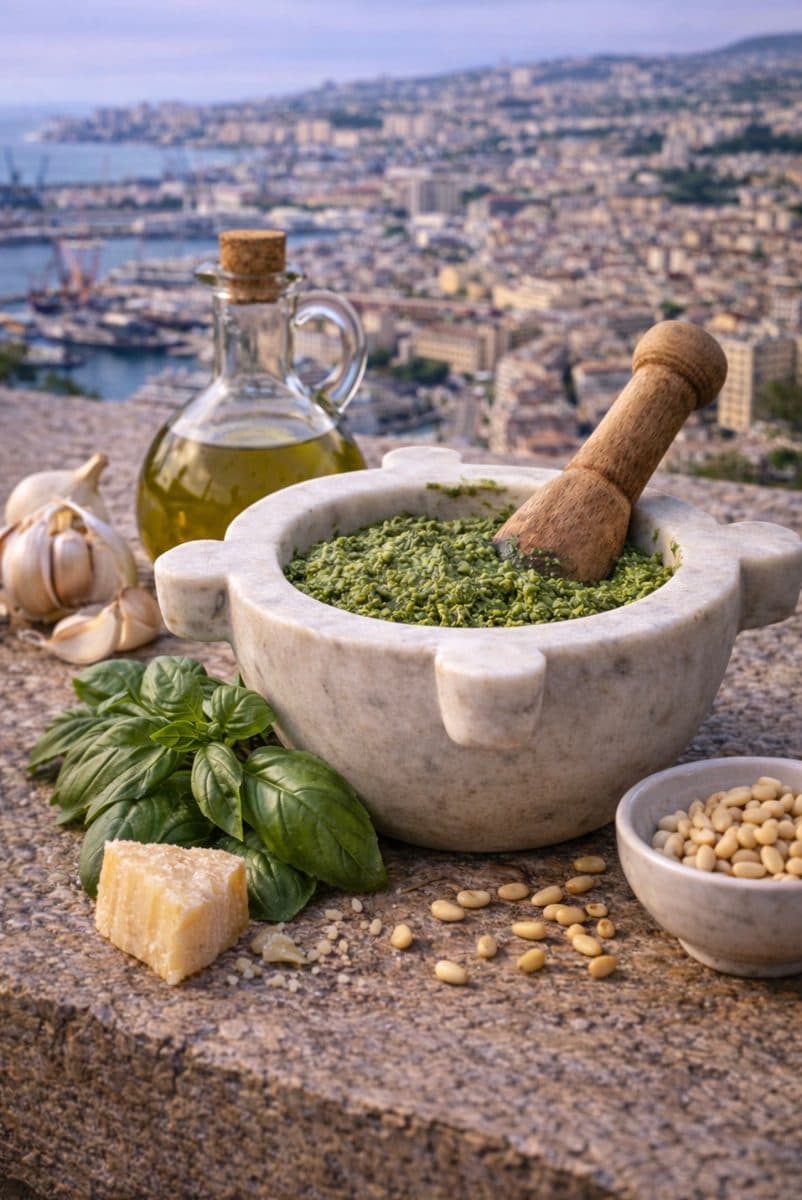
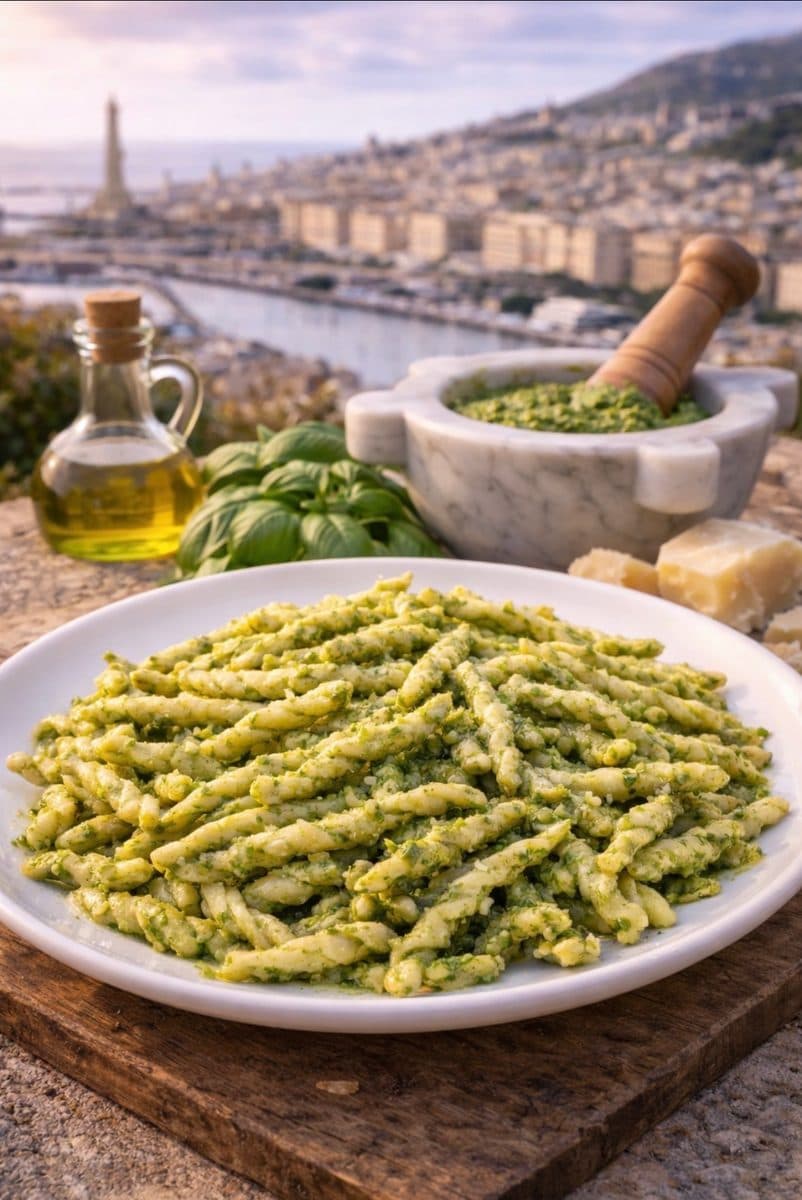
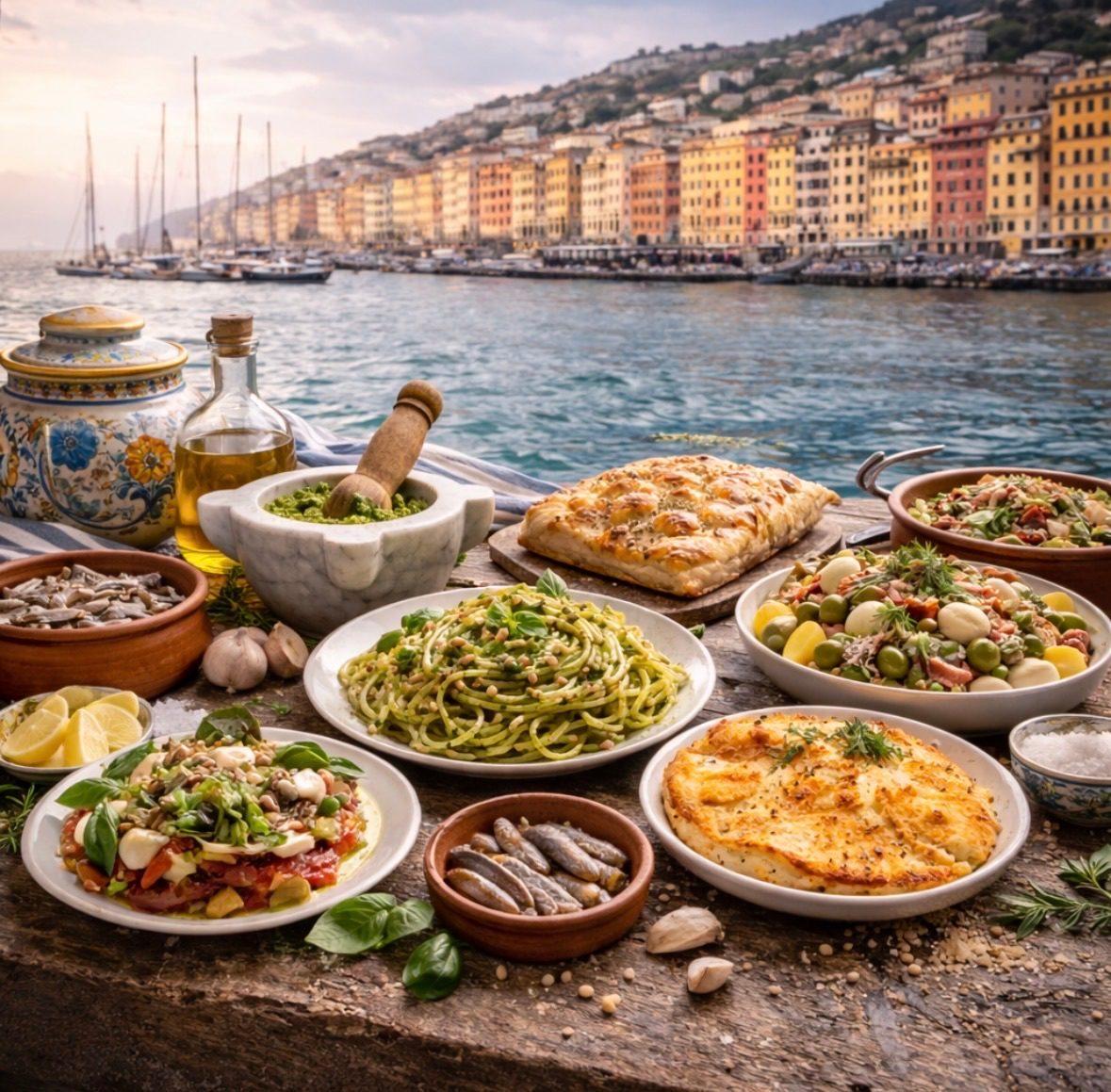
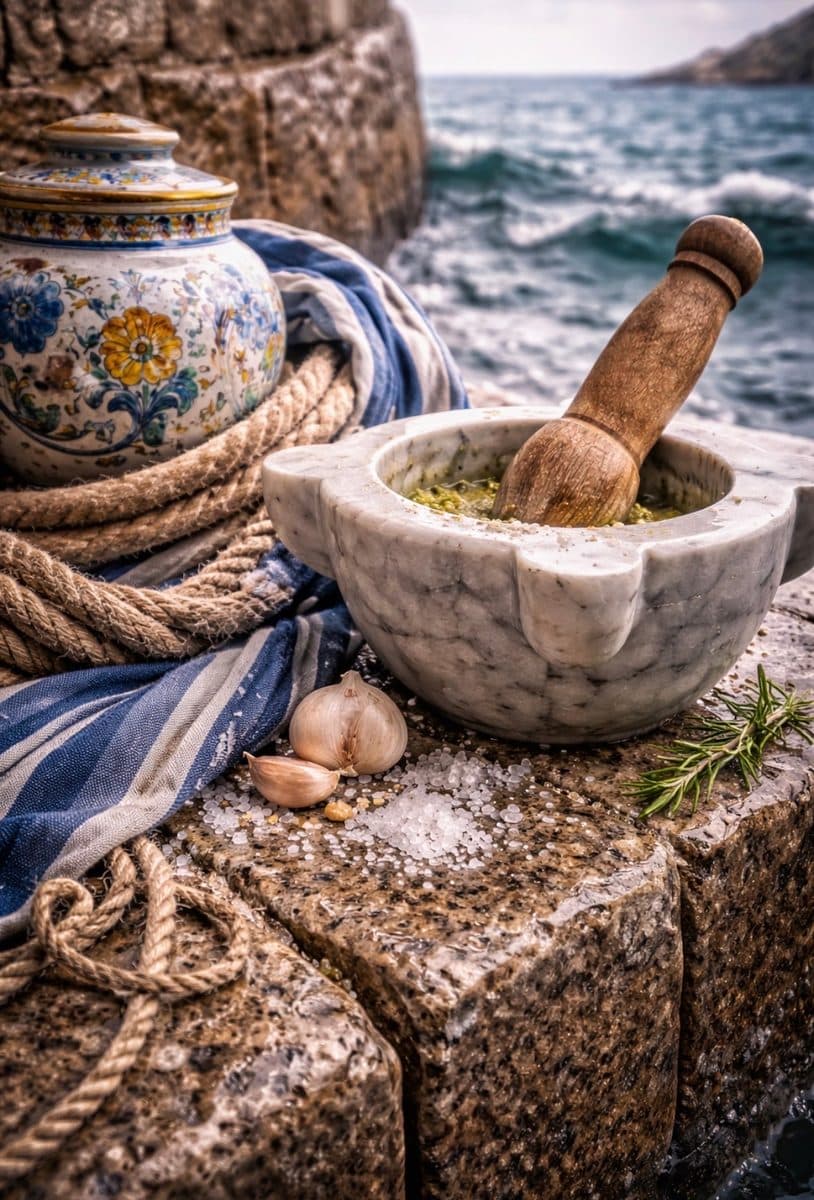
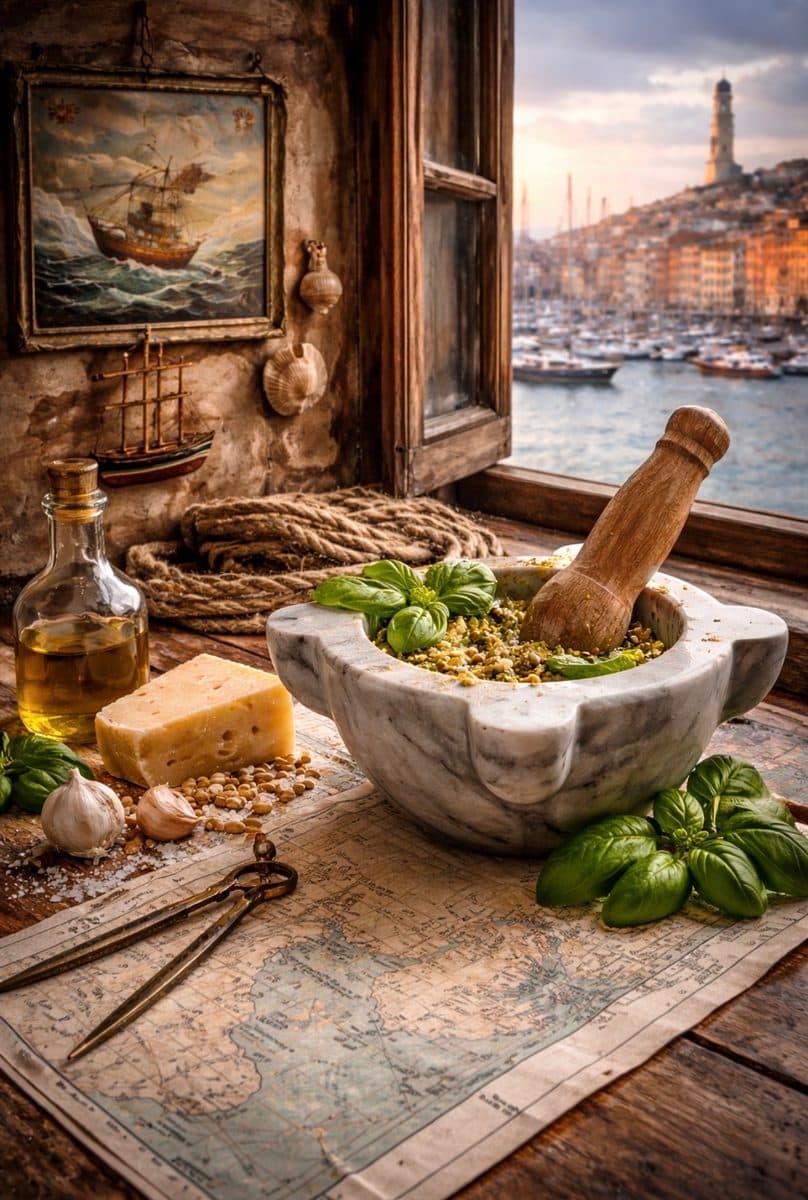
In Genoa, the souvenir revolves around a marble mortar: inside go Basilico Genovese DOP, Riviera Ligure DOP extra virgin olive oil, garlic, pine nuts, aged cheese and salt, and out comes pesto alla genovese. You buy the basil in bunches with the roots; it is also grown within the municipality, especially in Prà, in the western part of the city. Alongside jarred prepared pesto, you will find trofie, the twisted short pasta of the Riviera di Levante.
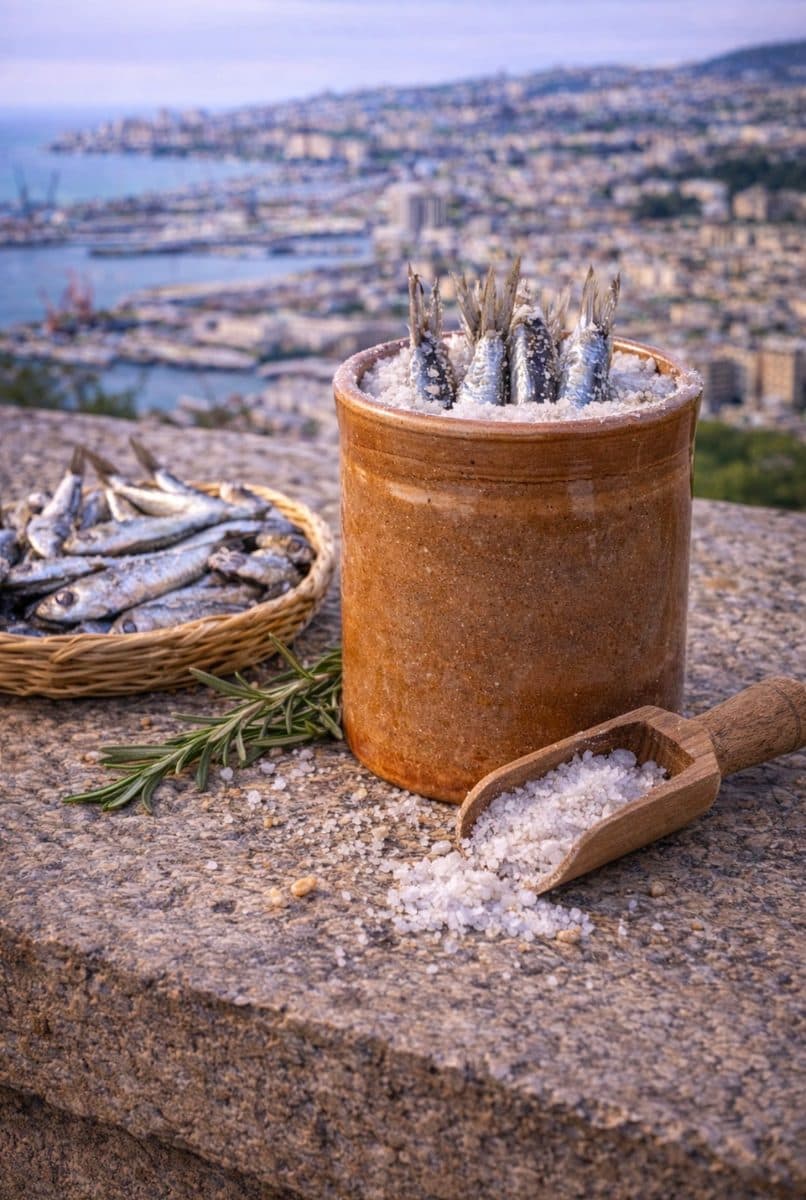
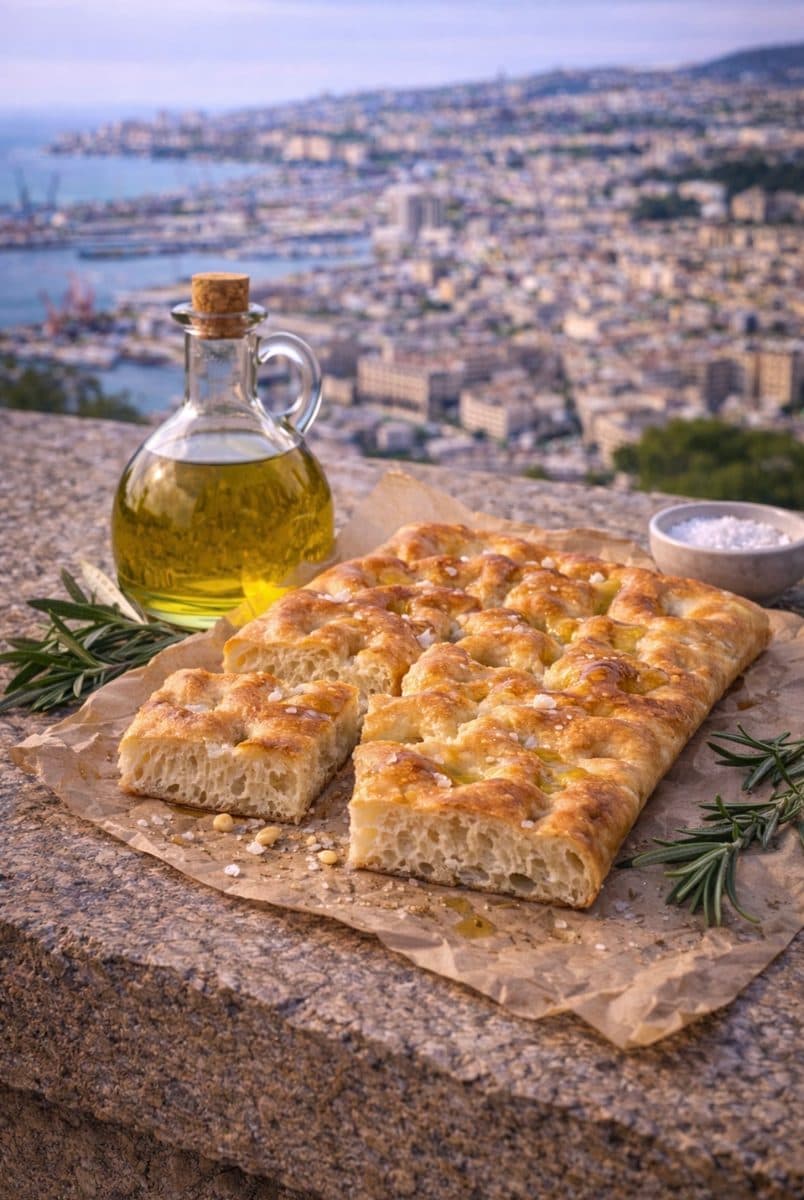
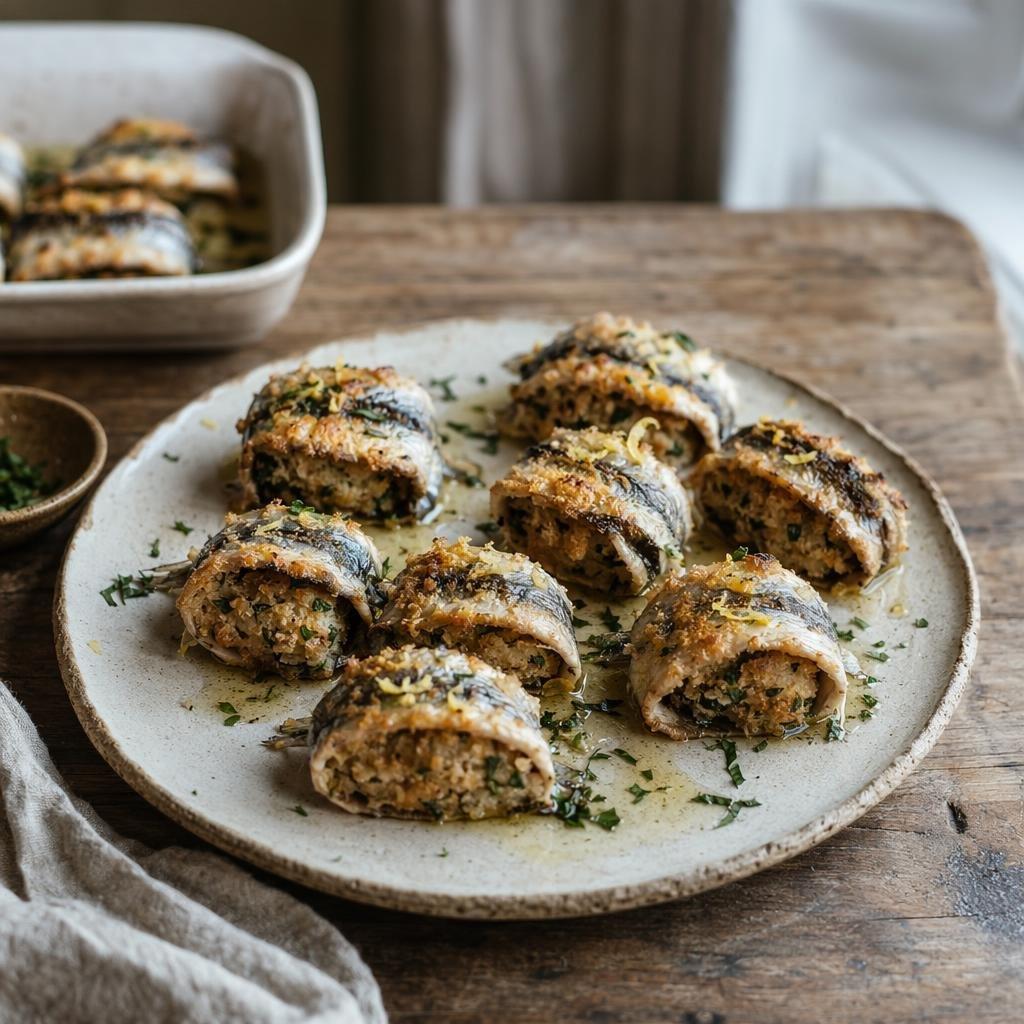
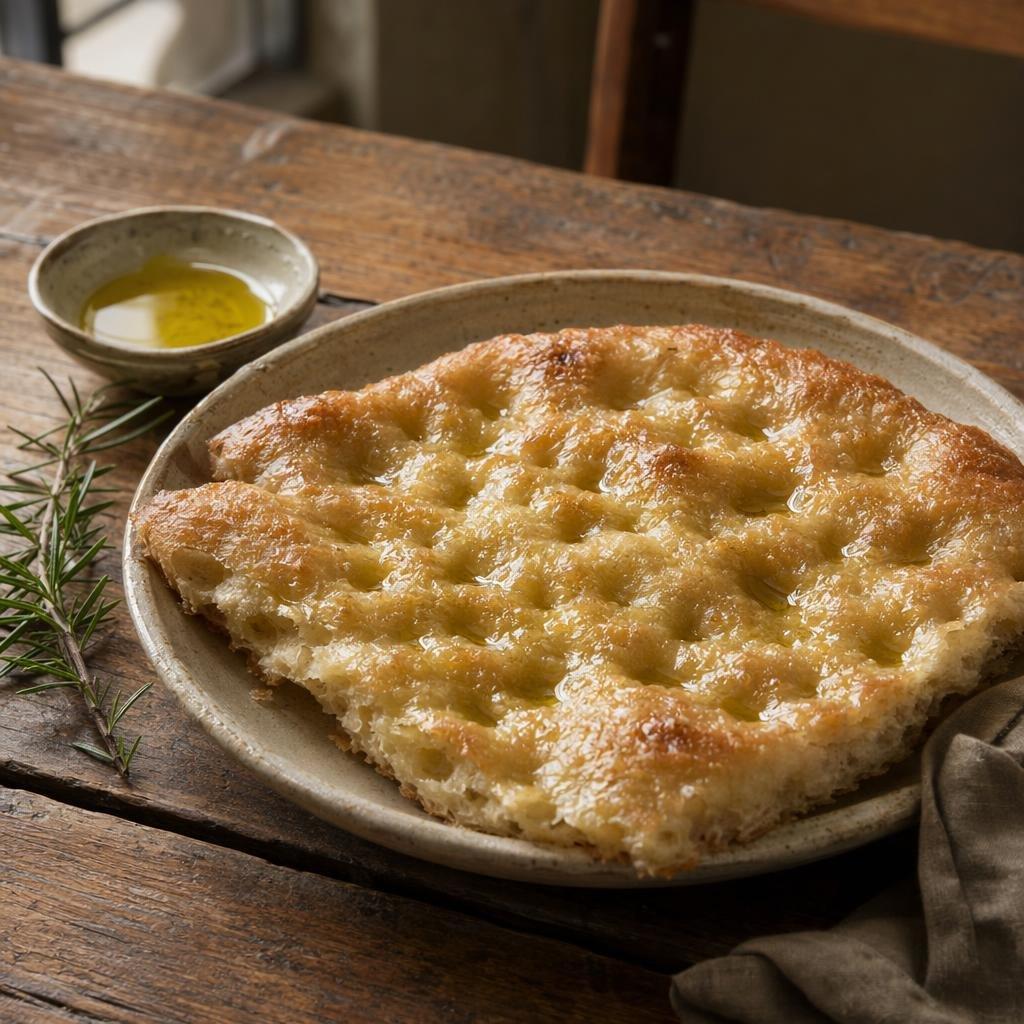
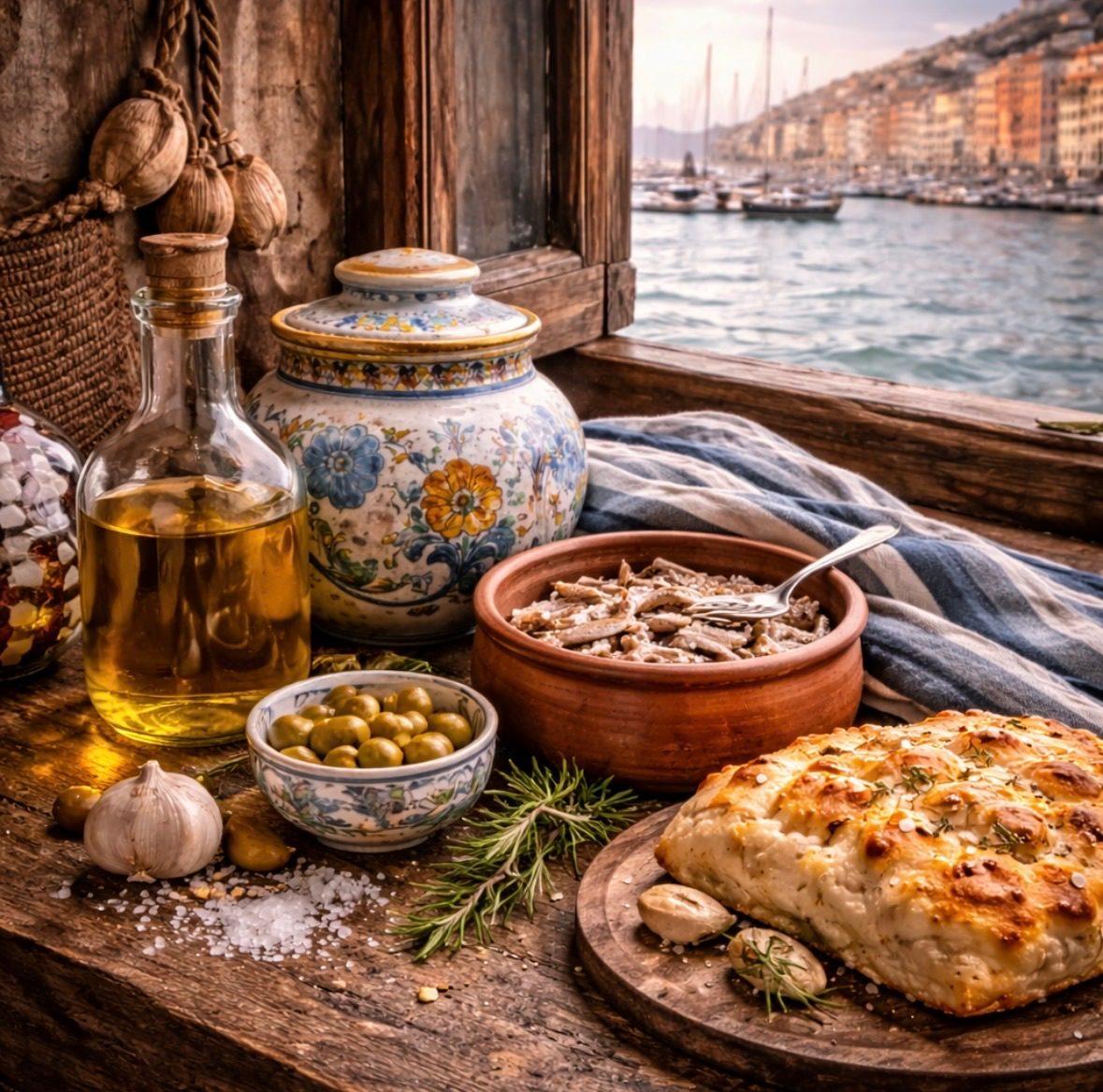
From the sea come Acciughe sotto sale del Mar Ligure IGP, fished off the Ligurian coast. From the neighbourhood bakery comes Genoese focaccia, known as fugassa: flat, glossy with oil, with dimples full of brine. It is eaten warm, even for breakfast.
- Basilico Genovese DOP: entire seedlings with roots.
- Pesto alla genovese: the uncooked sauce made in a mortar.
- Marble mortar for pesto: white marble and a wooden pestle.
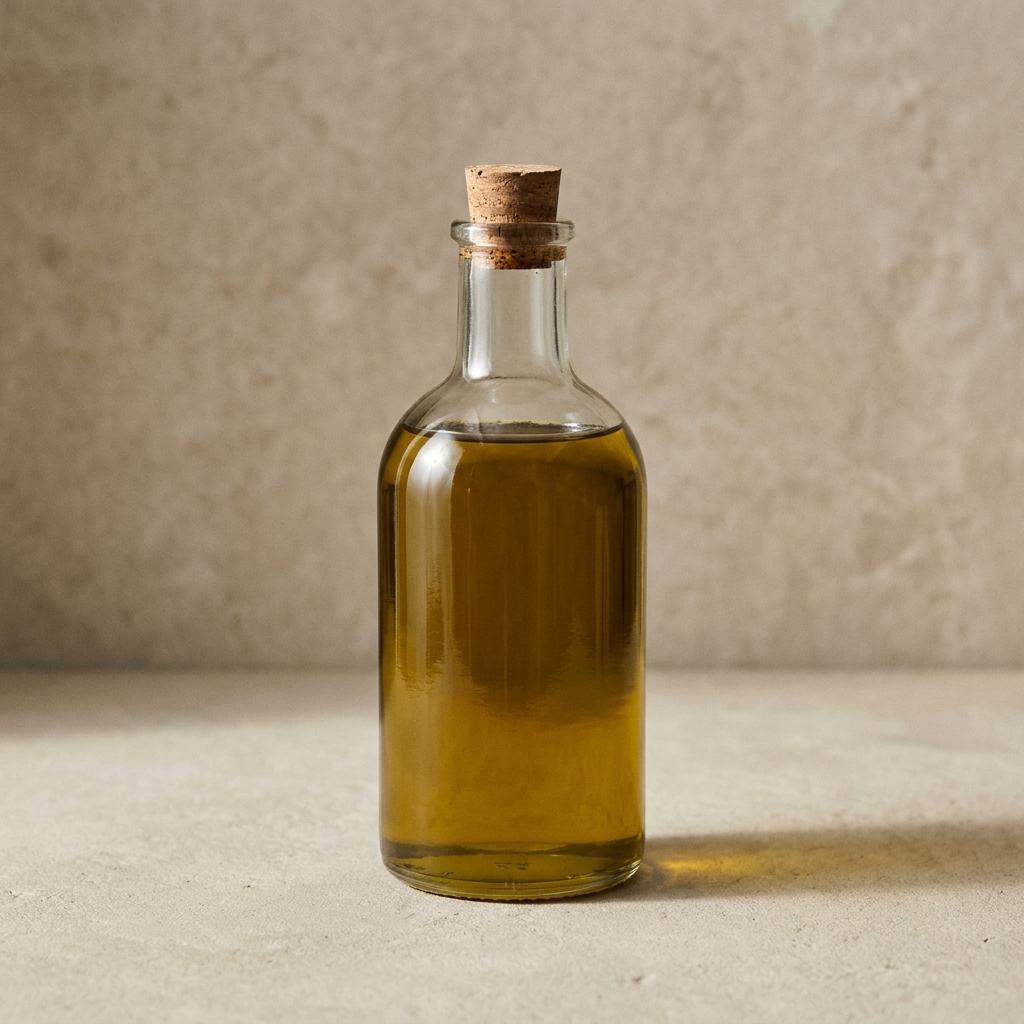
- Riviera Ligure DOP extra virgin olive oil: the key seasoning for pesto.
- Acciughe sotto sale del Mar Ligure IGP: caught using lampara boats.
- Ligurian trofie: twisted short pasta, fresh or dried.
- Genoese focaccia: fugassa, with its brine-filled dimples.
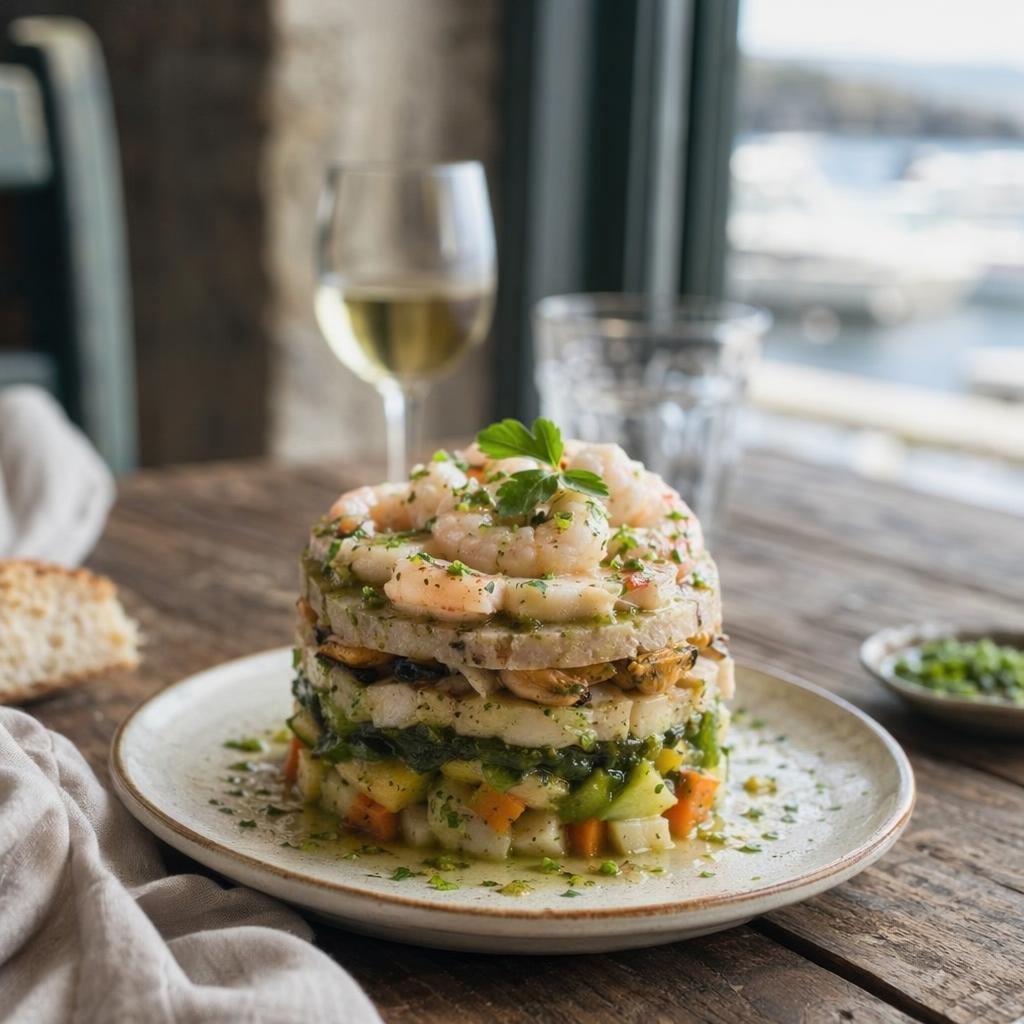
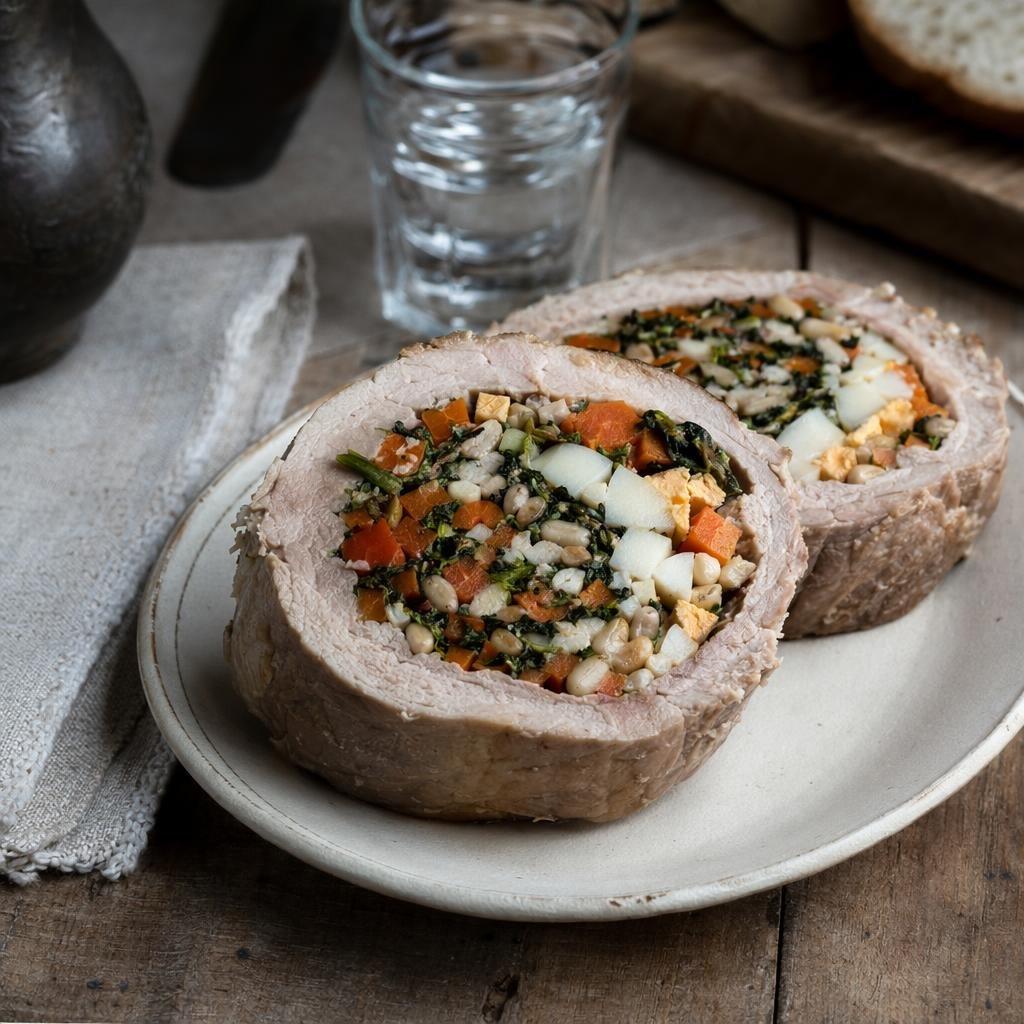
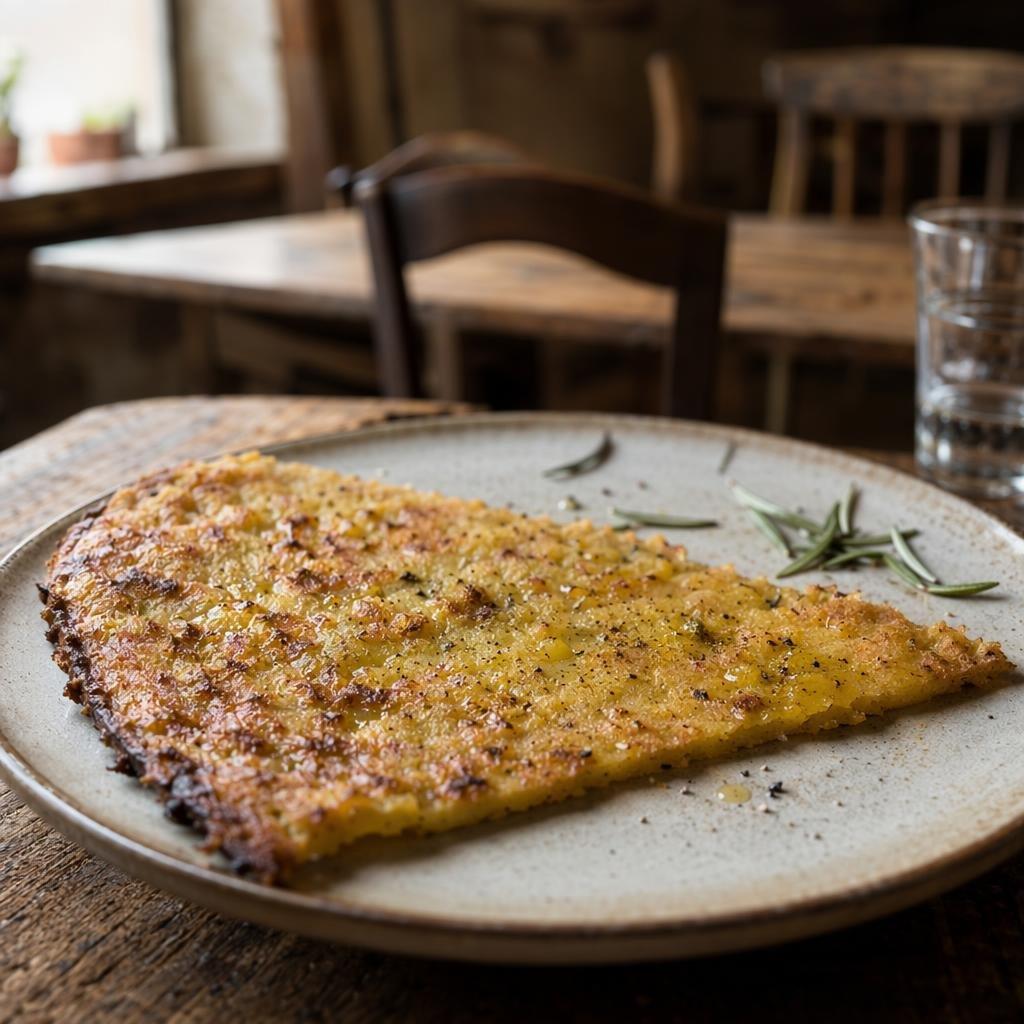
At the table, try the farinata di ceci from the sciamadde, pansoti with walnut sauce, cima alla genovese and cappon magro. In winter, pastry shops sell pandolce genovese, filled with raisins and candied fruit.
Prà basil, lampara fishing boats and wood-fired ovens
Basilico Genovese DOP is sold as an entire plant: young seedlings with two to four pairs of leaves and no flowers, harvested with the root. IGP anchovies are caught using lampara fishing boats and must be processed within twelve hours of capture. Pesto as we know it today was established in nineteenth-century Genoese recipe books. Focaccia has its home in bakeries and sciamadde, the old historic centre shops with the wood-fired oven always burning: the name means burst of flame, and they also bake farinata and savoury tarts there.
What to check on basil, oil and anchovies
Basilico Genovese DOP comes in bunches of 3 to 10 seedlings with roots, wrapped in paper bearing the name and the DOP symbol. On the oil, look for the inscription Riviera Ligure next to the DOP symbol; if Riviera di Levante also appears, the olives come from the provinces of Genoa and La Spezia. On the anchovies, read the full name, Acciughe sotto sale del Mar Ligure IGP. For jarred pesto, check the ingredient list: basil, extra virgin olive oil, pine nuts, cheese, garlic and salt.
Caruggi, Mercato Orientale and Prà
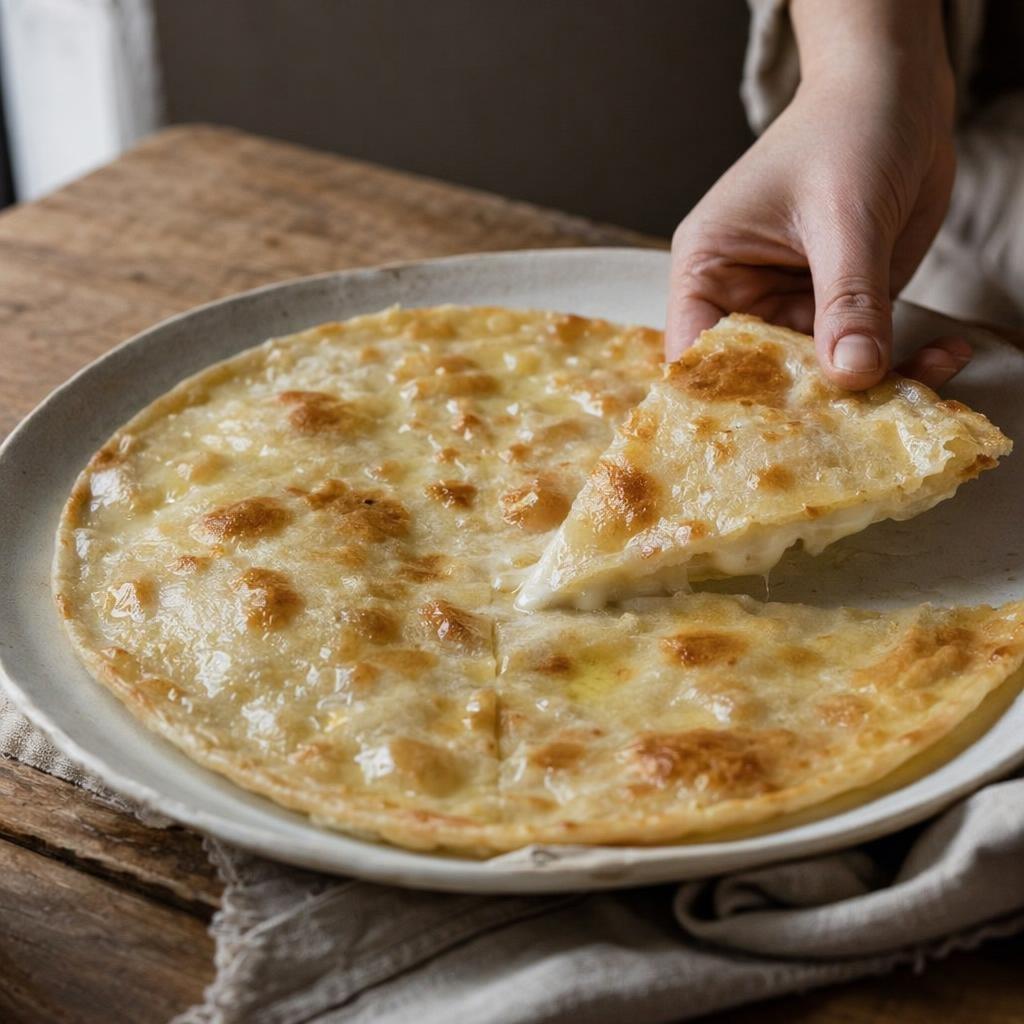
In the narrow alleys (caruggi) of the historic centre you will find bakeries, sciamadde and gourmet food shops where you can buy focaccia, pesto and fresh trofie. For basil and vegetables, take a stroll through the Mercato Orientale on Via XX Settembre. Oil and anchovies are found in old-style grocers and food shops, and mortars in kitchenware stores. Focaccia di Recco col formaggio IGP is eaten in Recco and the neighbouring municipalities of Sori, Avegno and Camogli, the only places where it can be made.
Pesto, basil and mortar in your suitcase
Jarred pesto usually costs between €6 and €18; in cabin baggage only containers up to 100 ml are allowed, so pack the rest in your checked luggage, well wrapped. A bunch of basil, costing between €3 and €12, lasts only a few days: keep the roots in their paper and use it as soon as you arrive. Salted anchovies cost between €12 and €30, and Riviera Ligure DOP oil costs between €10 and €28. A marble mortar with a pestle ranges from €30 to €80 and has some weight to it, so pack it in your checked luggage.