 €15-€120
Traditional Filet Lace of Alghero
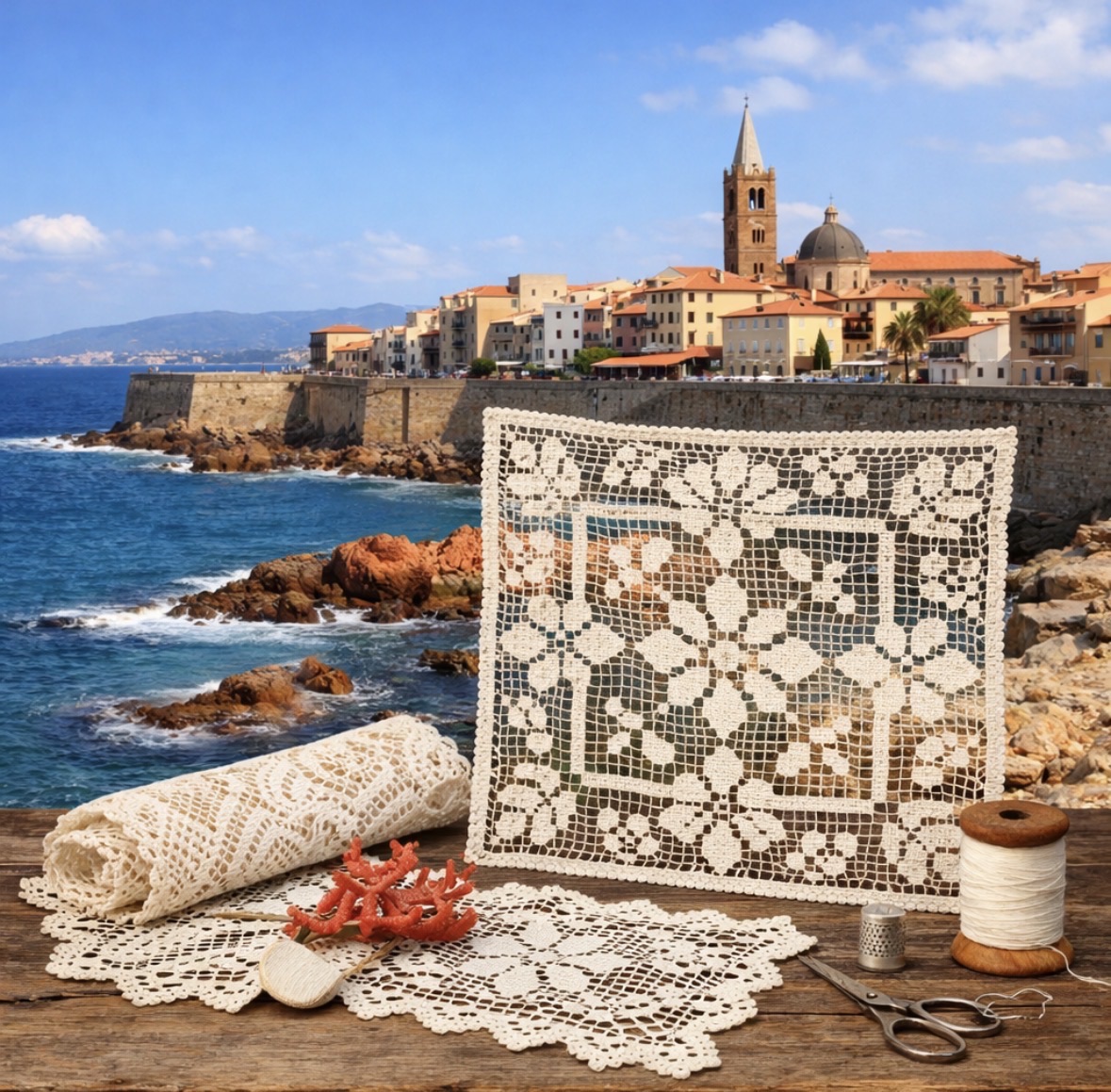
Filet lace is a decorative textile made on a regular grid of knotted threads, on which ornamental motifs are created with needle and thread. The design emerges from the alternation between filled and empty spaces, forming geometric, floral, or symbolic figures that become visible against the light. In Alghero this technique is mainly used for doilies, light curtains, borders, and small decorative elements for the home. The threads are usually white or natural cotton, and the work requires time, precision, and deep familiarity with the technique.
Verified shops arrive in the app
Why it's the ideal souvenir
Filet lace is an ideal souvenir for those looking for a light object that is deeply connected to local everyday life. It is not just a decorative item: it reflects the slow rhythm of manual work and the domestic traditions that shaped Mediterranean culture for generations. A small doily or border takes up little space in a suitcase but, once at home, can become a real part of the living environment. It is especially suited to those who appreciate textile craftsmanship, handmade objects, and traditions preserved outside industrial production. More than a tourist keepsake, it is a fragment of material culture that continues to live through everyday use.
The message it carries
Filet reminds us that even the most delicate objects are born from patient gestures repeated over time. It carries the idea of a home built with care, where manual work holds cultural as well as aesthetic value. It is a small symbol of Mediterranean domestic memory.
Origin story
The filet technique has ancient origins and spread across Europe between the late Middle Ages and the Renaissance, evolving from knotted nets similar to fishing nets. In Mediterranean coastal cities, including Alghero, this connection between maritime life and textile work helped the technique take root. Over time, filet became part of domestic practices as a relatively accessible yet highly expressive form of embroidery. In Sardegna and in Alghero, the craft has been kept alive through family transmission and small-scale artisanal production.
Cultural significance
Filet belongs to the long tradition of domestic textile crafts that for centuries accompanied everyday life in Mediterranean homes. In Alghero it represents a practice closely linked to women’s work, passed down between generations as part of domestic education and the preparation of a household trousseau. These embroideries decorated tables, windows, and cabinets, helping shape the aesthetic identity of the home. Today filet continues to be appreciated as a testament to patient craftsmanship and the continuity of manual techniques.
Where to find Traditional Filet Lace of Alghero in Alghero
Filet lace can mainly be found in artisan shops in the historic center of Alghero, along the streets around the city walls and main squares. Some local craft stores display doilies, runners, or small panels made by embroiderers from the area or by Sardinian workshops. During craft markets or cultural events, it is also possible to meet artisans who demonstrate the technique directly on the net. The most authentic pieces often come from home-based production or small local cooperatives.
Get the full verified list — map, hours, reviews — for Traditional Filet Lace of Alghero in Alghero.
More authentic souvenirs of Alghero

Go deeper on Traditional Filet Lace of Alghero
Unlock the full editorial dossier, certified shops with maps and opening hours, and related cultural paths.
- Certified shops nearby
- Full origin story
- Related souvenirs & paths
Free · iOS and Android · No subscription
Questions about Traditional Filet Lace of Alghero
What makes Traditional Filet Lace of Alghero authentic?
Filet belongs to the long tradition of domestic textile crafts that for centuries accompanied everyday life in Mediterranean homes. In Alghero it represents a practice closely linked to women’s work, passed down between generations as part of domestic education and the preparation of a household trousseau. These embroideries decorated tables, windows, and cabinets, helping shape the aesthetic identity of the home. Today filet continues to be appreciated as a testament to patient craftsmanship and the continuity of manual techniques.
Where to find Traditional Filet Lace of Alghero in Alghero?
Filet lace can mainly be found in artisan shops in the historic center of Alghero, along the streets around the city walls and main squares. Some local craft stores display doilies, runners, or small panels made by embroiderers from the area or by Sardinian workshops. During craft markets or cultural events, it is also possible to meet artisans who demonstrate the technique directly on the net. The most authentic pieces often come from home-based production or small local cooperatives.
How much does Traditional Filet Lace of Alghero cost?
€15-€120 a seconda di dimensione e complessità
Why choose Traditional Filet Lace of Alghero as a gift?
Filet reminds us that even the most delicate objects are born from patient gestures repeated over time. It carries the idea of a home built with care, where manual work holds cultural as well as aesthetic value. It is a small symbol of Mediterranean domestic memory.
Take Trouvenir with you
iOS and Android. Free with a one-time Premium option. No subscription.