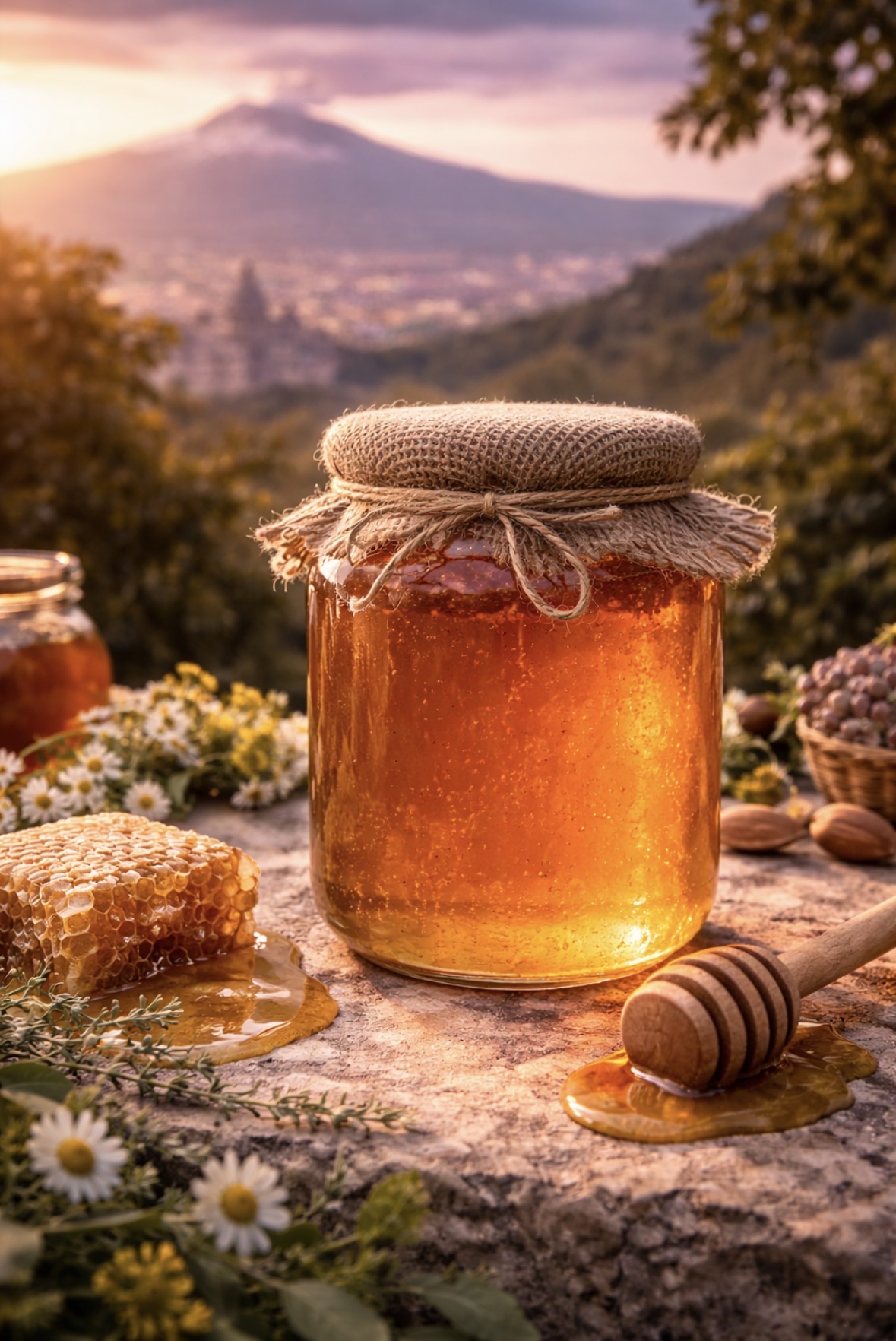
 €8-18
€8-18Etna Honey (Zafferana Etnea)
Etna honey produced in the area of Zafferana Etnea comes from hives placed between coastal citrus groves, chestnut woods, and Mediterranean scrub that climbs toward the higher slopes of the volcano. Etna offers an extraordinary variety of blooms: citrus blossom in spring, sulla, wild thyme, chestnut, and many mountain millefiori varieties. Each honey has its own color, aroma, and flavor, ranging from light and floral to darker with slightly bitter notes. Altitude, volcanic soil, and the microclimates of the eastern slope strongly influence the product’s characteristics. The result is an intense, aromatic honey that directly reflects the plant landscape of Etna.
Verified shops arrive in the app
Why it's the ideal souvenir
Etna honey is a particularly meaningful gastronomic souvenir because it captures the biodiversity of the volcano in a small jar. Unlike many standardized products, each variety tells the story of a specific season and landscape: citrus blossom recalls the spring orange groves, chestnut evokes the mountain forests, while millefiori changes from year to year. It is a travel memory that is easy to carry, long-lasting, and genuinely useful in everyday life, from breakfast to pairings with cheeses and desserts. Buying honey from an Etna producer also offers a chance to connect with a living agricultural tradition, often explained directly by the beekeepers themselves. For visitors to Catania and Etna, this product reveals the quieter agricultural side of the volcano, far from the dramatic imagery of eruptions.
The message it carries
A jar of Etna honey tells the story of the relationship between a complex volcanic environment and the patient work of beekeepers. Bees gather nectar from an extraordinary biodiversity that changes rapidly with altitude and the seasons. The result is a product deeply shaped by the balance between nature, climate, and human care. Taking it home means preserving a small fragment of the landscape of Etna.
Origin story
Beekeeping in the Etna area has ancient roots, encouraged by the fertility of volcanic soils and the region’s rich botanical diversity. In the past, many rural families kept small apiaries for personal consumption and for selling honey in local markets. During the twentieth century the activity gradually became more professional, with Zafferana Etnea taking on a central role thanks to its position between the coast and the mountains. Here citrus groves, chestnut forests, and high-altitude wild flora meet, creating ideal conditions for producing very different types of honey. In recent decades, the reputation of Etna honey has also grown thanks to food fairs and local events dedicated to regional products.
Cultural significance
Honey is one of the most representative agricultural products of the eastern slope of Etna, and Zafferana Etnea is often considered one of the main centers of beekeeping in Sicilia. Local beekeeping follows strongly marked natural rhythms: short blooming periods, hive movements, and changes in altitude directly influence production. Etna beekeepers often practice migratory beekeeping, moving their hives to follow the territory’s different flowering periods. For this reason, every harvest reflects a specific moment of the year and a particular plant landscape. The honey thus becomes a tangible expression of the biodiversity of the Parco dell’Etna.
Where to find Etna Honey (Zafferana Etnea) in Catania
It can easily be purchased from beekeeping farms and agricultural producers in Zafferana Etnea and nearby Etna villages, where many producers sell directly from their workshops or small farm shops. Food specialty stores in the center of Zafferana often offer several monofloral varieties. During the “Ottobrata Zafferanese”, the autumn festival dedicated to local products, honey is one of the main highlights of the market stands. In Catania it can also be found in specialty food shops and stores selling typical Sicilian products.
Get the full verified list — map, hours, reviews — for Etna Honey (Zafferana Etnea) in Catania.
More authentic souvenirs of Catania
Go deeper on Etna Honey (Zafferana Etnea)
Unlock the full editorial dossier, certified shops with maps and opening hours, and related cultural paths.
- Certified shops nearby
- Full origin story
- Related souvenirs & paths
Free · iOS and Android · No subscription
Questions about Etna Honey (Zafferana Etnea)
What makes Etna Honey (Zafferana Etnea) authentic?
Honey is one of the most representative agricultural products of the eastern slope of Etna, and Zafferana Etnea is often considered one of the main centers of beekeeping in Sicilia. Local beekeeping follows strongly marked natural rhythms: short blooming periods, hive movements, and changes in altitude directly influence production. Etna beekeepers often practice migratory beekeeping, moving their hives to follow the territory’s different flowering periods. For this reason, every harvest reflects a specific moment of the year and a particular plant landscape. The honey thus becomes a tangible expression of the biodiversity of the Parco dell’Etna.
Where to find Etna Honey (Zafferana Etnea) in Catania?
It can easily be purchased from beekeeping farms and agricultural producers in Zafferana Etnea and nearby Etna villages, where many producers sell directly from their workshops or small farm shops. Food specialty stores in the center of Zafferana often offer several monofloral varieties. During the “Ottobrata Zafferanese”, the autumn festival dedicated to local products, honey is one of the main highlights of the market stands. In Catania it can also be found in specialty food shops and stores selling typical Sicilian products.
How much does Etna Honey (Zafferana Etnea) cost?
€8-18
Why choose Etna Honey (Zafferana Etnea) as a gift?
A jar of Etna honey tells the story of the relationship between a complex volcanic environment and the patient work of beekeepers. Bees gather nectar from an extraordinary biodiversity that changes rapidly with altitude and the seasons. The result is a product deeply shaped by the balance between nature, climate, and human care. Taking it home means preserving a small fragment of the landscape of Etna.
Take Trouvenir with you
iOS and Android. Free with a one-time Premium option. No subscription.