 4-15 €
Turin breadsticks (Rubatà or stirati)
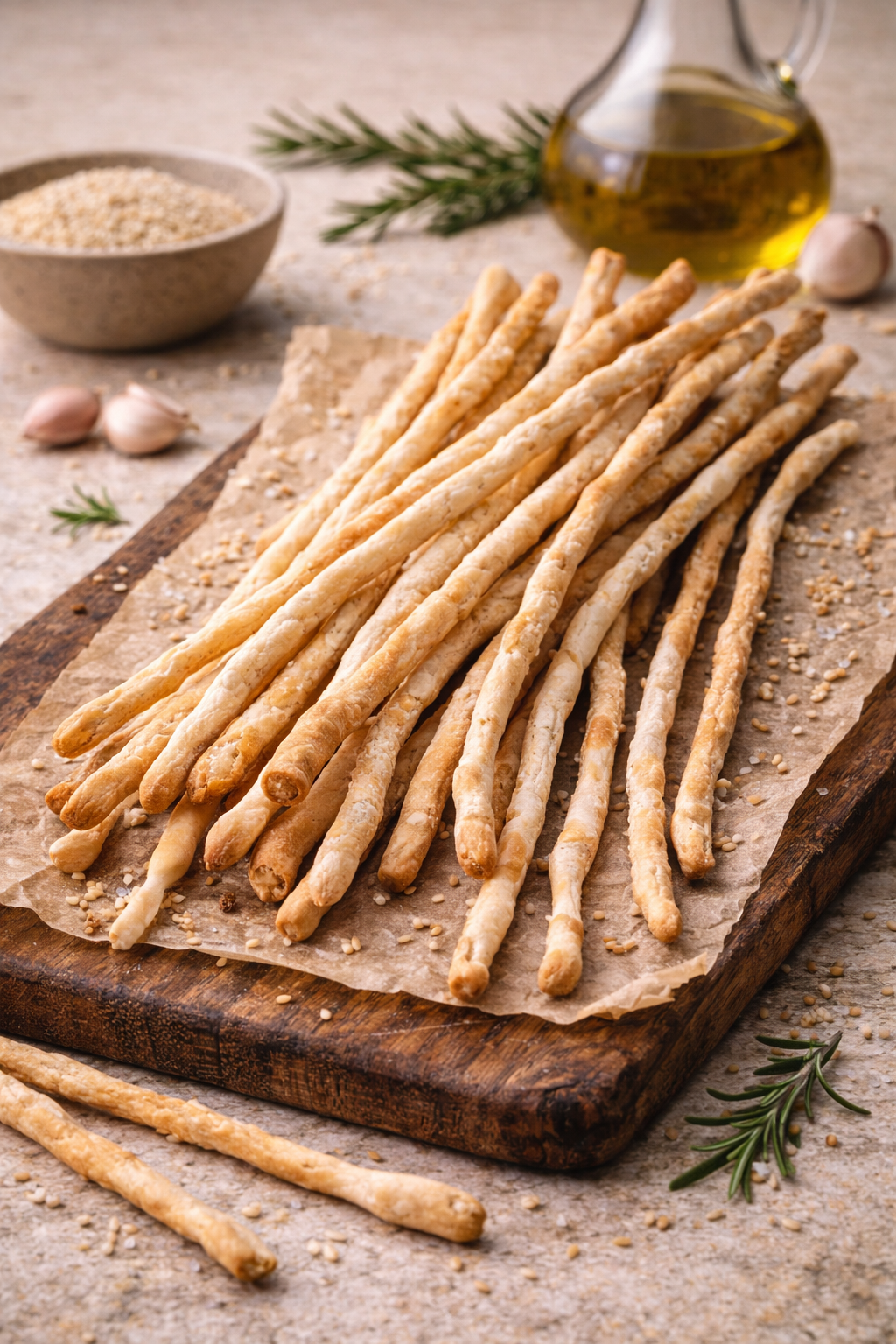
Turin breadsticks are thin sticks of dry bread, crunchy and very crumbly, born in Torino in the 17th century. The most common version is the "stirata", long and slender, while rubatà are shorter, thicker, and hand‑rolled, with a slightly irregular shape. They are made with simple ingredients – flour, water, yeast, salt, and often olive oil or lard – and baked until golden and fragrant. In Torino they are traditionally served in restaurants before meals and accompany cured meats, cheeses, and classic Piedmontese appetizers.
Verified shops arrive in the app
Why it's the ideal souvenir
Grissini are a simple yet highly representative gastronomic souvenir from Torino. They take up little space, keep well for several days, and are easy to carry in a suitcase, especially when packaged in rigid boxes or protective tubes. They are perfect for anyone who wants to bring home an authentic piece of Piedmontese tradition without choosing something too delicate or perishable. They also make it easy to recreate the experience of a Turin-style aperitivo or appetizer at home, perhaps paired with cured meats, cheeses, or a glass of wine. For those who appreciate artisanal baking, hand‑rolled rubatà offer a direct taste of the culture of local bakeries.
The message it carries
Grissini embody the Piedmontese idea of elegance in simplicity: few ingredients, great care in preparation, and attention to the table. Bringing them home means sharing a daily gesture of Torino’s culture—the act of breaking bread before beginning the meal. They are a small symbol of conviviality and artisanal tradition that continues to live on in the city’s bakeries.
Origin story
According to tradition, grissini were created in the 17th century in Torino by a court baker, likely at the request of the doctors of the young duke Vittorio Amedeo II of Savoia, who had difficulty digesting ordinary bread. They were searching for a lighter loaf that was thoroughly baked and free of internal moisture. The result was a very thin, elongated loaf that was then broken into crisp breadsticks. Over time the recipe spread through the city’s bakeries and became a local specialty appreciated even by historical figures such as Napoleone.
Cultural significance
The grissino is one of the most recognizable symbols of Torino’s gastronomic culture. It is closely tied to the Piedmontese table tradition and the habit of serving dry, crunchy bread alongside appetizers. Over time it became an iconic product of the city, later spreading throughout Italy and abroad. The rubatà version, hand‑rolled, preserves a strong link with the craftsmanship of local bakers and with the artisanal tradition of breadmaking in Torino.
Where to find Turin breadsticks (Rubatà or stirati) in Turin
They can be easily found in historic bakeries in Torino, in delicatessens, and in shops specializing in Piedmontese products in the city center. Some artisanal bakeries still sell hand‑made rubatà, often packaged in paper bags or elegant boxes. Many city markets and gourmet shops near Piazza Castello or Porta Palazzo also offer local varieties. In traditional restaurants they are often served free at the table as the opening of the meal.
Get the full verified list — map, hours, reviews — for Turin breadsticks (Rubatà or stirati) in Turin.
More authentic souvenirs of Turin


Go deeper on Turin breadsticks (Rubatà or stirati)
Unlock the full editorial dossier, certified shops with maps and opening hours, and related cultural paths.
- Certified shops nearby
- Full origin story
- Related souvenirs & paths
Free · iOS and Android · No subscription
Questions about Turin breadsticks (Rubatà or stirati)
What makes Turin breadsticks (Rubatà or stirati) authentic?
The grissino is one of the most recognizable symbols of Torino’s gastronomic culture. It is closely tied to the Piedmontese table tradition and the habit of serving dry, crunchy bread alongside appetizers. Over time it became an iconic product of the city, later spreading throughout Italy and abroad. The rubatà version, hand‑rolled, preserves a strong link with the craftsmanship of local bakers and with the artisanal tradition of breadmaking in Torino.
Where to find Turin breadsticks (Rubatà or stirati) in Turin?
They can be easily found in historic bakeries in Torino, in delicatessens, and in shops specializing in Piedmontese products in the city center. Some artisanal bakeries still sell hand‑made rubatà, often packaged in paper bags or elegant boxes. Many city markets and gourmet shops near Piazza Castello or Porta Palazzo also offer local varieties. In traditional restaurants they are often served free at the table as the opening of the meal.
How much does Turin breadsticks (Rubatà or stirati) cost?
4-15 €
Why choose Turin breadsticks (Rubatà or stirati) as a gift?
Grissini embody the Piedmontese idea of elegance in simplicity: few ingredients, great care in preparation, and attention to the table. Bringing them home means sharing a daily gesture of Torino’s culture—the act of breaking bread before beginning the meal. They are a small symbol of conviviality and artisanal tradition that continues to live on in the city’s bakeries.
Take Trouvenir with you
iOS and Android. Free with a one-time Premium option. No subscription.