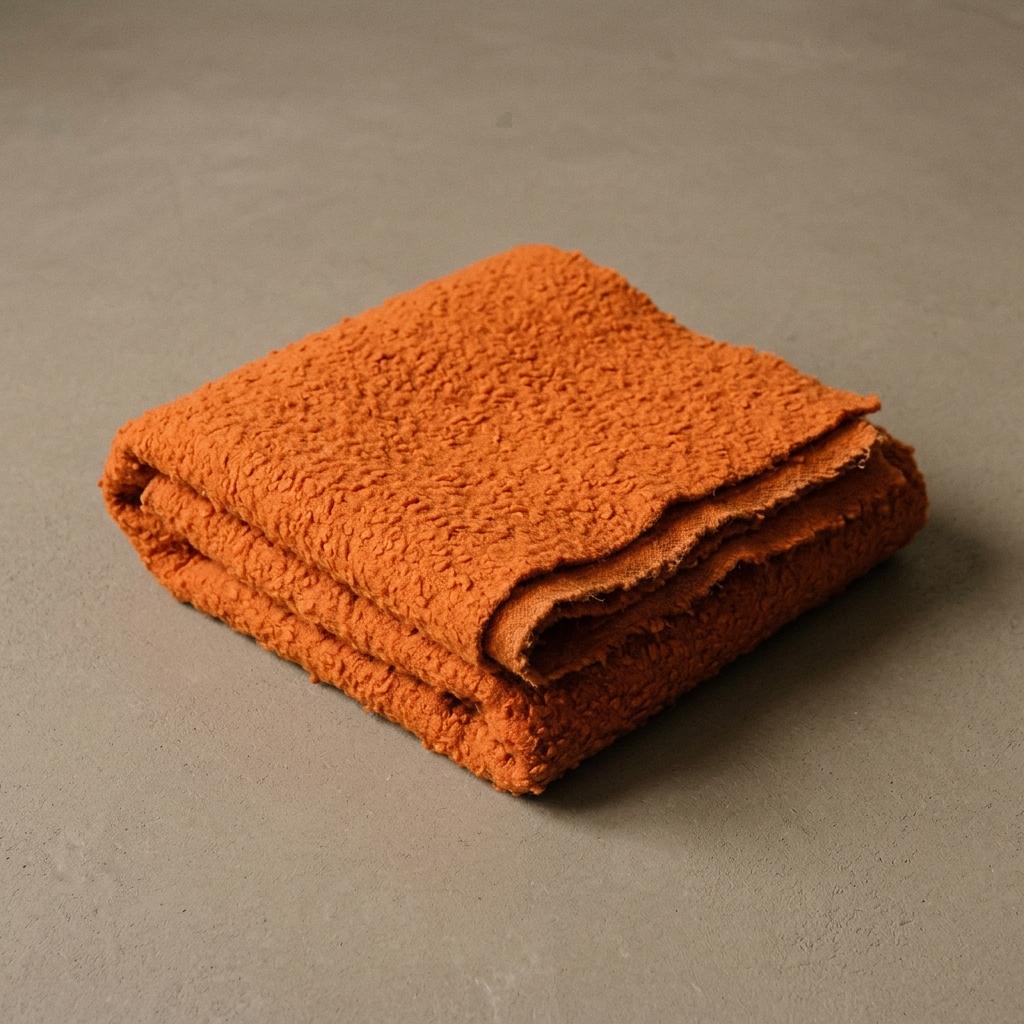
Casentino Cloth in Arezzo
AI-generatedIllustrative image generated with artificial intelligence.
Casentino cloth is one of the most iconic fabrics of Tuscan culture, recognizable for its curled surface and the famous intense orange that made it famous. Created to protect against the cold and rain of the Apennines, it tells a centuries-old story of shepherds, forests, and wool manufactures of the Casentino valley. To this day it is worked with ancient techniques and transformed into coats, scarves, and accessories with an unmistakable character. Bringing home a fragment of it means preserving a genuine piece of the textile culture of Arezzo and industrious Tuscany.
- Storia secolare
- Artigianato tessile
- Da indossare
What Casentino Cloth is
Casentino cloth is a robust woolen fabric originating in the valley of the same name in the province of Arezzo, easily recognizable by its slightly curled surface and intense colors, especially the bright orange that has become iconic. The fabric undergoes a special manufacturing process that creates a compact, resistant weave, originally designed to protect against cold and rain. Historically it has been used for coats, capes, blankets, and workwear, but today it also appears in accessories and design objects. Its warm, tactile appearance recalls a long textile history linked to the Tuscan Apennine territory.
«An object made of Casentino cloth carries with it the idea of knowledge born from practical needs: protecting oneself from the Apennine climate and utilizing local resources. It tells of communities' ability to transform a simple material like wool into a durable and recognizable product. It is also a message of artisanal continuity, because some processing methods have remained surprisingly similar over time. As a souvenir, it reminds us that behind many Italian landscapes exist deeply rooted productive skills that continue to live on in local workshops and manufactures.»
Origin and history
The origins of Casentino cloth date back at least to the Middle Ages, when a solid wool industry developed in the Casentino valley thanks to the presence of pastures and watercourses useful for wool processing. The fabric was subjected to fulling and a particular carding process that curled the surface, making it more resistant to bad weather. In the 19th and 20th centuries, production became structured in more organized manufactures, contributing to the spread of the famous Casentino coat. The historic Casentino Manufactory, founded in 1906, closed in 2025 after over a century of activity.
Where to find Casentino Cloth in Arezzo
We don't have verified shops for this souvenir yet. Here is where to look.
In Arezzo and the Casentino area, it can be found in shops and ateliers selling garments and accessories made with this cloth. Following the closure of the Casentino Manufactory in 2025, availability may be reduced, so it is advisable to check before purchasing.
Cultural significance
Casentino cloth is one of the most recognizable symbols of eastern Tuscany's textile history. Its fame stems from its ability to combine practical function with local identity: a resistant material created for daily life in mountainous areas. Over time it has also become a distinctive cultural sign, associated with the imagery of the Casentine orange coat. It has been historically worn by farmers, woodsmen, and hunters, but also by prominent figures and urban circles, demonstrating how a rural product can enter national culture.
More crafts from Arezzo
All
Frequently asked questions
What makes Casentino Cloth special?
Casentino cloth is one of the most recognizable symbols of eastern Tuscany's textile history. Its fame stems from its ability to combine practical function with local identity: a resistant material created for daily life in mountainous areas. Over time it has also become a distinctive cultural sign, associated with the imagery of the Casentine orange coat. It has been historically worn by farmers, woodsmen, and hunters, but also by prominent figures and urban circles, demonstrating how a rural product can enter national culture.
Where to find Casentino Cloth in Arezzo?
In Arezzo and the Casentino area, it can be found in shops and ateliers selling garments and accessories made with this cloth. Following the closure of the Casentino Manufactory in 2025, availability may be reduced, so it is advisable to check before purchasing.
How much does Casentino Cloth cost?
50–800 € a seconda dell’oggetto (sciarpe, borse, cappotti o tessuto al metro)
Why choose Casentino Cloth as a gift?
An object made of Casentino cloth carries with it the idea of knowledge born from practical needs: protecting oneself from the Apennine climate and utilizing local resources. It tells of communities' ability to transform a simple material like wool into a durable and recognizable product. It is also a message of artisanal continuity, because some processing methods have remained surprisingly similar over time. As a souvenir, it reminds us that behind many Italian landscapes exist deeply rooted productive skills that continue to live on in local workshops and manufactures.
Take Trouvenir with you
iOS and Android. Free.