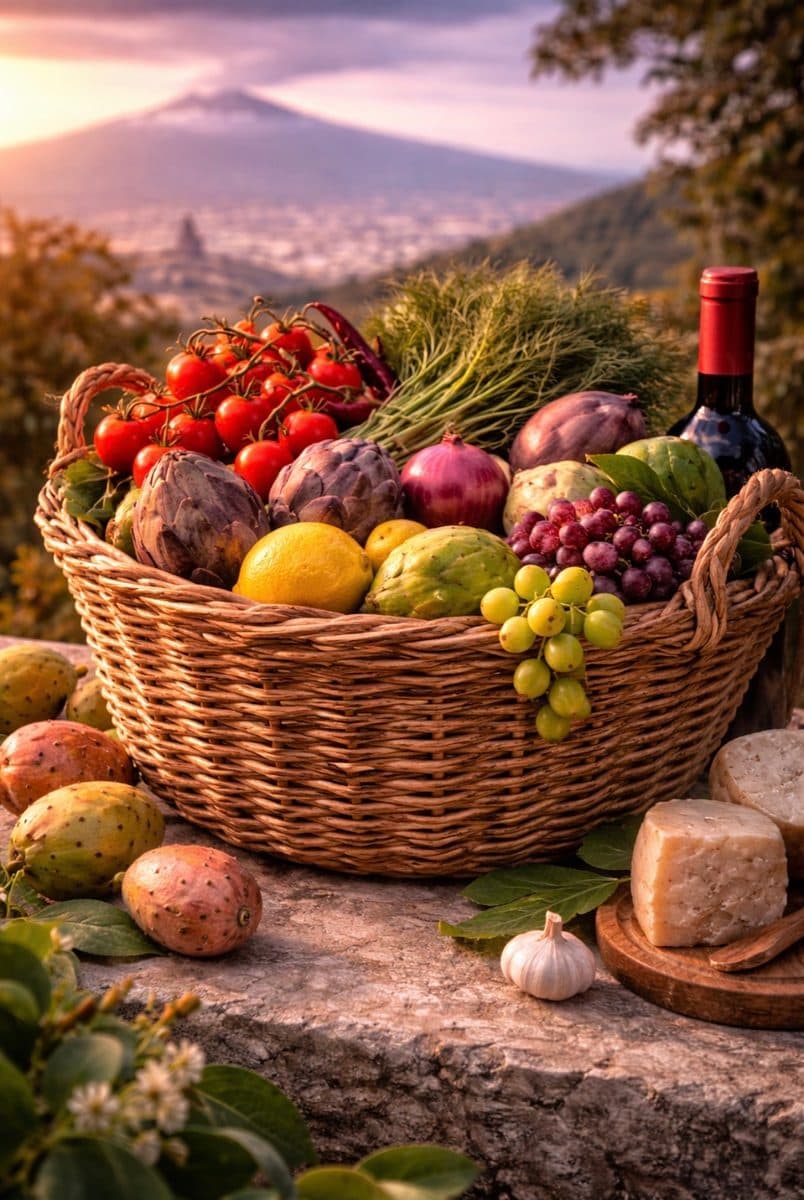
Woven agricultural basket from the Etna area (panaru) in Catania
In the Etna area, the weaving of reed, rush, and wicker has been for centuries a quiet knowledge accompanying field work. This agricultural basket, lightweight yet sturdy, is created for harvesting fruits and vegetables and carries with it the patient rhythm of the hands that made it. Its essential shape tells of a farming culture made of seasons, toil, and practical intelligence. Taking it home means preserving a genuine fragment of rural life around Mount Etna, where even the simplest tools hold together territory and community.
- artigianato rurale
- intreccio vegetale
- Cultura agricola
- Etna
What Woven agricultural basket from the Etna area (panaru) is
The woven agricultural basket, often called locally "panaru", is made from plant fibers such as reed, rush, or wicker gathered in the countryside and handcrafted. The structure is flexible yet robust, designed to support weight and to be easily carried during harvesting. The shape is simple and functional: a stable bottom, high walls, and a tight weave that protects the contents. Each piece reveals minor variations in the pattern and curvature, signs of manual work and the artisan's experience.
«This basket carries with it the idea that the most essential objects can tell the story of an entire territory. It recalls a culture where the relationship with the land and the seasons was organized through simple yet durable tools. Gifting or keeping a panaru means recognizing the value of manual labor and practical knowledge handed down over time.»
Origin and history
The weaving of plant fibers has been a widespread technique in Sicily for centuries, favored by the availability of reeds and rushes in wetland areas and agricultural margins. In the Etna area, these materials were collected, dried, and worked to create baskets destined for fieldwork and the transport of products to city markets. The shapes of the baskets adapted over time to various agricultural uses, from citrus harvesting to the grape harvest. Although many industrial containers have replaced these items today, the art of weaving survives in some artisanal productions and in rural contexts.
From workshop to plate, with the people who make it
- FoodThe Pescheria and Catania street foodArancino, cipollina and granita at the stallsSee on GetYourGuide
 CraftA tile of Etna lava stoneDecorate lava stone and try the potter's wheelSee on GetYourGuide
 CookingPistachio ravioli in a Catania homeMake the pasta, then dine with your hostSee on GetYourGuide
Affiliate links: if you book, Trouvenir earns a small commission at no cost to you.
Where to find Woven agricultural basket from the Etna area (panaru) in Catania
We don't have verified shops for this souvenir yet. Here is where to look.
They can be found in the historic markets of Catania such as La Pescheria or Fera 'o Luni, where they are sometimes sold alongside agricultural tools and local products. Some artisans and street vendors in the Etna area, especially in the foothill towns, continue to offer them during fairs, festivals, and farmers' markets. They can also be found in local craft shops or stores that highlight Sicilian rural culture.
- Look at the tight weave of cane, rush or wicker and the steady base; ask who wove it.
Woven agricultural basket from the Etna area (panaru)
Not passing by a shop? Before you buy, check the name and production area on the label.
Search on AmazonAmazon affiliate link
Cultural significance
The woven basket represents a concrete part of the agricultural work culture around Mount Etna. It is a daily tool used to harvest citrus fruits, olives, vegetables, and grapes, and it reflects an economy based on seasonality and the manual care of crops. Its presence in the markets and countryside recalls how historically urban life in Catania is linked to the fertility of the surrounding volcanic territory. In this simple object, one recognizes practical knowledge passed down through generations of farmers and artisans.
More crafts from Catania
AllFrequently asked questions
What makes Woven agricultural basket from the Etna area (panaru) special?
The woven basket represents a concrete part of the agricultural work culture around Mount Etna. It is a daily tool used to harvest citrus fruits, olives, vegetables, and grapes, and it reflects an economy based on seasonality and the manual care of crops. Its presence in the markets and countryside recalls how historically urban life in Catania is linked to the fertility of the surrounding volcanic territory. In this simple object, one recognizes practical knowledge passed down through generations of farmers and artisans.
Where to find Woven agricultural basket from the Etna area (panaru) in Catania?
They can be found in the historic markets of Catania such as La Pescheria or Fera 'o Luni, where they are sometimes sold alongside agricultural tools and local products. Some artisans and street vendors in the Etna area, especially in the foothill towns, continue to offer them during fairs, festivals, and farmers' markets. They can also be found in local craft shops or stores that highlight Sicilian rural culture.
How much does Woven agricultural basket from the Etna area (panaru) cost?
15-60 €
Why choose Woven agricultural basket from the Etna area (panaru) as a gift?
This basket carries with it the idea that the most essential objects can tell the story of an entire territory. It recalls a culture where the relationship with the land and the seasons was organized through simple yet durable tools. Gifting or keeping a panaru means recognizing the value of manual labor and practical knowledge handed down over time.
Take Trouvenir with you
iOS and Android. Free.