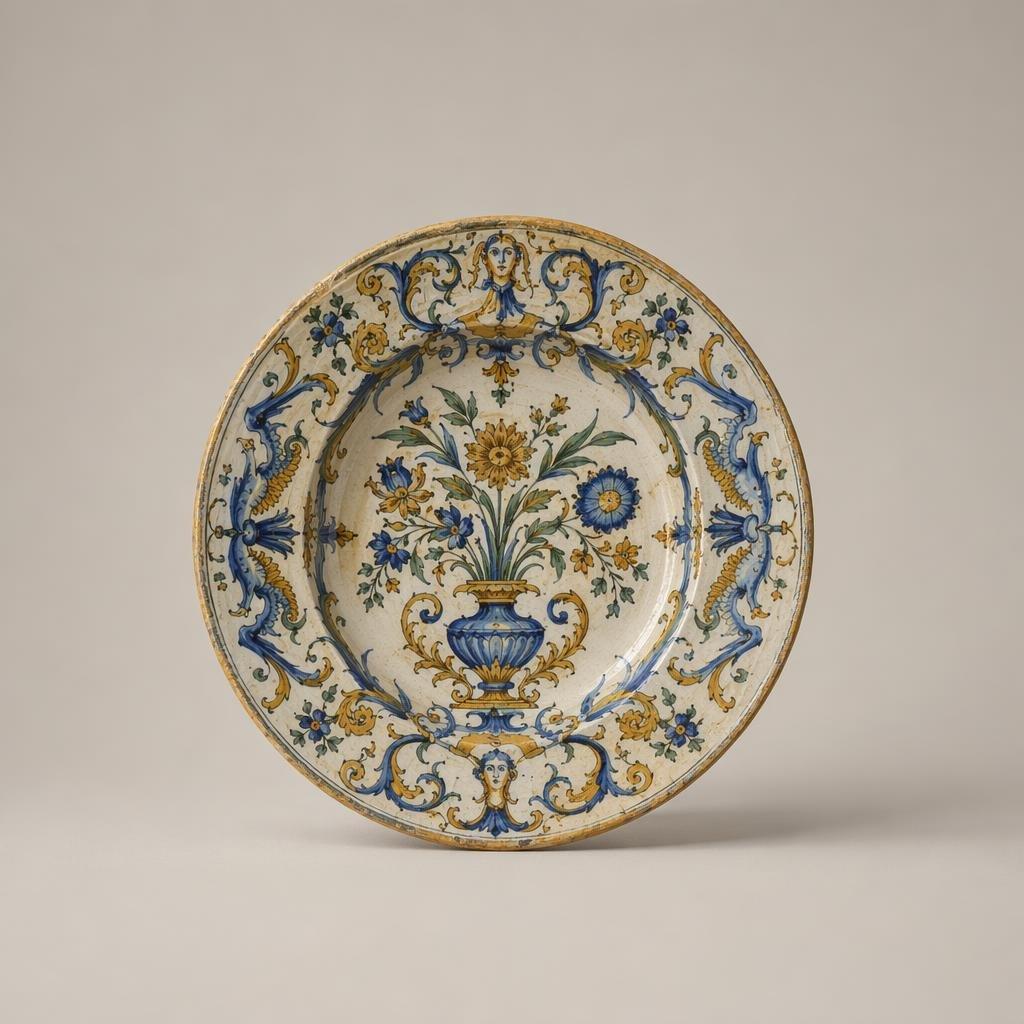
Sienese majolica in Siena
AI-generatedIllustrative image generated with artificial intelligence.
Sienese majolica is a fragment of the Renaissance that takes shape in enameled pottery, where intense blues, luminous yellows, and ornamental motifs tell centuries of Tuscan artistic taste. Born among the tables and dwellings of noble families, this decorative art combines art and daily life with timeless elegance. Even today, Siena's workshops reinterpret historical motifs and heraldic coats of arms, keeping alive a technique that spans the centuries. Bringing one home means treasuring an object that is at once artistic memory, local craftsmanship, and beauty to live every day.
- Fatto a mano
- Da esporre
- Origini rinascimentali
- Da regalare
What Sienese majolica is
Sienese majolica is pottery decorated with colored glazes on a light background, often enriched with floral motifs, Renaissance grotesques, or heraldic coats of arms. Ornamental plates, small trays, pitchers, and tiles are among the most common items. Typical colors include blue, yellow, green, and orange, applied to an enameled surface that makes the decorations vibrant and bright. Even when produced today by contemporary workshops, it maintains an aesthetic that recalls the artistic taste of Renaissance Tuscany.
«Sienese majolica tells the story of the connection between art and daily life in historic Tuscany. Remember that even household objects can be bearers of beauty and culture. Bringing it home means preserving a fragment of the artistic history that made Siena famous in the context of the Italian Renaissance.»
Origin and history
The production of majolica in Italy developed between the 14th and 16th centuries, with important centers in various regions including Tuscany. In the Sienese territory, the presence of decorated ceramics is documented at least since the 16th century, as testified by finds and museum collections. These objects were used both as tableware and as decorative elements in the richest homes. Over time, local production has intertwined with that of other Tuscan hubs, but the Sienese style has continued to reflect the artistic taste linked to the city's history.
From workshop to plate, with the people who make it
- FoodFood walk through central SienaPici, cured meats, pecorino and Sienese sweetsSee on GetYourGuide
- CraftCeramic painting in a Sienese workshopPaint a plate, tile or mug to take homeSee on GetYourGuide
- CookingPici and tiramisu in a Siena trattoriaMake pici, tagliatelle and gnocchi, then eatSee on GetYourGuide
Affiliate links: if you book, Trouvenir earns a small commission at no cost to you.
Where to find Sienese majolica in Siena
We don't have verified shops for this souvenir yet. Here is where to look.
In Siena, it can be found mainly in artisanal workshops and ceramic shops in the historic center, particularly in the streets around Piazza del Campo and near the Duomo. Some specialized shops sell reproductions inspired by historical models preserved in local museums. It is also common to find it in artisanal workshops of the Sienese province and at fairs dedicated to Tuscan craftsmanship. In city museums, such as those of the Musei Senesi system, it is possible to see historical examples that help recognize their styles.
- Look for hand-painted designs in blue, yellow, green and orange on a pale glazed ground, and ask which historic model it follows.
Sienese majolica
Not passing by a shop? Before you buy, check the name and production area on the label.
Search on AmazonAmazon affiliate link
Cultural significance
Majolica represents an important part of Italian material culture between the late Middle Ages and the Renaissance, when enameled pottery became a widespread object in noble and bourgeois homes. In the Sienese area, these manufactured items reflect the city's artistic taste and commercial contacts with other ceramic centers of the peninsula. The decorations often recalled heraldic symbols, naturalistic motifs, or ornamental scenes linked to the figurative culture of the time. Today these ceramics evoke the Renaissance artistic heritage and the connection between decorative arts and daily life.
More crafts from Siena
All
Frequently asked questions
What makes Sienese majolica special?
Majolica represents an important part of Italian material culture between the late Middle Ages and the Renaissance, when enameled pottery became a widespread object in noble and bourgeois homes. In the Sienese area, these manufactured items reflect the city's artistic taste and commercial contacts with other ceramic centers of the peninsula. The decorations often recalled heraldic symbols, naturalistic motifs, or ornamental scenes linked to the figurative culture of the time. Today these ceramics evoke the Renaissance artistic heritage and the connection between decorative arts and daily life.
Where to find Sienese majolica in Siena?
In Siena, it can be found mainly in artisanal workshops and ceramic shops in the historic center, particularly in the streets around Piazza del Campo and near the Duomo. Some specialized shops sell reproductions inspired by historical models preserved in local museums. It is also common to find it in artisanal workshops of the Sienese province and at fairs dedicated to Tuscan craftsmanship. In city museums, such as those of the Musei Senesi system, it is possible to see historical examples that help recognize their styles.
How much does Sienese majolica cost?
circa 20–200 € a seconda di dimensioni e lavorazione
Why choose Sienese majolica as a gift?
Sienese majolica tells the story of the connection between art and daily life in historic Tuscany. Remember that even household objects can be bearers of beauty and culture. Bringing it home means preserving a fragment of the artistic history that made Siena famous in the context of the Italian Renaissance.
Take Trouvenir with you
iOS and Android. Free.