
Messina is one of Italy's destinations with the deepest artisanal and gastronomic traditions. Every product here reflects local history, craftsmanship, and culture — something you won't find elsewhere with the same authenticity.
This guide collects authentic souvenirs selected by the Trouvenir app for Messina: local objects and specialties that truly capture the soul of the city, far from tourist stalls and mass-produced items. For each souvenir you'll find cultural context, price ranges, and where to buy with confidence.
1. Figurative ceramics of Santo Stefano di Camastra
🏺 Craftsmanship
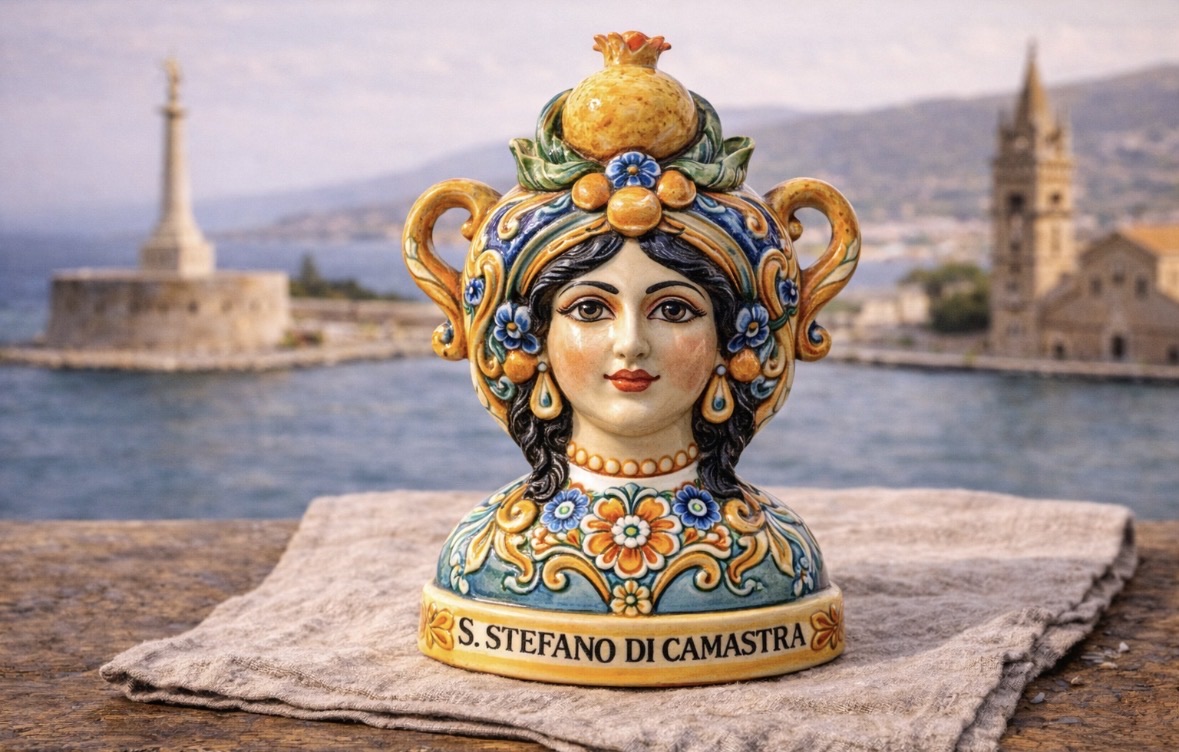
These are objects made of glazed terracotta and painted by hand. The most typical forms are decorative display plates, vases, tiered stands, and small figurative panels. The dominant colors are cobalt blue, yellow, copper green, and manganese. The decorations depict folk scenes, saints, fantastic animals, floral motifs, and Baroque arabesques.
Why it's special
This ceramics tradition tells the story of a Sicily that transformed everyday use into art. It speaks of a culture capable of uniting function and beauty, devotion and ornament. It is the symbol of a province that built its identity around the kiln, the potter’s wheel, and color. In every painted figure lives the local idea that an object does not merely serve a purpose—it tells a story.
History
The ceramic tradition of Santo Stefano di Camastra began in the 17th century, after the village was rebuilt following a landslide that destroyed the ancient settlement. The town quickly became one of the main ceramic centers of Sicily, thanks to the presence of local clays and the protection of the Camastra feudal lords. Between the 18th and 19th centuries, a recognizable figurative style developed, with plates, vases, and albarelli decorated by hand for domestic and devotional use. Even today, Santo Stefano ceramics remain one of the most enduring expressions of artistic craftsmanship in the Messina area.
Price
€15-€200+ a seconda di dimensioni e complessità
Where to find it
Artisan ceramic workshops Historic shops in the ceramic district Exhibition spaces dedicated to artistic craftsmanship
Discover Figurative ceramics of Santo Stefano di Camastra on Trouvenir →
2. Miniatura della Vara di Messina
🏺 Craftsmanship
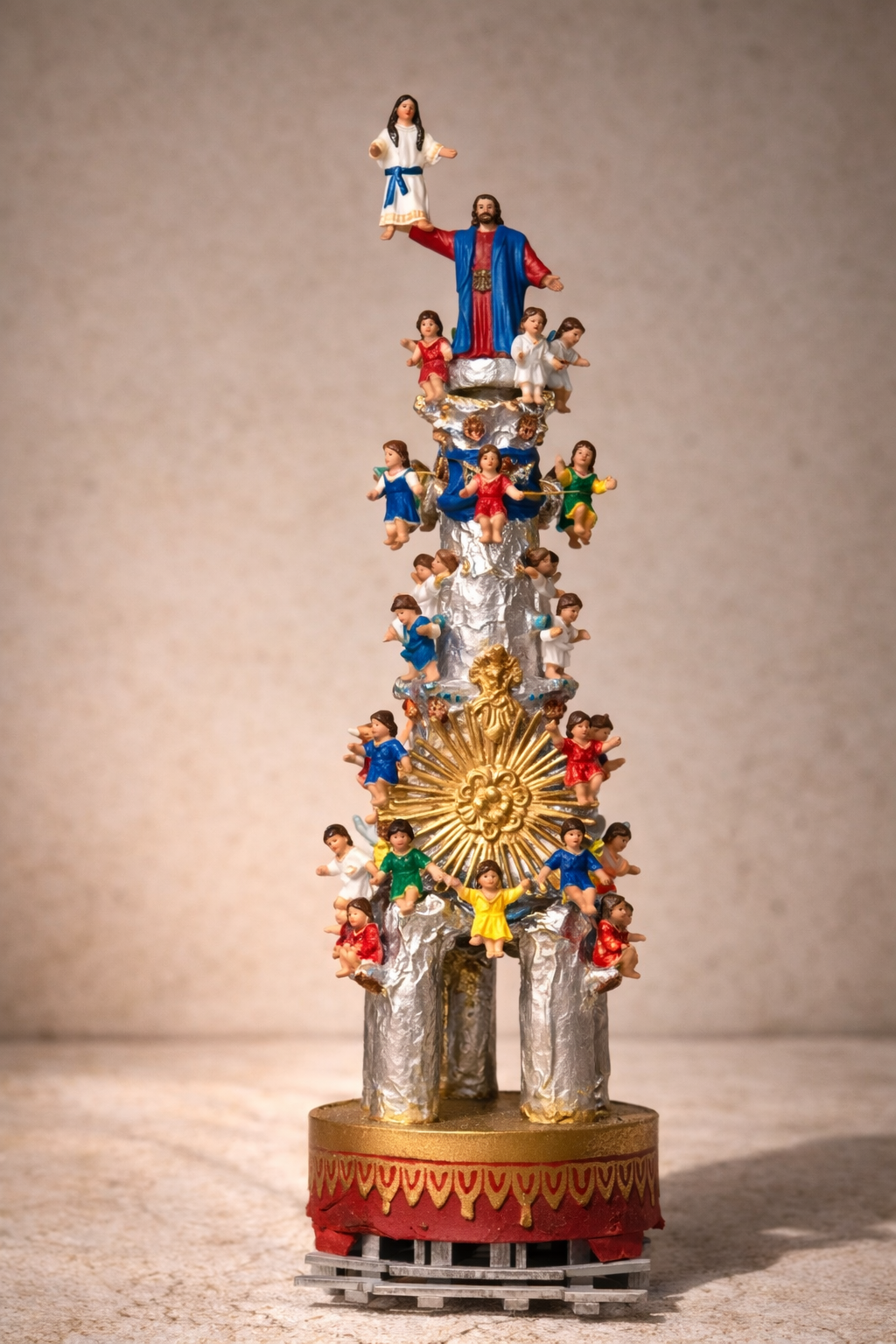
La miniatura della Vara di Messina è una piccola riproduzione della grande macchina votiva che ogni 15 agosto attraversa la città durante la Festa dell’Assunta. L’originale è un’imponente struttura alta oltre dieci metri che raffigura l’Assunzione della Vergine con angeli, sfere e figure simboliche. Le versioni in miniatura riprendono la forma piramidale della macchina e i suoi elementi iconografici principali. Sono realizzate in resina, legno o metallo e spesso dipinte con colori vivaci e dettagli dorati.
Why it's special
La Vara è uno dei simboli più forti dell’identità religiosa e civica di Messina. Ogni anno centinaia di tiratori trascinano la macchina votiva lungo le vie della città, accompagnati da migliaia di fedeli e spettatori. La miniatura richiama questa tradizione collettiva fatta di fede, spettacolo e partecipazione popolare. Per molti messinesi rappresenta un segno di appartenenza e memoria della festa più importante dell’anno.
History
La Vara di Messina ha origini nel XVI secolo e si collega alle celebrazioni dell’Assunzione della Vergine Maria, molto diffuse nel mondo cattolico. La struttura attuale, più volte ricostruita e restaurata nel tempo anche dopo il terremoto del 1908, mantiene una scenografia complessa con figure simboliche che rappresentano l’ascesa al cielo di Maria. La spettacolare processione del 15 agosto è diventata nei secoli uno degli eventi religiosi più noti della Sicilia. Le miniature sono nate come oggetti devozionali e ricordo della festa, diffondendosi tra fedeli e visitatori.
Price
10-40 €
Where to find it
Le miniatura si trovano soprattutto nei negozi di souvenir del centro storico di Messina e nelle botteghe vicino al Duomo. Durante i giorni della Festa della Madonna Assunta, a metà agosto, compaiono anche nelle bancarelle e negli stand temporanei lungo il percorso della processione. Alcune edicole religiose e negozi di articoli sacri ne vendono versioni più tradizionali legate alla devozione locale.
Discover Miniatura della Vara di Messina on Trouvenir →
3. Messina terracotta pignata
🏺 Craftsmanship
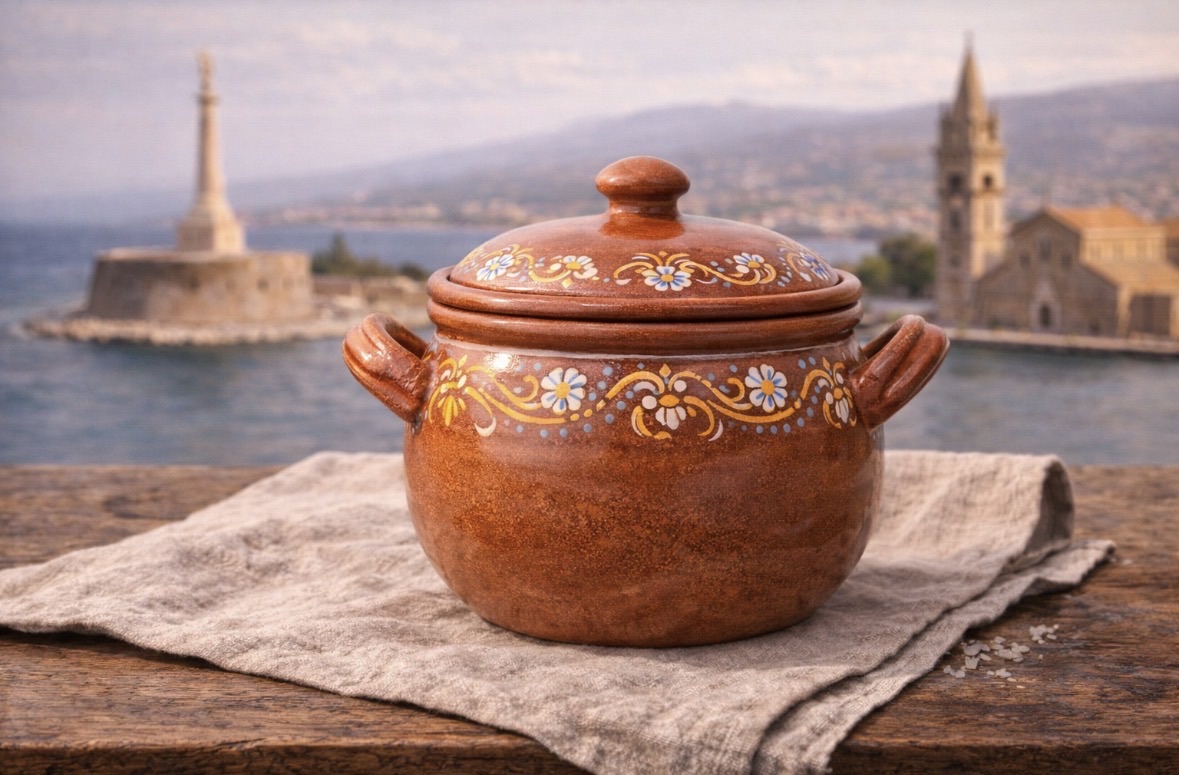
It is an unglazed terracotta pot with a rounded body, a narrow opening, and one or two small handles. The clay is local, shaped on the wheel and fired at a low temperature. Its color ranges from brick red to light brown. It is designed for direct cooking over flame or in embers, ideal for soups, legumes, and slow-cooked stews.
Why it's special
The pignata tells the story of Messina’s humble, patient kitchens. It speaks of a culture of long time, low flames, and waiting as an essential ingredient. It represents a city where food was not only nourishment but also a daily act of care and continuity. Within this vessel lives the Messinese idea that knowledge passes through the hands, not through words.
History
The pignata is one of the oldest forms of Sicilian domestic pottery. In Messina and the villages of the Peloritani it was already produced in the medieval era as a humble vessel for the slow cooking of legumes and meats. The name comes from the Latin pinea, meaning a rounded pot, and refers to a container intended for the hearth. For centuries it was the quiet heart of the family kitchen, found in every rural and fishing household.
Price
15–50 €
Where to find it
Artisan ceramic workshops Traditional utensil shops Historic markets of the Peloritani hinterland
Discover Messina terracotta pignata on Trouvenir →
4. Puppet of the Giants Mata and Grifone
🏺 Craftsmanship
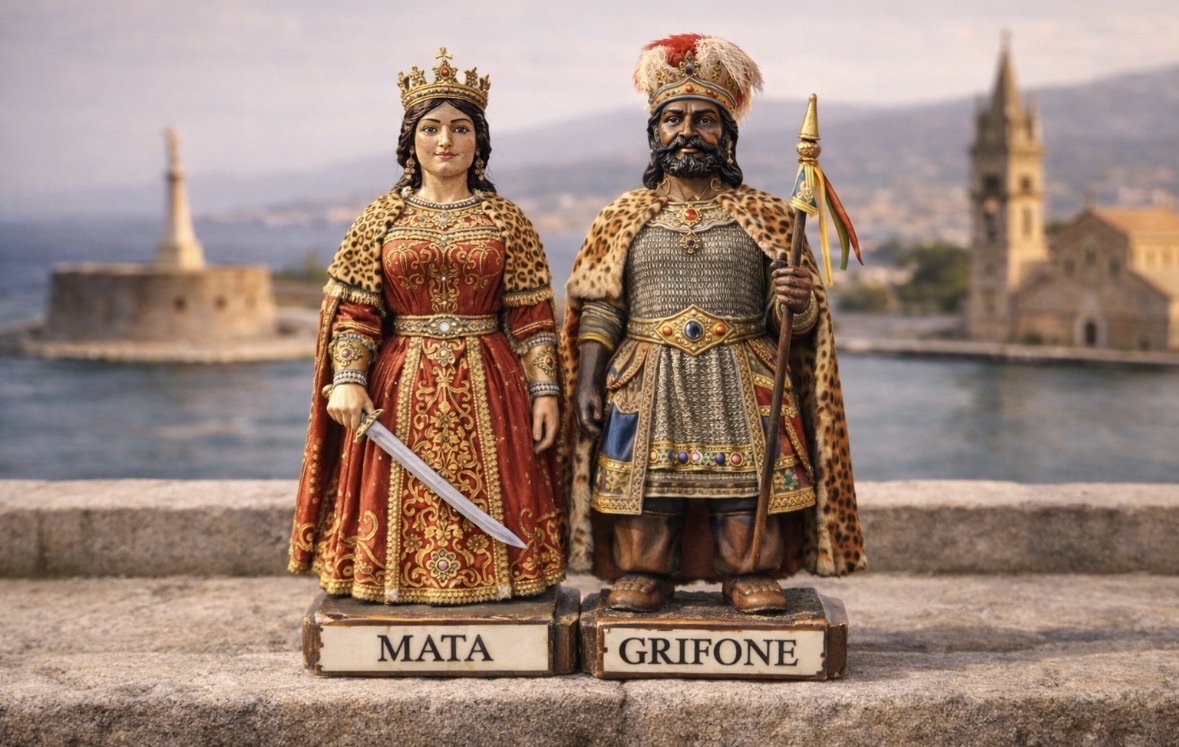
The Giants puppet is a small miniature reproduction of the colossal procession figures. Made from fabric, papier-mâché, or lightweight fiber, it echoes the mounted posture of the Giants, with traditional garments, colors, and iconographic details. Mata is portrayed as an imposing and regal female figure; Grifone as a vigorous and proud male figure. The forms are stylized yet recognizable, with careful attention to fabrics, stitching, and the genealogical symbols of the Messina tradition.
Why it's special
This puppet tells the story of Messina as a city that recognizes itself in its myths, celebrating its origins through the physical presence of legendary figures. It is much more than a doll: it is a narrative symbol, a bridge between the ancient and the contemporary, between collective ritual and personal memory. Within its fabric intertwine stories of conquest, resistance, encounter, and cultural transformation. It represents the Messina idea that identity is built through dialogue between the other and ourselves.
History
The tradition of the Giants of Messina dates back to the 16th century, when the city Senate commissioned enormous procession statues depicting Mata and Grifone, the legendary progenitors of the Peloritani lineage. They parade through the city streets especially in the days around August 15, during the celebrations of the Vara and the patronal festivities. The figure of Mata, a woman of Messina, and that of Grifone, a warrior of Moorish origins, weave together myth, history, and popular legend, recounting encounters and conflicts between cultures and communities. This narrative has been passed down through the centuries through festivities, storytelling, and popular performances.
Price
10-40 €
Where to find it
Artisan workshops specializing in papier-mâché and textiles Traditional markets connected to folk festivals Exhibition spaces dedicated to folkloric objects
Discover Puppet of the Giants Mata and Grifone on Trouvenir →
5. Salted anchovies from the Strait
🍽️ Food Specialties
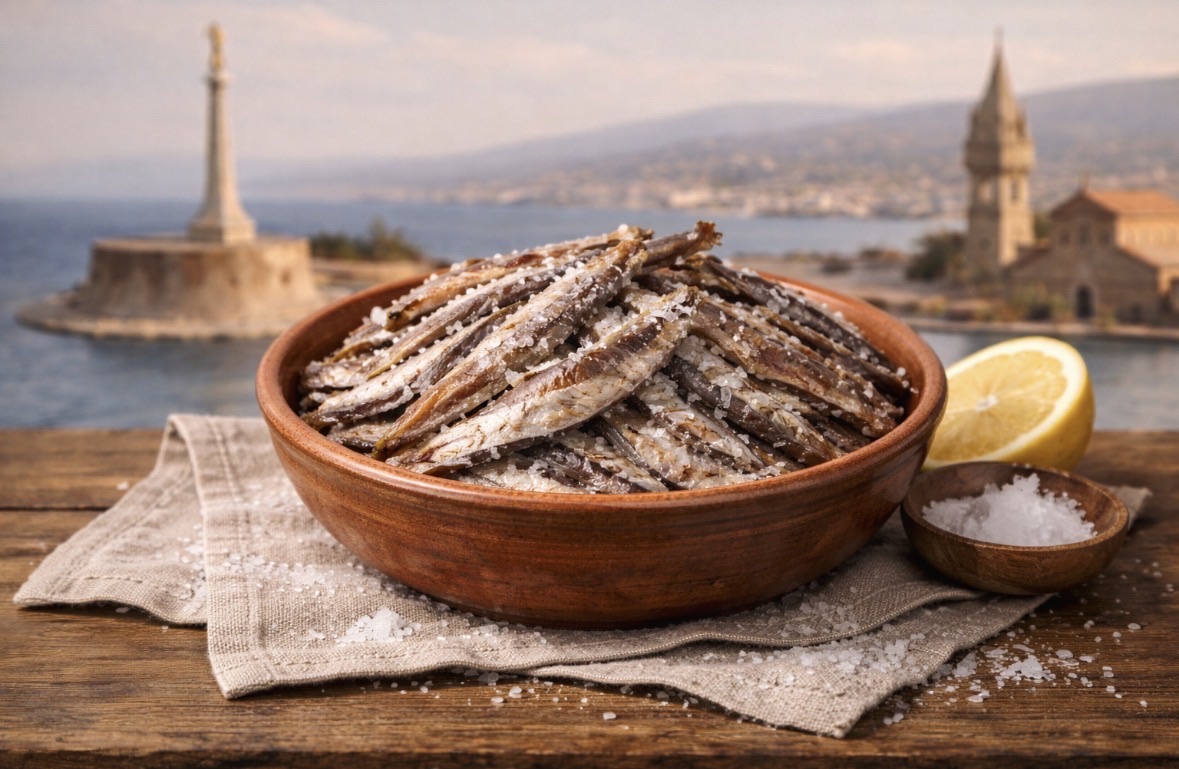
They are fresh anchovies, cleaned by hand and arranged in alternating layers of sea salt inside small containers. The fish matures slowly, losing moisture while gaining firmness and an intense aroma. The color turns pinkish-brown, the flesh firm yet delicate. They are eaten raw dressed with oil and citrus, or used as a base for traditional dishes.
Why it's special
Salted anchovies tell the story of the fishermen and ports of Messina. They speak of a cuisine born from necessity, capable of turning scarcity into preservation. They represent the everyday bond between the city and its Strait, between manual labor and knowledge passed down through generations. In every jar lies the idea that the sea is not taken—it is preserved with respect.
History
Salting anchovies in the Stretto di Messina has been documented since ancient Greek and Roman times. The technique developed as a response to the need to preserve fish in a place marked by strong currents and seasonal fishing. In the Middle Ages it became a fundamental practice for the nourishment of coastal communities and for trade toward inland areas. Even today it follows rhythms that are almost unchanged, tied to the cycles of spring fishing.
Price
€6-€18 a vasetto (150–300 g circa)
Where to find it
Traditional fish markets Artisanal fish preservation workshops Historic gourmet food shops
Discover Salted anchovies from the Strait on Trouvenir →
6. Sesame “Reginelle” biscuits
🍽️ Food Specialties
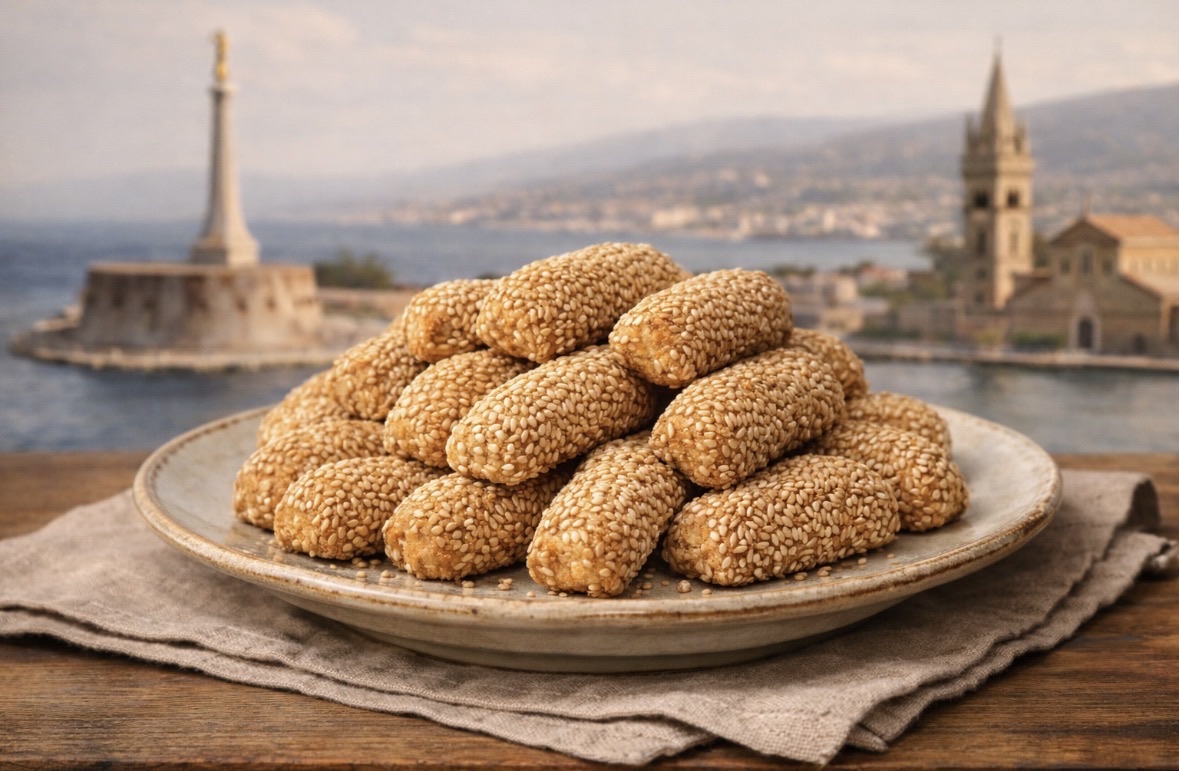
They are elongated, golden biscuits, entirely coated with sesame seeds. The dough is simple: flour, sugar, eggs, lard or butter, citrus zest. The texture is crumbly yet compact, designed to be dipped in sweet wine or milk. There are softer or crunchier variations, depending on family traditions.
Why it's special
Reginelle tell the story of everyday Sicilia, not the one of grand celebrations. They speak of slow breakfasts, household pantries, and a relationship with food built on balance and repetition. The sesame recalls Arab memory, while the oven reflects European heritage. In this biscuit, centuries of cultural crossings live on as everyday habit.
History
Reginelle originated in the medieval period as baked biscuits connected to monastic and rural traditions. Their name likely comes from a ceremonial dedication to an Aragonese queen, though their spread happened mainly in private homes. Sesame, introduced to Sicilia by the Arabs, became a distinctive ingredient along the coasts and around the Strait. In Messina they were adopted as an everyday biscuit, eaten at breakfast or at the end of a meal, keeping a form that has remained almost unchanged for centuries.
Price
€4–€12 a confezione (circa 300–500 g)
Where to find it
Traditional pastry shops Historic bakeries Artisanal dry biscuit workshops
Discover Sesame “Reginelle” biscuits on Trouvenir →
7. Capperi delle Isole Eolie
🍽️ Food Specialties
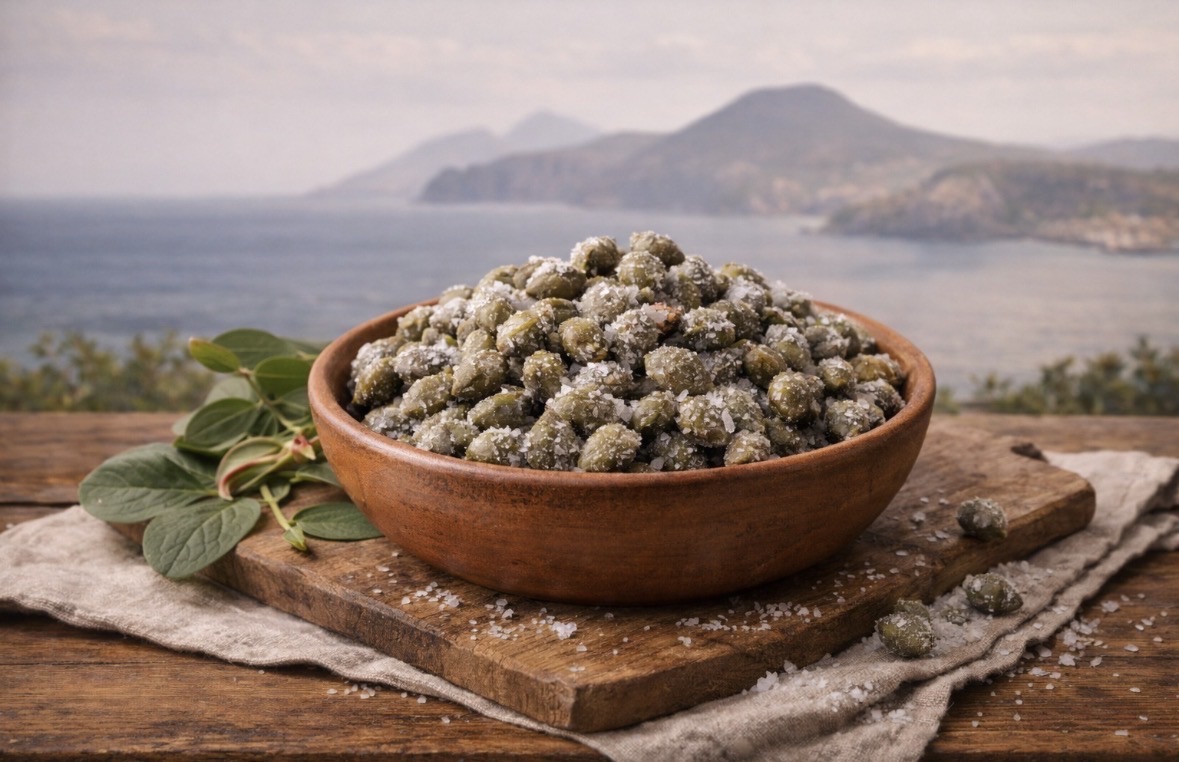
They are the unopened buds of the caper plant, harvested carefully by hand one by one. After picking, they are left to mature slowly under sea salt, without vinegar. Their color ranges from deep green to olive green. The flavor is intense, aromatic, and slightly spicy, with mineral notes linked to the volcanic soil. They come in different sizes, from the smallest and most prized to the larger, fleshier ones.
Why it's special
Capers reflect the islands’ culture of patience and essential simplicity. They speak of poor soils, steady winds, and hands that harvest quietly at dawn. They are a symbol of a cuisine born from scarcity that transforms it into identity. In every caper lives the Aeolian idea that the landscape is not something to conquer, but to follow.
History
The caper plant has grown wild on the volcanic rocks of the Isole Eolie for thousands of years. Already in Greek and Roman times it was harvested as both a food and medicinal plant, prized for its resilience and intense aroma. Over time, the early-morning hand harvest and preservation in sea salt became ritual practices of the islands, especially in Salina. Today, “Cappero delle Isole Eolie” is recognized as a DOP product, a living testament to an agriculture that exists at the boundary between land and sea.
Price
€6-€18 a vasetto, a seconda della pezzatura e della qualità
Where to find it
Artisanal gourmet food shops Traditional markets Agricultural processing workshops
Discover Capperi delle Isole Eolie on Trouvenir →
8. Conserve di pesce spada dello Stretto
🍽️ Food Specialties
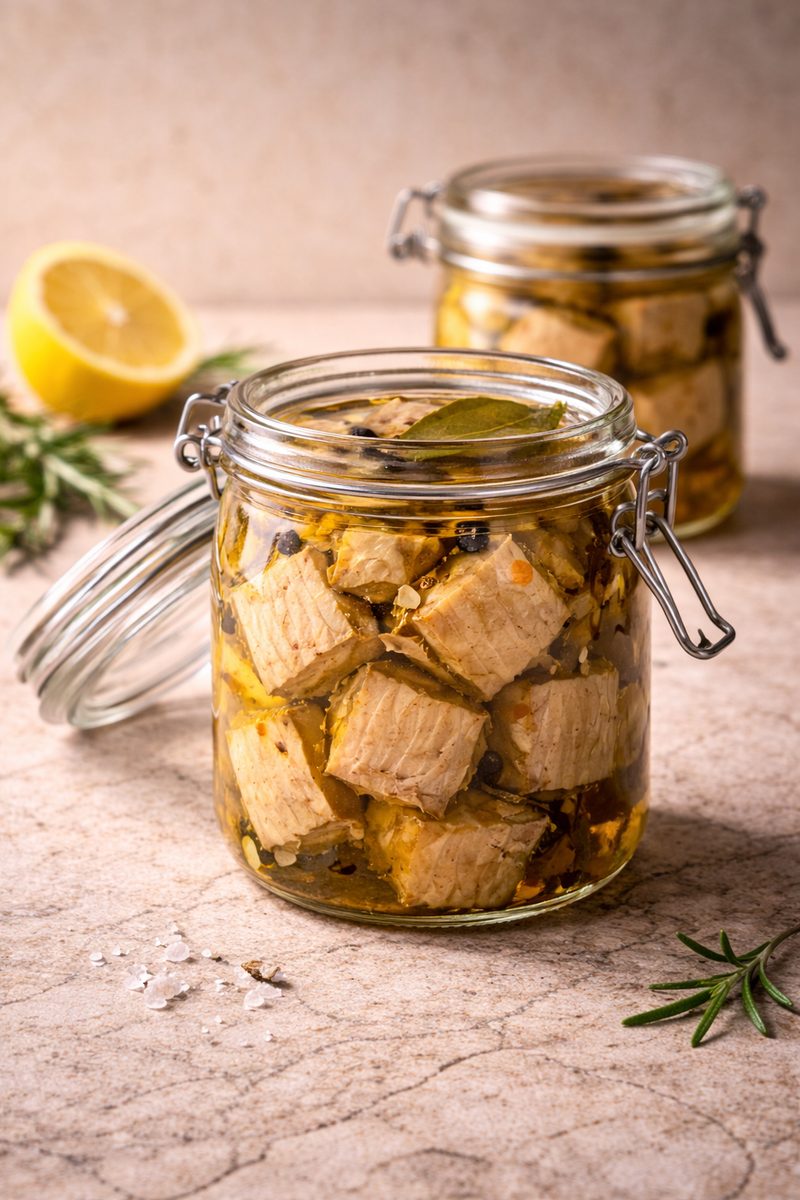
Le conserve di pesce spada dello Stretto di Messina sono preparazioni gastronomiche a base di uno dei pesci simbolo della città. Il pesce spada viene generalmente cotto e conservato in olio d’oliva, talvolta con aromi semplici come alloro, pepe o limone, per preservarne il sapore intenso e la consistenza compatta. Si trovano in vasetti o lattine prodotti da piccole aziende locali o gastronomie siciliane. Il risultato è un prodotto pronto da gustare che richiama immediatamente i profumi del mare dello Stretto.
Why it's special
Il pesce spada è profondamente legato all’identità dello Stretto di Messina, dove la sua pesca rappresenta una tradizione antica e spettacolare. Ancora oggi viene praticata con le caratteristiche feluche, lunghe barche dotate di torre di avvistamento e passerella per l’arpionaggio. Questa tecnica artigianale è diventata uno dei simboli culturali della costa tra Messina e la Calabria. Le conserve permettono di trasformare un prodotto fresco e stagionale in un alimento che conserva memoria di questa tradizione marinara. In questo modo il pesce spada entra anche nella quotidianità domestica e nella cucina locale.
History
La pesca del pesce spada nello Stretto ha radici antiche, probabilmente già praticata in epoca greca e romana grazie alle particolari correnti e rotte migratorie del pesce in questa zona. Nel tempo si è sviluppato il sistema tradizionale delle feluche, ancora oggi riconoscibile lungo le coste messinesi. Poiché il pesce spada è fortemente stagionale, la conservazione in olio è diventata una pratica diffusa per prolungarne la disponibilità durante l’anno. Con l’evoluzione delle piccole industrie alimentari siciliane, queste preparazioni sono state confezionate e commercializzate come specialità regionale. Oggi rappresentano una delle forme più accessibili per portare a casa il sapore del pesce spada dello Stretto.
Price
€8-€20 a vasetto circa, a seconda della qualità e del produttore
Where to find it
Si trovano facilmente nelle gastronomie, nelle botteghe alimentari tradizionali e nei negozi di specialità siciliane nel centro di Messina. Molti negozi vicino al porto o nelle vie commerciali propongono conserve prodotte da aziende della costa messinese o della vicina area dello Stretto. Sono comuni anche nei mercati alimentari e nelle enoteche che vendono prodotti locali. Spesso vengono acquistate insieme ad altri prodotti del mare come bottarga o tonno sott’olio.
Discover Conserve di pesce spada dello Stretto on Trouvenir →
9. Limone Interdonato IGP
🍽️ Food Specialties
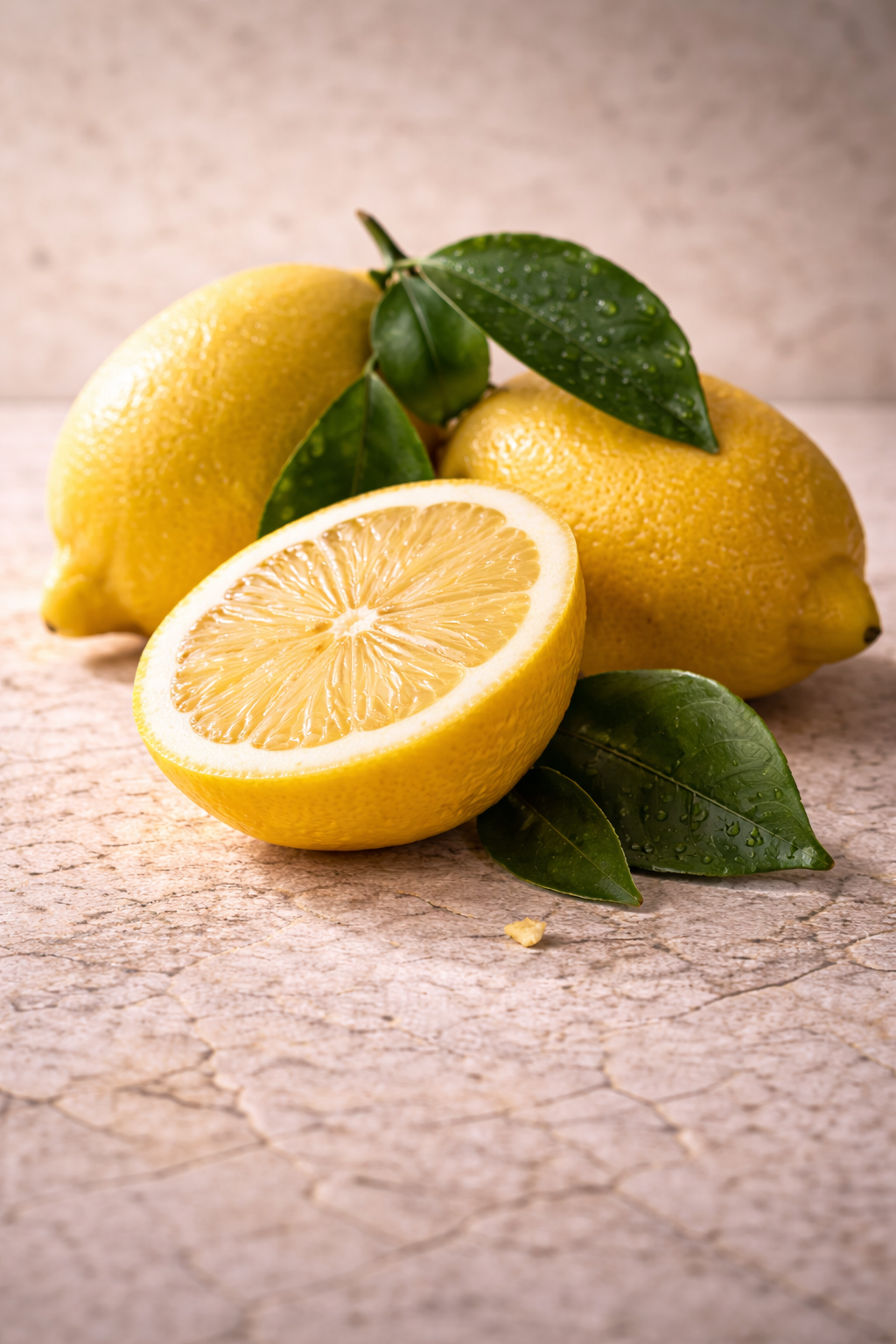
Il Limone Interdonato Messina IGP è una varietà di limone coltivata lungo la costa ionica della provincia di Messina, soprattutto tra i comuni di Roccalumera, Furci Siculo e Santa Teresa di Riva. Si riconosce per la forma allungata, la buccia sottile e liscia e il profumo molto delicato rispetto ad altri limoni mediterranei. Il succo è meno acido e più aromatico, caratteristica che lo rende apprezzato sia in cucina sia per il consumo fresco. La raccolta avviene precocemente, già tra settembre e ottobre, quando molti altri limoni italiani non sono ancora maturi.
Why it's special
Questo limone è uno degli agrumi più identitari della fascia ionica messinese e rappresenta un esempio concreto di agricoltura locale adattata al microclima tra mare e colline. La sua coltivazione ha contribuito per decenni all’economia agricola dei piccoli comuni della zona. L’Indicazione Geografica Protetta riconosce non solo la qualità del frutto ma anche il legame con il territorio e con le tecniche agricole tradizionali. Nella cucina locale viene usato per condire pesce, insalate, granite e dolci, diventando parte della quotidianità gastronomica della costa.
History
La varietà prende il nome dal colonnello Giovanni Interdonato, che nell’Ottocento sperimentò un innesto tra cedro e limone nelle campagne della zona di Messina. L’obiettivo era ottenere un agrume più precoce e profumato, adatto al clima locale e alla commercializzazione anticipata. La nuova varietà si diffuse rapidamente tra i coltivatori della fascia ionica grazie alla sua maturazione autunnale e alla buona qualità del frutto. Nel tempo la coltivazione si è concentrata soprattutto nell’area compresa tra Messina e Taormina, fino al riconoscimento dell’IGP nel 2020.
Price
€3–€8 al kg circa, a seconda della stagione e del punto vendita
Where to find it
Si trova facilmente nei mercati ortofrutticoli e nei negozi di prodotti locali della riviera ionica messinese, soprattutto durante la stagione autunnale. Molti produttori vendono cassette direttamente nei piccoli punti vendita agricoli lungo la SS114 tra Messina e Taormina. È comune anche nei mercati cittadini di Messina e nelle gastronomie che valorizzano i prodotti DOP e IGP siciliani. Alcuni agrumeti offrono vendita diretta durante il periodo di raccolta.
Discover Limone Interdonato IGP on Trouvenir →
10. Smoked swordfish from the Stretto
🍽️ Food Specialties
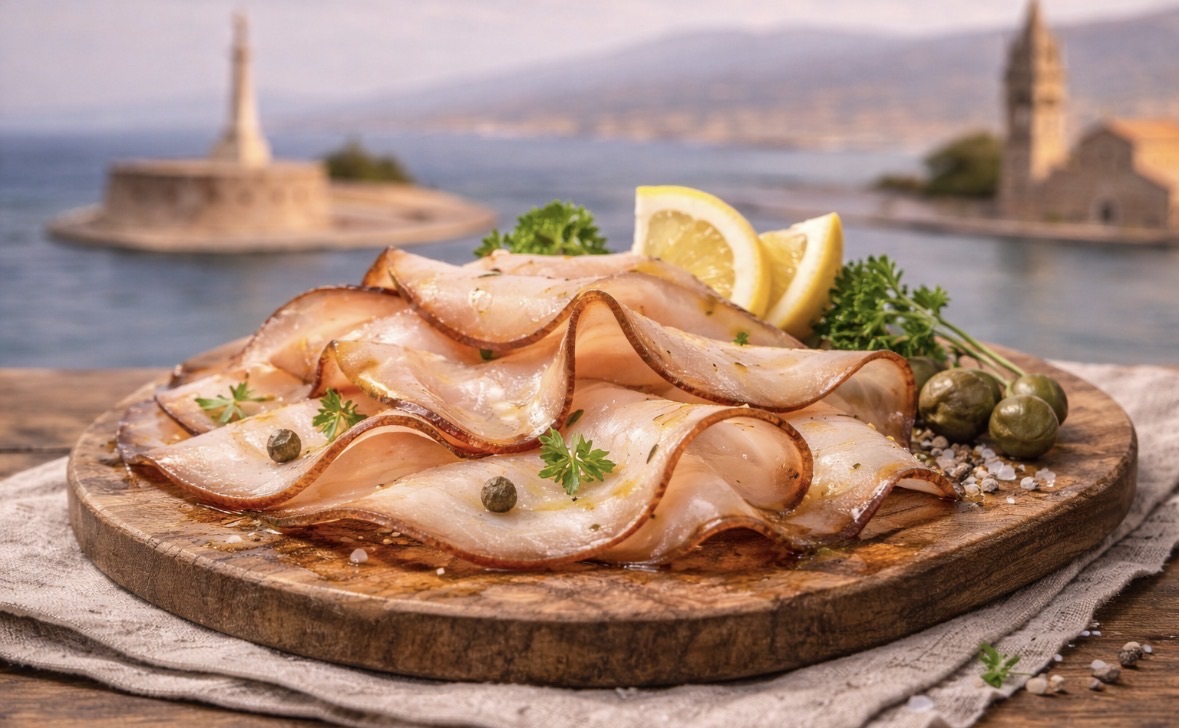
It is made from fresh swordfish steaks, lightly salted and slowly smoked with aromatic woods. The flesh remains firm, with an intense pink color and pale streaks. The aroma is delicate, never overpowering, with well-balanced marine and smoky notes. It is eaten in thin slices, often with olive oil, citrus, or wild herbs from the Stretto.
Why it's special
Smoked swordfish tells the story of Messina’s fishermen, its currents, and the long waits in open water. It is the symbol of a city that built its identity on the narrow passage between two worlds. It represents a cuisine born from respect for time, for the fish, and for manual craftsmanship. In every slice lies the Messinese idea that the sea is not exploited: it is understood and honored.
History
Swordfish fishing in the Stretto di Messina has been documented since ancient Greek and Roman times. Here a technique unique in the world was born: hunting from the feluca, with a harpoon thrown by sight, still practiced today according to rituals that have remained unchanged. Smoking emerged as a household preservation method, necessary to extend the life of a prized yet highly perishable fish. Over time it became an integral part of Messina’s coastal cuisine, tied to the seasons and the cycles of the sea.
Price
€10-€50
Where to find it
Artisanal fish processing workshops Historic gastronomic shops Traditional fish markets
Discover Smoked swordfish from the Stretto on Trouvenir →
11. Pignolata glassata from Messina
🍽️ Food Specialties
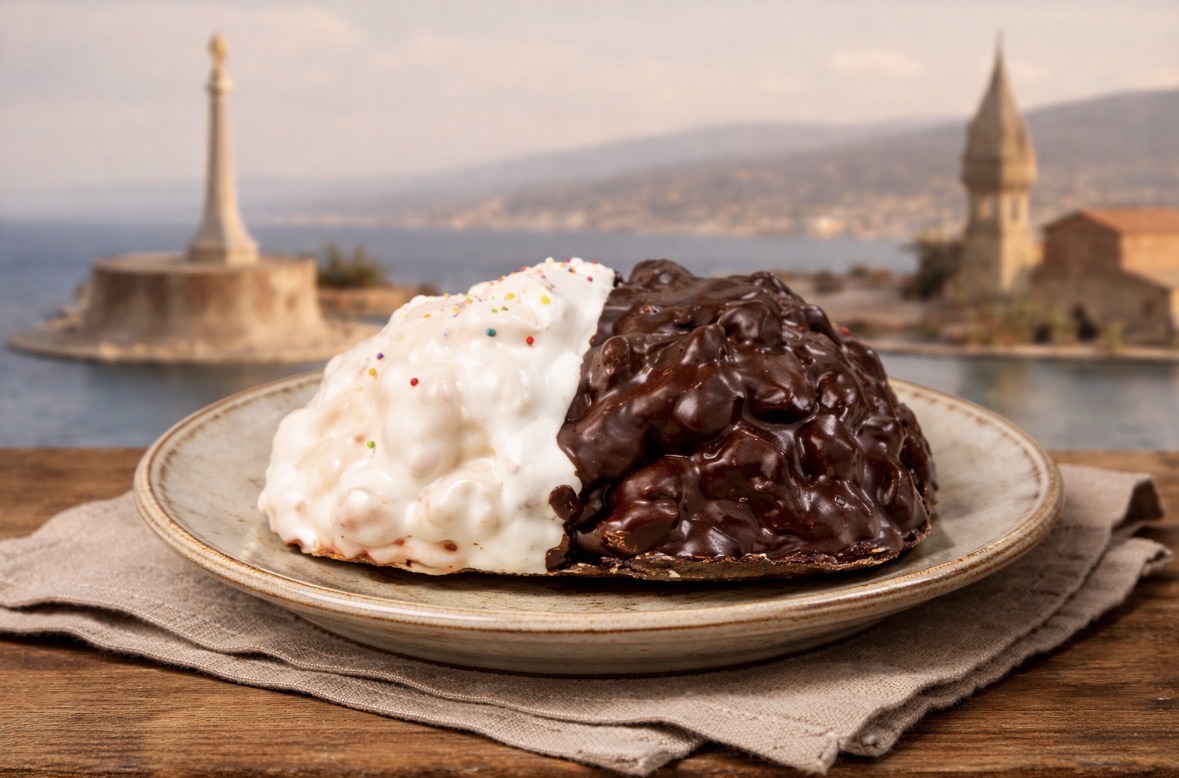
It is made of small balls of fried dough, soft on the inside and lightly crisp on the outside. They are piled into a small mound and covered with two different glazes: one light and scented with citrus, the other dark with cocoa. The appearance is irregular, almost spontaneous. It is served at room temperature, sliced like a festive cake.
Why it's special
Pignolata tells the convivial soul of Messina. It is a dessert not meant for one person, but for a group. It speaks of crowded tables, religious and family celebrations, and of a city that has learned to rebuild itself also through its culinary rituals. In every double glaze there is the meeting of different cultures that have crossed the Strait.
History
Pignolata was born in the 17th century in the convent and family kitchens of Messina. It derives from ancient sweets of Arab origin made with fried dough and honey, later transformed during the Baroque period with the introduction of two glazes: white with lemon and dark with cocoa. It soon became the dessert of major celebrations, especially Carnival and important civic festivities. After the earthquake of 1908 it remained one of the few gastronomic rituals that survived, becoming a symbol of domestic continuity.
Price
15-30 € al kg circa
Where to find it
Historic pastry shops Artisan laboratories of traditional sweets
Discover Pignolata glassata from Messina on Trouvenir →
12. Piparelli messinesi
🍽️ Food Specialties
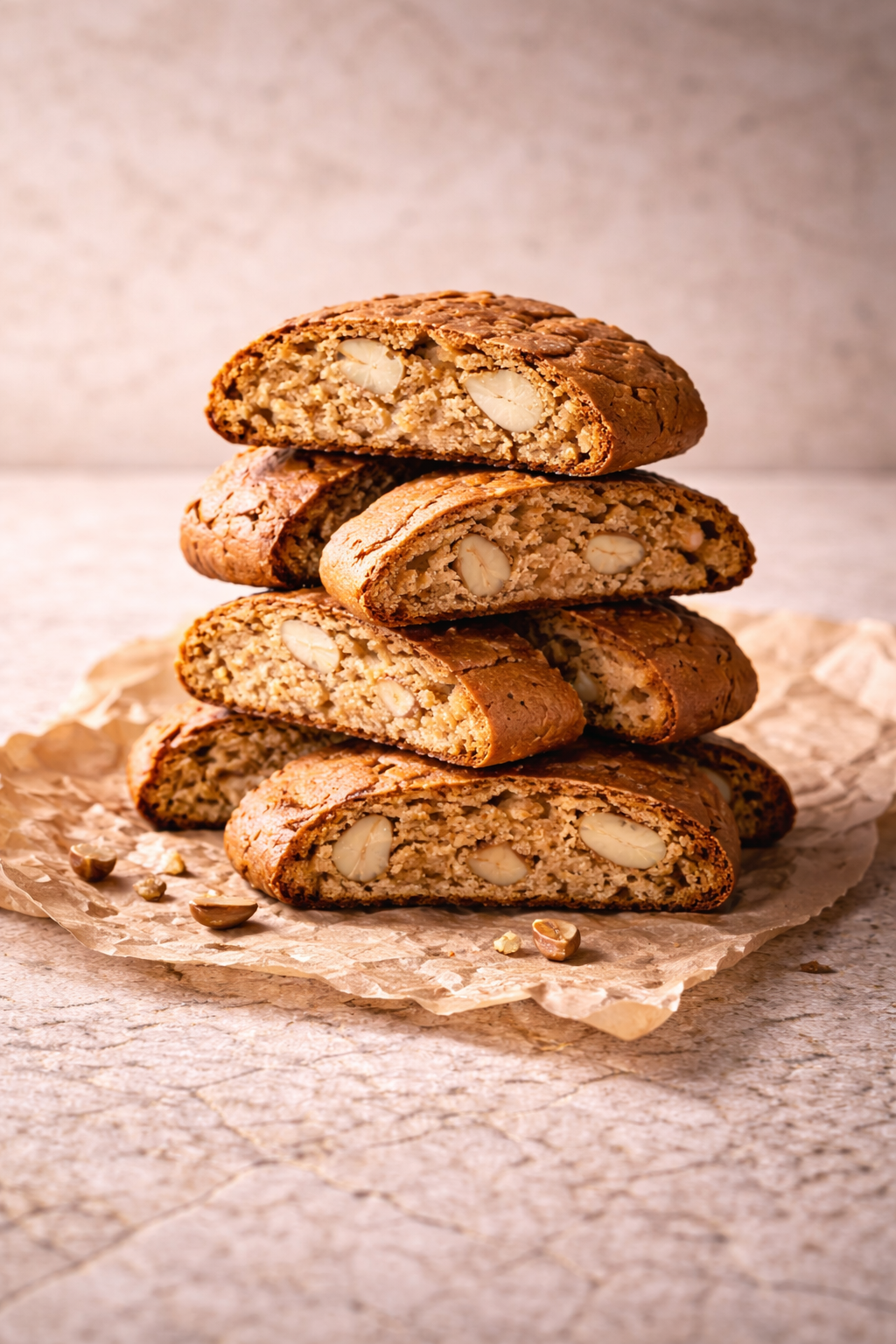
I piparelli sono biscotti secchi e molto croccanti tipici della tradizione dolciaria di Messina. Si preparano con farina, zucchero o miele, mandorle intere e un mix di spezie aromatiche come cannella, chiodi di garofano e talvolta pepe, che dà il nome al dolce. Dopo una prima cottura l’impasto viene tagliato a losanghe o rombi e rimesso in forno, ottenendo una consistenza dura e profumata. Il risultato è un biscotto speziato e intenso, pensato per essere conservato a lungo e gustato lentamente.
Why it's special
I piparelli fanno parte della tradizione dolciaria più identitaria di Messina e della Sicilia nord-orientale. Sono legati a una cultura alimentare in cui i biscotti secchi, ricchi di spezie e frutta secca, venivano preparati per durare nel tempo e accompagnare momenti conviviali. Il loro consumo è spesso associato al rito di intingerli in vini liquorosi come Malvasia o Zibibbo. Ancora oggi rappresentano un dolce che unisce la dimensione domestica della cucina siciliana con quella della socialità e dell’ospitalità.
History
Le origini dei piparelli vengono generalmente collocate tra l’età moderna e l’Ottocento nella tradizione pasticcera messinese. Il nome sembra derivare dal termine “pepe”, in riferimento alla presenza di spezie nell’impasto, caratteristica tipica dei biscotti antichi del Mediterraneo. Ricette simili circolavano nelle cucine conventuali e nelle famiglie della borghesia locale, dove spezie e mandorle erano ingredienti di pregio. Con il tempo i piparelli si sono diffusi come biscotto cittadino per eccellenza, diventando uno dei dolci più riconoscibili legati a Messina.
Price
€5-€12 a confezione
Where to find it
Si trovano facilmente nelle pasticcerie tradizionali e nei forni storici di Messina, spesso venduti in sacchetti o scatole semplici. Molti negozi del centro e delle zone turistiche li propongono anche in confezioni regalo insieme ad altri dolci siciliani. Nei mercati e nelle botteghe gastronomiche locali vengono spesso consigliati da accompagnare con vini dolci dell’isola. Alcune pasticcerie li producono ancora secondo ricette familiari tramandate.
Discover Piparelli messinesi on Trouvenir →
More souvenirs not to miss
Messina has much more to offer. Here are the other authentic souvenirs catalogued by Trouvenir:
- Provola dei Nebrodi — 🍽️ Food Specialties · €8-€20 a forma (circa 500 g – 1 kg)
- Stoccafisso alla ghiotta - preserve — 🍽️ Food Specialties · €10-€40
How to recognise an authentic souvenir in Messina
Authentic products from Messina are found in artisan workshops, local markets, and directly from producers — not in tourist shops in the city centre.
Practical rule
if a product has no indication of origin, producer, or production method, it's probably not what it seems.
Use Trouvenir to find certified workshops near you, with details on products, prices, and authenticity.