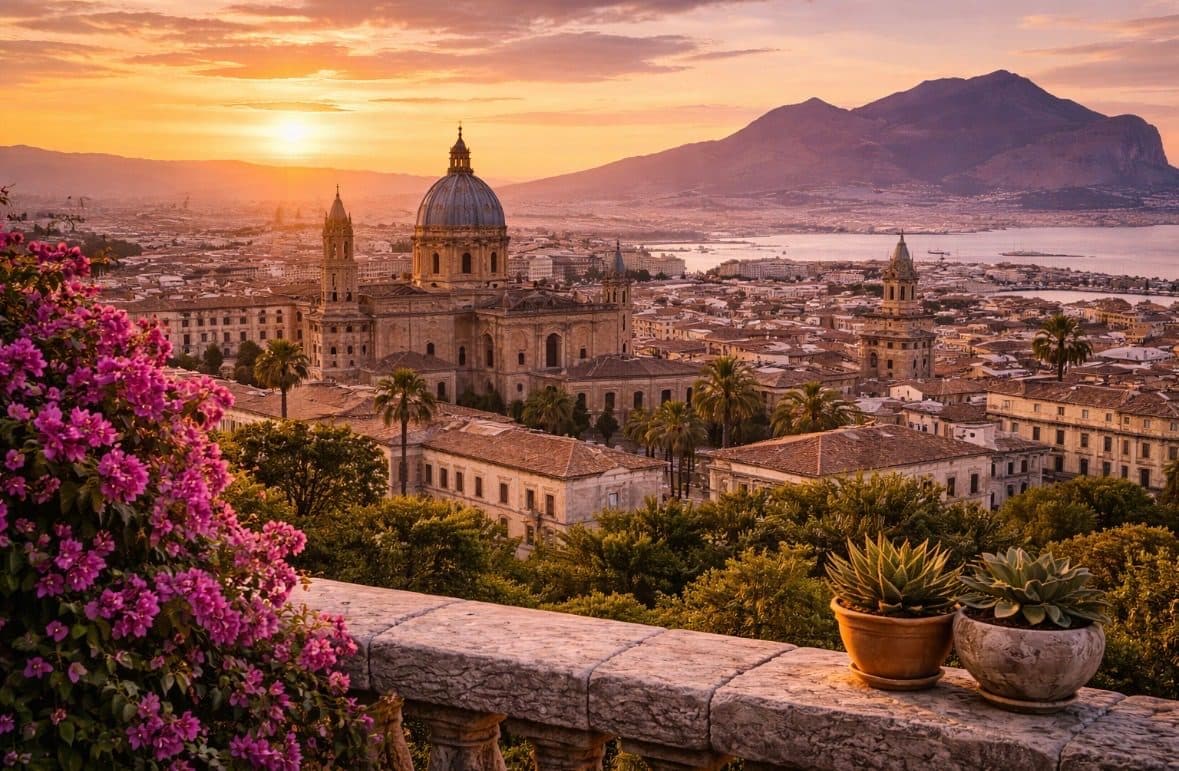
Palermo is one of Italy's destinations with the deepest artisanal and gastronomic traditions. Every product here reflects local history, craftsmanship, and culture — something you won't find elsewhere with the same authenticity.
This guide collects authentic souvenirs selected by the Trouvenir app for Palermo: local objects and specialties that truly capture the soul of the city, far from tourist stalls and mass-produced items. For each souvenir you'll find cultural context, price ranges, and where to buy with confidence.
1. Carretto siciliano
🏺 Craftsmanship
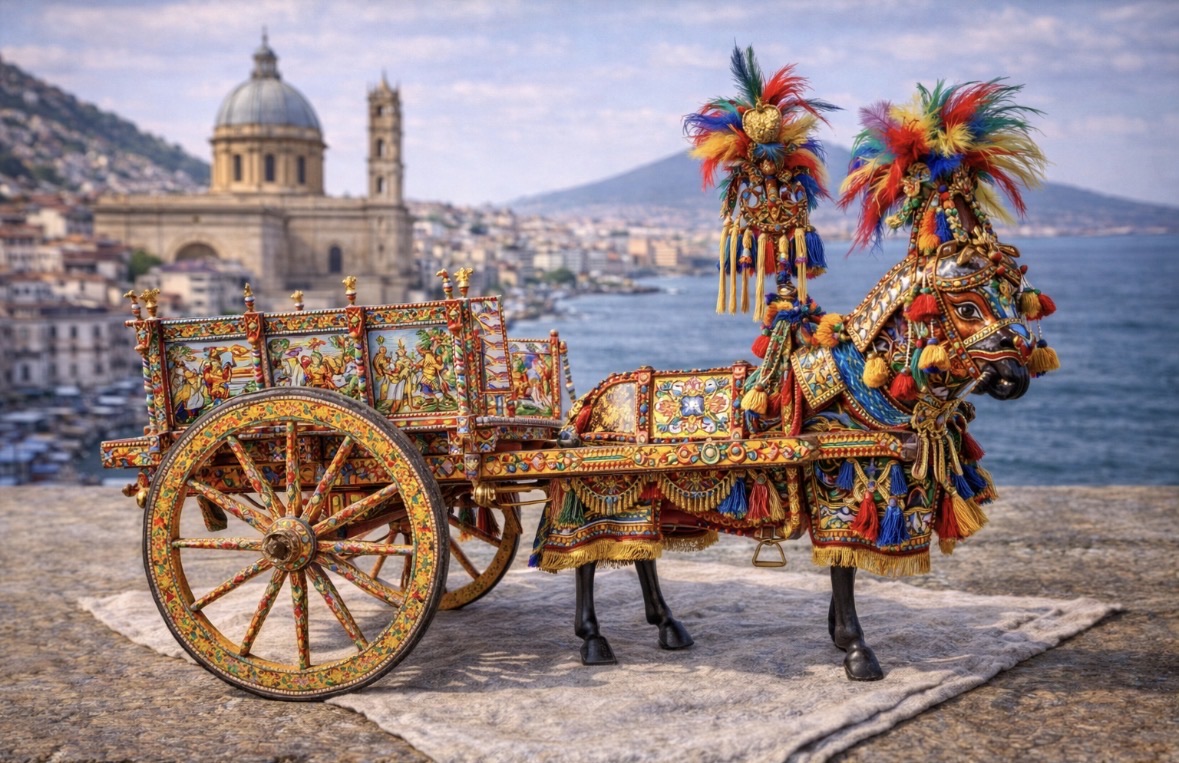
It is a small wooden cart, originally with two wheels, built with a sturdy structure and vibrant multicolored decorations. The surfaces are entirely hand‑painted with bright colors: red, yellow, blue, and green. Motifs include paladins, battles, patron saints, heraldic and floral symbols. Handcrafted models faithfully reproduce the proportions, painting, and carvings of the original cart, preserving the same narrative logic. Each piece is unique in composition and pictorial style.
It is an object that tells the story of Sicilia as a tale in motion. It is chosen by travelers who want to understand how everyday work can become an artistic language. It is ideal for those seeking a souvenir that does not simply represent a vehicle, but a hand‑painted vision of the world.
Why it's special
The carretto siciliano tells of a Sicilia that relies on stories to find its bearings. It symbolizes an oral and visual culture where storytelling accompanies work and travel. It speaks of a people who have transformed everyday hardship into moments of beauty and pride. In this object lives the palermitana and Sicilian idea that identity is not kept still: it is carried around, shown, and told.
History
The carretto siciliano emerged between the eighteenth and nineteenth centuries as an agricultural and commercial means of transport, widespread across the island. In the palermitana area, a distinctive decorative tradition developed, linked to narrative painting on wood: the sides and panels became surfaces for storytelling. Scenes depict episodes from chivalric poems, the lives of saints, historical events, and moral symbols, turning the cart into a true “traveling book.” Every craft involved — cart maker, blacksmith, painter — contributes to a collective work. Today, the carretto siciliano is recognized as one of the strongest symbols of the island’s popular identity.
Price
€50-€250
Where to find it
Artisan workshops of cart makers and painters Traditional craft shops Museum spaces and collections dedicated to Sicilian culture
Discover Carretto siciliano on Trouvenir →
2. Carretto siciliano dipinto (miniatura)
🏺 Craftsmanship
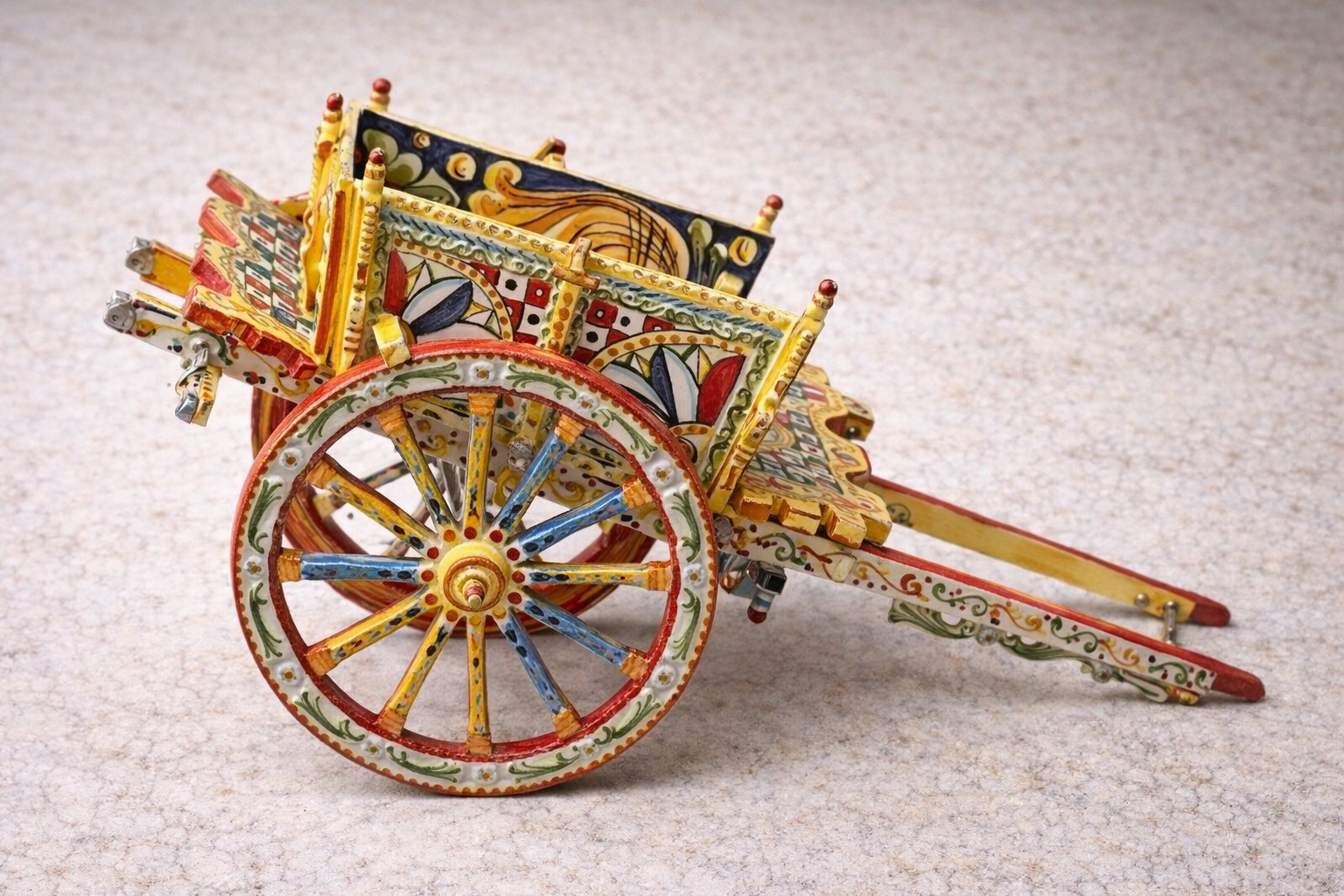
La miniatura del carretto siciliano riproduce in scala uno dei veicoli tradizionali più iconici della Sicilia, famoso per le sue decorazioni vivacissime. I carretti originali erano interamente dipinti a mano con scene tratte dai poemi cavallereschi, episodi storici, santi o momenti della vita popolare. Le versioni souvenir mantengono lo stesso linguaggio visivo: colori intensi, ruote ornate e piccoli pannelli figurativi ricchi di dettagli. Ogni pezzo richiama l'estetica teatrale e narrativa che ha reso celebre questo simbolo della cultura siciliana.
Why it's special
Il carretto siciliano è uno dei simboli visivi più forti dell'identità popolare dell'isola. Tra Ottocento e primo Novecento era il principale mezzo di trasporto per merci e persone, soprattutto nelle aree rurali. La sua decorazione non era solo ornamentale: raccontava storie epiche come quelle dei paladini di Carlo Magno, episodi religiosi o scene di orgoglio locale. Questo intreccio tra lavoro quotidiano, arte popolare e narrazione epica ha reso il carretto un vero manifesto della cultura visiva siciliana.
History
Il carretto siciliano si sviluppò tra il XVIII e il XIX secolo come mezzo di trasporto trainato da cavalli o muli. Con il tempo, artigiani specializzati – falegnami, fabbri e pittori – trasformarono il veicolo in un oggetto artistico complesso. Le decorazioni pittoriche, spesso ispirate all'opera dei pupi e ai racconti cavallereschi, divennero un tratto distintivo soprattutto nelle province di Palermo, Catania e Ragusa. Con l'arrivo dei camion nel Novecento il carretto perse la sua funzione pratica, ma rimase un potente simbolo culturale e artistico, oggi celebrato in festival, musei e produzioni artigianali.
Price
10-60 €
Where to find it
A Palermo le miniature si trovano facilmente nelle botteghe di artigianato del centro storico, in particolare nelle zone intorno ai Quattro Canti, alla Vucciria e al mercato di Ballarò. Alcuni negozi specializzati in arte popolare siciliana vendono pezzi dipinti a mano realizzati da artigiani locali. Nei mercati turistici si trovano anche versioni più semplici e accessibili, mentre gallerie e botteghe tradizionali propongono modelli più curati e fedeli ai carretti storici.
Discover Carretto siciliano dipinto (miniatura) on Trouvenir →
3. Woven Sicilian coffa
🏺 Craftsmanship
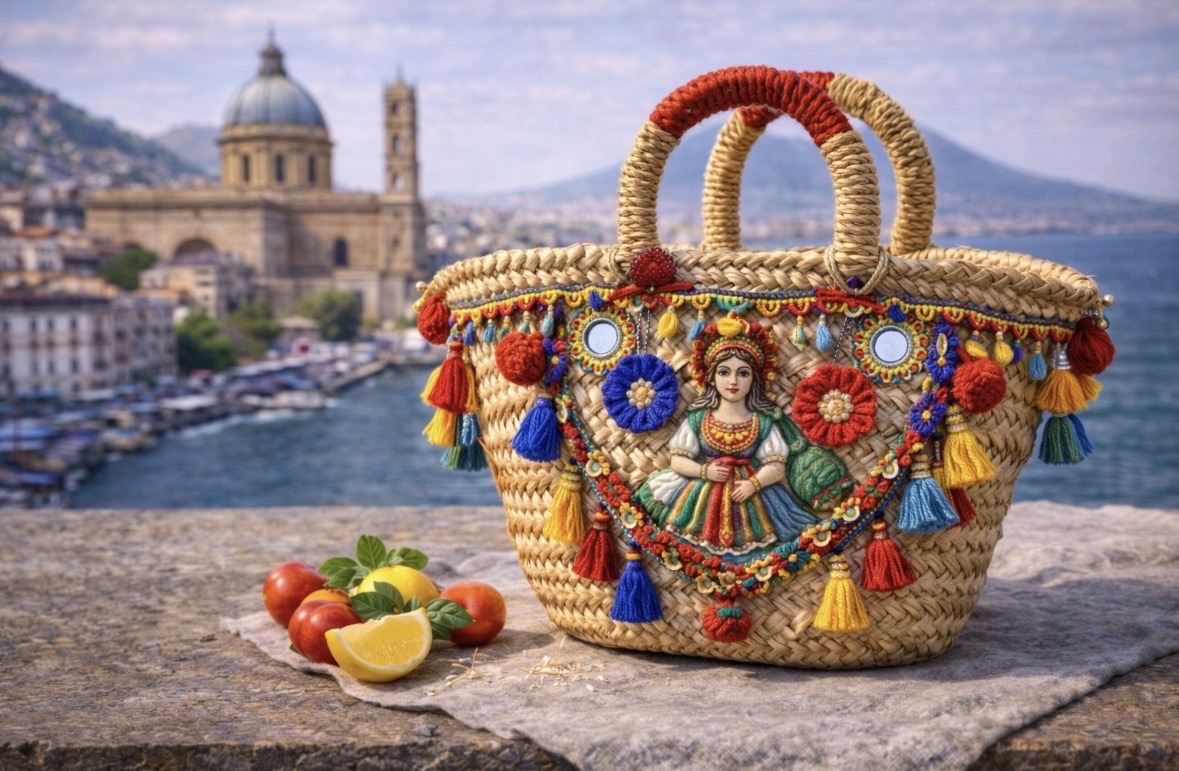
It is a rigid or semi-rigid bag handwoven with natural fibers. The shape is wide, often trapezoidal or oval, designed to carry weight. The handles can be made of braided fiber, rope, or leather. Traditional versions are neutral or decorated with textile inserts, pom-poms, or simple embroidery. Each coffa has slight irregularities that reveal its handmade craftsmanship.
It is an object created to serve, not to decorate. It is chosen by travelers who want to understand Sicily of everyday work and repeated gestures. It is ideal for those seeking a souvenir that tells the story of Palermo and its countryside through use, durability, and time.
Why it's special
The coffa tells the story of a practical Sicily, closely tied to the land and to necessity. It symbolizes a culture that has always valued durability over appearance. It evokes markets, countryside life, and journeys made on foot under the sun. Within this object lives the Palermo idea that beauty is not born from ornament, but from a function carried out well, every day.
History
The coffa is a traditional woven bag from western Sicily, historically widespread also in the area of Palermo and its agricultural hinterland. It originated as a functional container for transporting food, tools, and goods, used by farmers, shepherds, and traveling vendors. Originally made with local plant fibers — dwarf palm, rush, and asphodel — the coffa is handwoven using techniques passed down orally. Over time, especially between the nineteenth and twentieth centuries, decorations in fabric, wool, or leather were added to its essential structure, without ever losing its identity as a practical object.
Price
€30-€80
Where to find it
Weaving craft workshops Traditional artisan shops Historic markets connected to farming culture
Discover Woven Sicilian coffa on Trouvenir →
4. Coppola siciliana
🏺 Craftsmanship
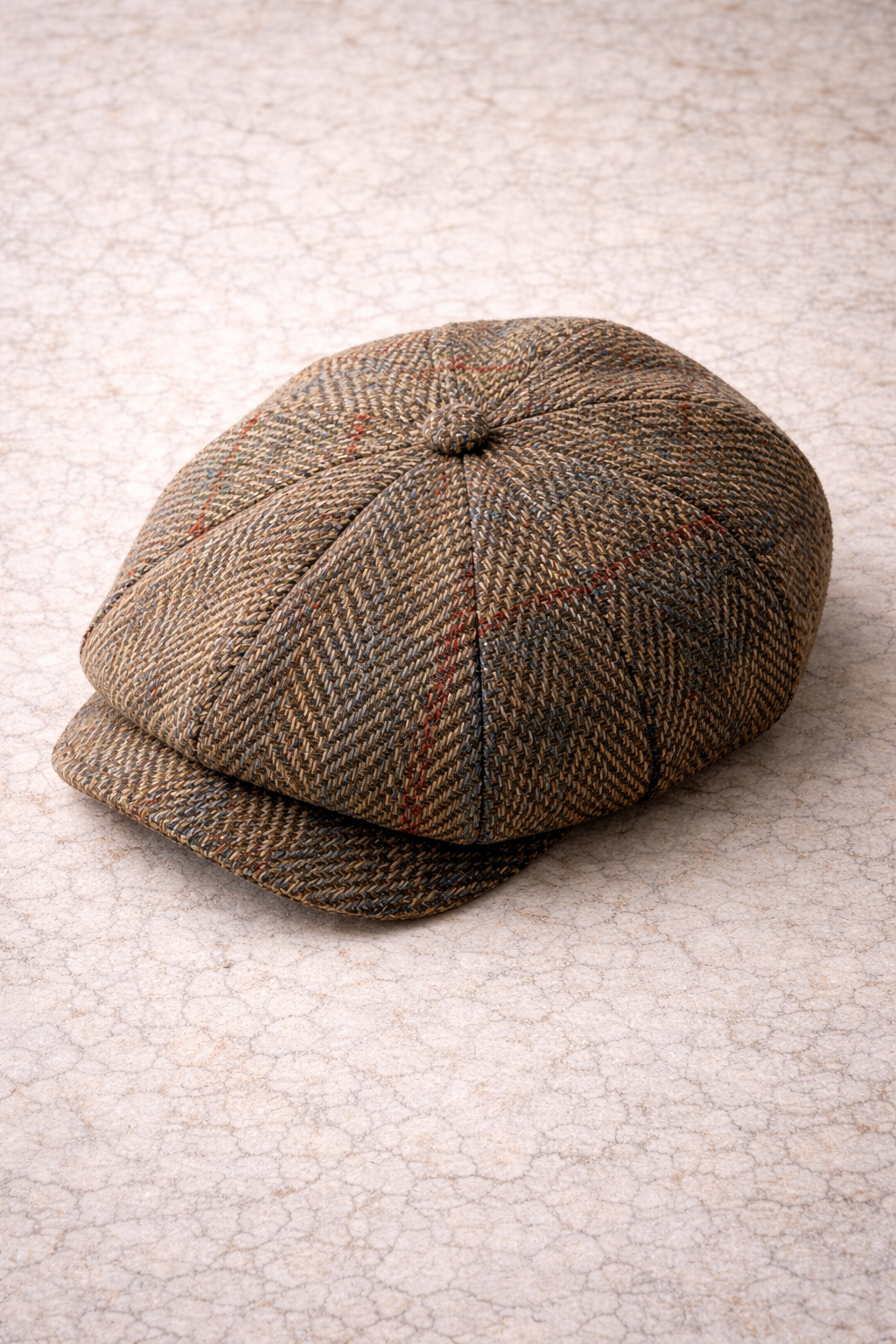
La coppola è un berretto maschile a visiera corta, realizzato tradizionalmente in lana, tweed o cotone pesante. Ha una forma morbida e leggermente piatta, con cuciture che modellano la calotta e una piccola visiera rigida sul davanti. In Sicilia è stata per decenni parte dell’abbigliamento quotidiano maschile, soprattutto tra lavoratori, contadini e artigiani. Oggi si trova in vari tessuti e colori, dalle versioni più classiche a reinterpretazioni contemporanee prodotte da sartorie e botteghe locali.
Why it's special
La coppola è uno dei simboli più riconoscibili della cultura popolare siciliana. Per molto tempo ha rappresentato l’abbigliamento quotidiano delle classi lavoratrici, diventando quasi una divisa informale per contadini, carrettieri e operai tra XIX e XX secolo. Nel tempo il berretto è entrato nell’immaginario collettivo dell’isola, anche attraverso cinema, teatro e fotografia. Oggi la coppola è reinterpretata sia come segno di appartenenza culturale sia come accessorio di stile legato all’identità mediterranea.
History
L’origine della coppola non è esclusivamente siciliana: berretti simili erano diffusi in molte regioni europee tra Settecento e Ottocento, in particolare tra lavoratori britannici e dell’Europa meridionale. In Sicilia il modello si diffuse ampiamente tra XIX e inizio XX secolo, probabilmente attraverso scambi commerciali e culturali con il mondo anglosassone. Qui però il cappello fu rapidamente adottato dalla popolazione locale e integrato nel costume quotidiano maschile. Con il tempo è diventato un elemento distintivo dell’immagine siciliana, anche grazie alla sua presenza nella cultura popolare e nei racconti visivi dell’isola.
Price
15–60 € circa, a seconda di tessuto e manifattura
Where to find it
A Palermo la coppola si trova facilmente in mercati storici come Ballarò o il Capo, ma anche in cappellerie tradizionali del centro storico. Alcune sartorie e botteghe artigiane propongono modelli realizzati in Sicilia con tessuti più ricercati. Nei negozi vicino ai luoghi turistici si trovano anche versioni più economiche pensate per i visitatori. Le cappellerie storiche restano i luoghi migliori per vedere modelli di qualità e ricevere consigli sulla vestibilità.
Discover Coppola siciliana on Trouvenir →
5. Pupi siciliani (marionette)
🏺 Craftsmanship
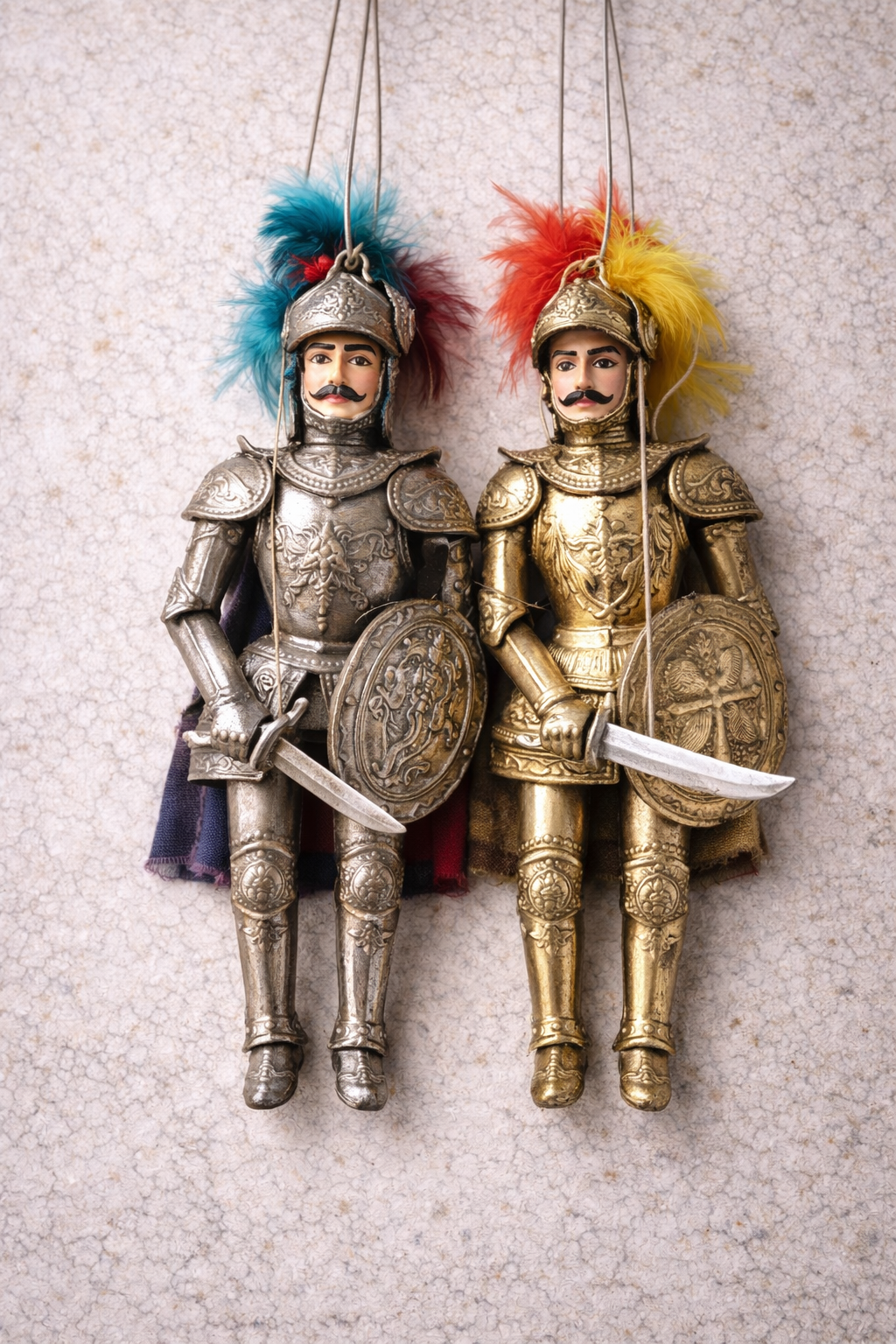
I pupi siciliani sono marionette armate che rappresentano cavalieri medievali, paladini di Carlo Magno e personaggi epici della tradizione cavalleresca. Realizzati in legno, metallo e tessuti decorati, sono caratterizzati da armature lucenti, elmi elaborati e scudi dipinti. Anche nelle versioni più piccole vendute come souvenir mantengono molti dettagli artigianali tipici delle marionette usate in teatro. A Palermo sono spesso raffigurati personaggi celebri come Orlando, Rinaldo o Angelica, protagonisti delle storie narrate nell’Opera dei Pupi.
Why it's special
L’Opera dei Pupi è uno dei simboli più riconoscibili della cultura popolare siciliana ed è stata iscritta nel 2001 nella lista UNESCO del patrimonio culturale immateriale dell’umanità. Questo teatro di marionette raccontava storie epiche di cavalieri cristiani e saraceni, diventando per secoli una forma di intrattenimento popolare nelle città e nei quartieri siciliani. I pupi non erano solo oggetti scenici ma strumenti narrativi che trasmettevano valori come onore, coraggio e lealtà. Ancora oggi rappresentano una memoria viva della tradizione teatrale e artigianale dell’isola.
History
L’Opera dei Pupi si sviluppò in Sicilia nel XIX secolo, con scuole principali a Palermo e Catania che differiscono per stile, dimensioni e meccanica delle marionette. Le storie messe in scena derivavano soprattutto dai cicli cavallereschi medievali, come la Chanson de Roland e i romanzi carolingi diffusi nella cultura europea. A Palermo i pupi sono generalmente più leggeri e manovrati dall’alto con fili e aste metalliche. Con il declino del teatro popolare nel secondo dopoguerra, molte compagnie scomparvero, ma alcune famiglie di pupari hanno continuato la tradizione mantenendola viva fino a oggi.
Price
20–300 € a seconda di dimensioni e lavorazione
Where to find it
A Palermo piccoli pupi decorativi si trovano nelle botteghe artigiane del centro storico, soprattutto nelle zone attorno a via Bara all’Olivella e ai Quattro Canti. Alcuni laboratori storici producono ancora pupi secondo metodi tradizionali e permettono di vedere da vicino il lavoro degli artigiani. Il Museo Internazionale delle Marionette Antonio Pasqualino è un punto importante per comprendere la tradizione e spesso ospita spettacoli e vendita di riproduzioni. Negozi culturali e librerie specializzate propongono versioni più piccole pensate per i visitatori.
Discover Pupi siciliani (marionette) on Trouvenir →
6. Palermitan Sicilian Pupo
🏺 Craftsmanship
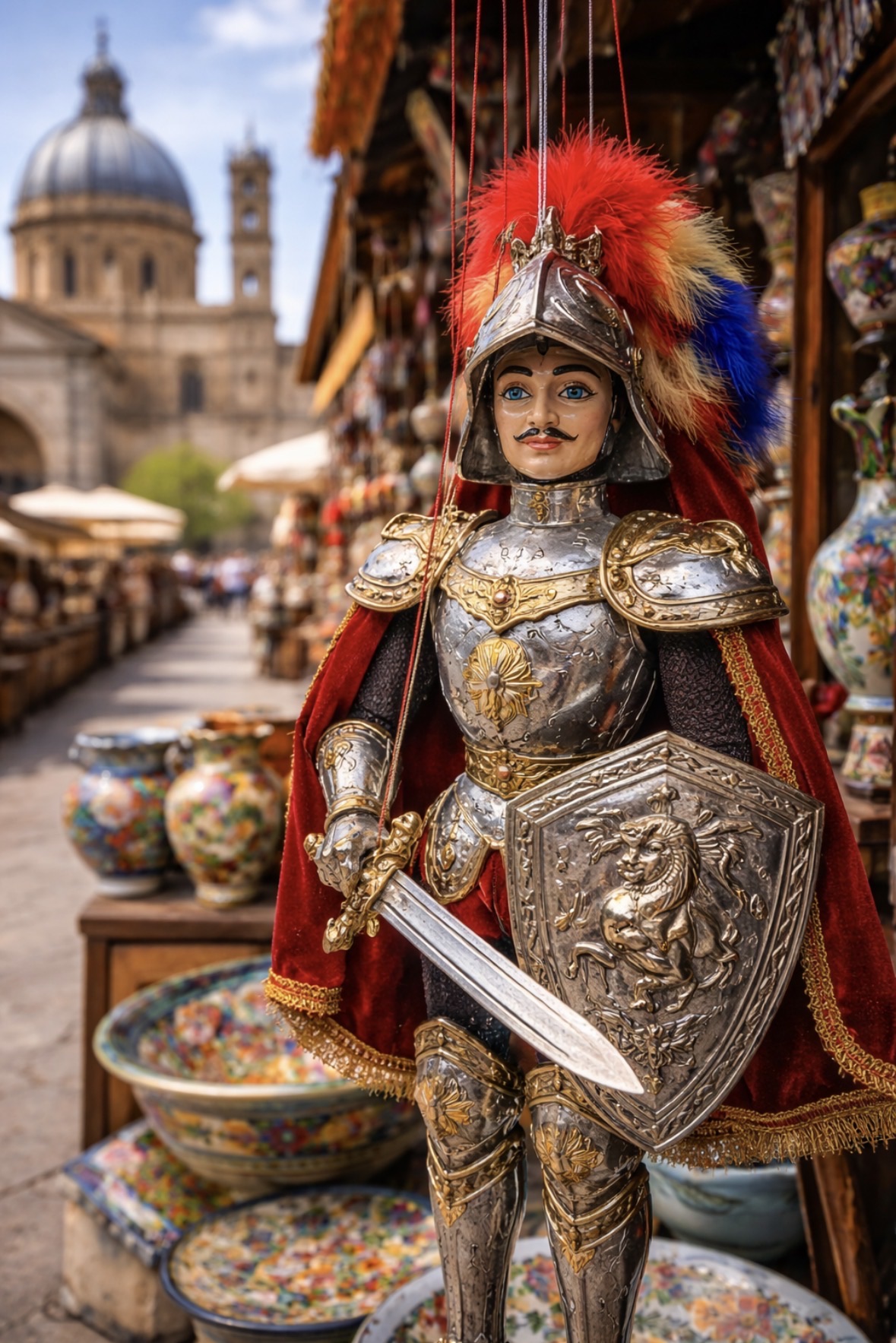
It is a carved wooden figure with armor made of embossed and decorated metal, complete with helmet, shield, and sword. The face is hand-painted, with pronounced features and a proud gaze. The body is articulated through wires and rods that allow precise stage movements. Sizes vary: from full theater puppets to smaller versions designed for home display or collecting. Each pupo is different, born from a unique combination of carving, painting, and metalwork.
It is an object that tells the story of Palermo through epic and popular storytelling. Travelers choose it to understand how a city transforms collective memory into theater. It is ideal for those seeking a souvenir that represents not just a character, but an entire way of narrating the world.
Why it's special
The Palermitan pupo represents justice, honor, and the conflict between good and evil. It tells of a Palermo that has always needed powerful stories to explain the world and endure hardship. It symbolizes an oral and theatrical culture in which storytelling is a tool of education and identity. In this object lives the Palermitan idea that memory is not preserved only in books, but staged every evening before a community.
History
The Sicilian pupo was born in the 19th century as the protagonist of the Opera dei Pupi, a form of popular theater developed in Sicily and especially vibrant in Palermo. Puppeteers stage the deeds of the paladins of Charlemagne, drawing from medieval chivalric cycles adapted to popular language and values. In Palermo the pupo takes on specific characteristics: a slimmer structure, fluid movements, and greater attention to dialogue and storytelling rather than combat. For decades this theater became a true popular "moral school," until the Opera dei Pupi was recognized as UNESCO Intangible Cultural Heritage in 2001.
Price
€80-€300
Where to find it
Artisan workshops of pupari Shops connected to traditional popular theater Museum spaces dedicated to the Opera dei Pupi
Discover Palermitan Sicilian Pupo on Trouvenir →
7. Palermitan gold thread embroidery
🏺 Craftsmanship
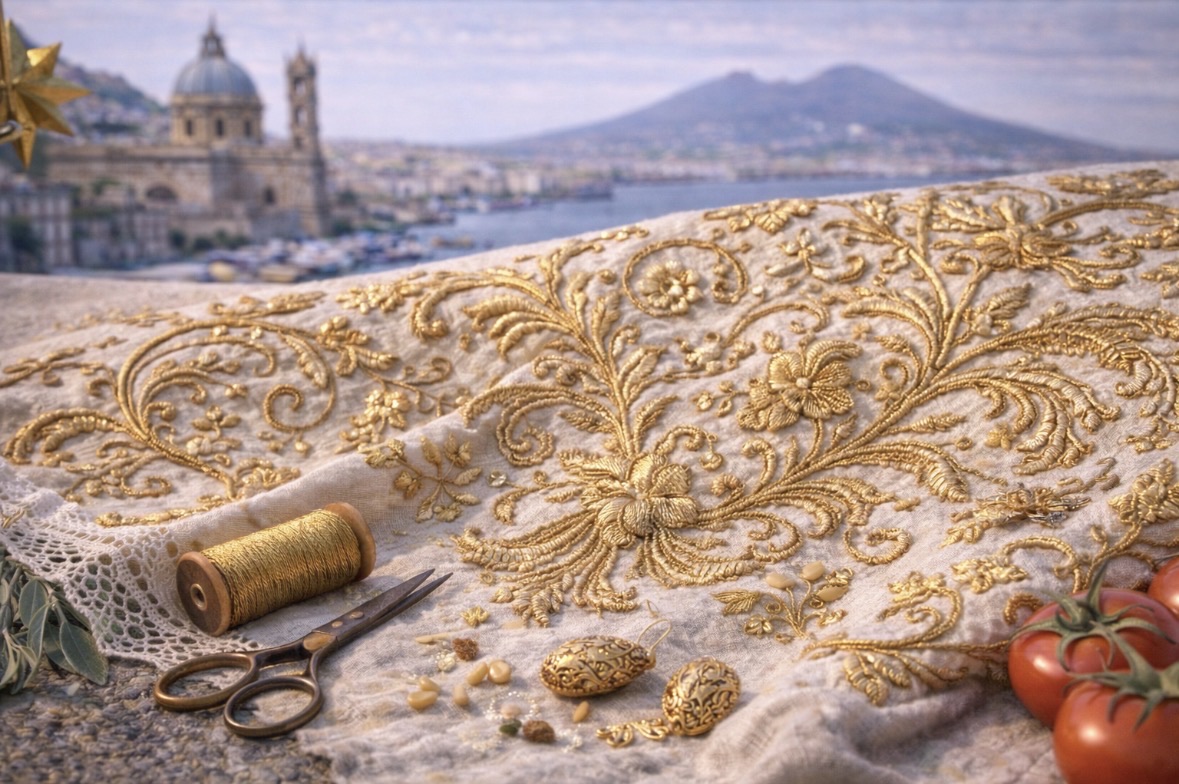
This embroidery is created using golden metallic threads applied to precious fabrics such as velvet, silk, or sturdy linen. The motifs are solemn and symbolic: scrolls, stylized flowers, rays, stars, and sacred inscriptions. The technique involves laying the gold thread on the surface and securing it with fine silk stitches, creating luminous relief effects. Traditionally these embroideries form part of sacred vestments, processional banners, altar elements, and ritual objects.
It tells the story of Palermo through light and devotion. It is ideal for travelers who want to understand the deep bond between craftsmanship and sacred tradition. It appeals to those seeking a souvenir not meant for everyday use, but to mark the most solemn moments of collective life.
Why it's special
Gold thread embroidery tells the story of a ceremonial and layered Palermo. It is the visible sign of a city that has long entrusted precious materials with the task of making the sacred visible. It speaks of slow processions, of light moving through the streets, of communities recognizing themselves in shared symbols. Within this object lives the Palermitan idea that beauty is not meant to distinguish, but to unite through ritual.
History
The tradition of gold thread embroidery in Palermo took shape between the Middle Ages and the early modern period, supported by the city’s role as the capital of the Kingdom of Sicily. Arab, Byzantine, and Spanish influences converged in a highly refined textile production often connected to churches, monasteries, and confraternities. These embroideries became an integral part of major religious celebrations, accompanying statues, fercoli, and sacred vestments. Over time, the technical knowledge has been preserved by specialized artisans and passed down through long, rigorous apprenticeships.
Price
€80-€300
Where to find it
Artisan workshops specializing in sacred embroidery Contexts connected to confraternities and processional traditions Shops dedicated to artistic textile craftsmanship
Discover Palermitan gold thread embroidery on Trouvenir →
8. Palermitano devotional rosary
🏺 Craftsmanship
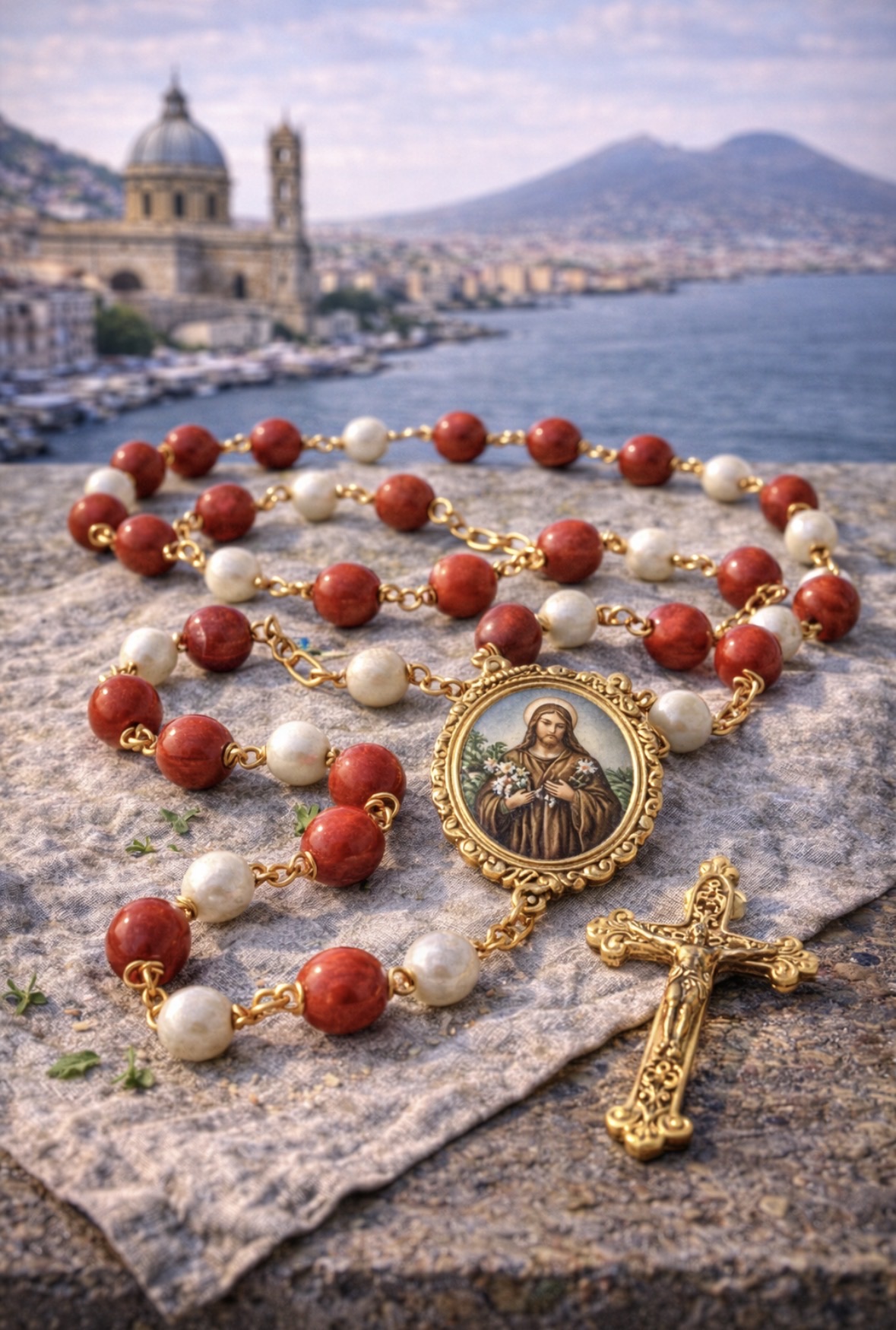
It is a string of beads linked by metal wires, ending in a cross. Traditional materials include wood, bone, glass, and plain metal; sometimes coral or natural seeds. The beads are often small, intended for everyday, discreet use. The cross is simple, without excessive decoration. Each rosary shows slight irregularities, a sign of manual workmanship and real use.
It is an object that tells the story of Palermo through the gesture of repetition and waiting. Travelers choose it to understand a form of everyday religiosity that is quiet and unshowy. It is ideal for those looking for a souvenir that isn’t displayed, but held in the hands, like slow time.
Why it's special
The devotional rosary reflects a Palermo that has long lived with uncertainty. It symbolizes a practical faith, made of repeated words used to endure. It speaks of homes rather than altars; of worn hands rather than solemn processions. In this object lives the Palermitan idea that spirituality is not spectacle, but a quiet companion in difficult moments.
History
The spread of the rosary in Palermo became established between the late Middle Ages and the early modern period, particularly through the Dominican orders and lay confraternities. In the city, marked by plagues, famines, and earthquakes, the rosary became an instrument of protection and collective trust. Alongside its liturgical use, a local craft tradition developed, producing rosaries intended for domestic and personal devotion, often linked to city sanctuaries and Marian cults. The rosary thus entered everyday life as an intimate object, passed down and worn by use rather than preserved.
Price
€10-€40
Where to find it
Devotional artisan workshops Religious object workshops Spaces connected to sanctuaries and popular devotion
Discover Palermitano devotional rosary on Trouvenir →
9. Traditional textiles and embroidery
🏺 Craftsmanship
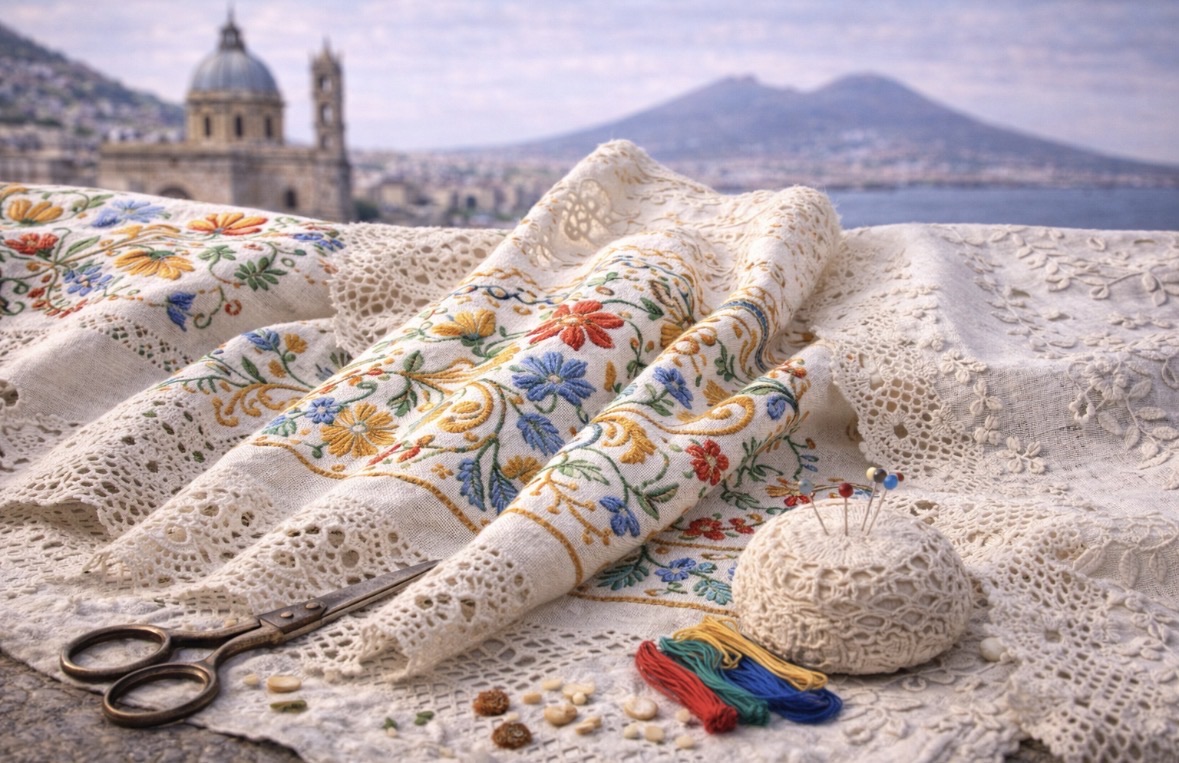
These are handmade textile crafts: tablecloths, bed sheets, bedspreads, ritual towels, and small decorative panels. The materials are natural — linen, cotton, sometimes light wool — worked on simple looms or embroidered freehand. The motifs are geometric, floral, or symbolic, often repetitive, with understated colors: white, ivory, écru, with touches of deep red or blue. Objects created for domestic use, designed to last and accompany everyday life.
They tell the story of Palermo through the slow rhythm of the home. Ideal for travelers who want to understand material culture, not only monumental heritage. Appreciated by those looking for a souvenir that is not displayed but lived with, shaped by quiet, repeated gestures.
Why it's special
Traditional textiles and embroidery reveal an intimate, feminine, domestic side of Palermo. They reflect a culture in which value is built over time, stitch by stitch. They speak of dowries, household linens, family transmission, and of hands that work without signing their creations. In these objects lives the Palermitan idea that beauty is not spectacle, but continuity.
History
The textile tradition in the Palermo area dates back to the Middle Ages, shaped by Arab, Norman, and later Spanish influence. Palermo was an important center for textile production and trade in the Mediterranean, and many decorative techniques entered domestic culture through monasteries and rural settings. Over the centuries, embroidery became a form of female knowledge passed down orally, closely tied to the preparation of a dowry and family life. These artifacts were not originally created as works of art, but as everyday necessities, and today they stand as tangible evidence of a layered domestic civilization.
Price
€40-€100
Where to find it
Textile artisan workshops Shops specializing in traditional embroidery Rural and artisan settings around Palermo
Discover Traditional textiles and embroidery on Trouvenir →
10. Testa di Moro
🏺 Craftsmanship
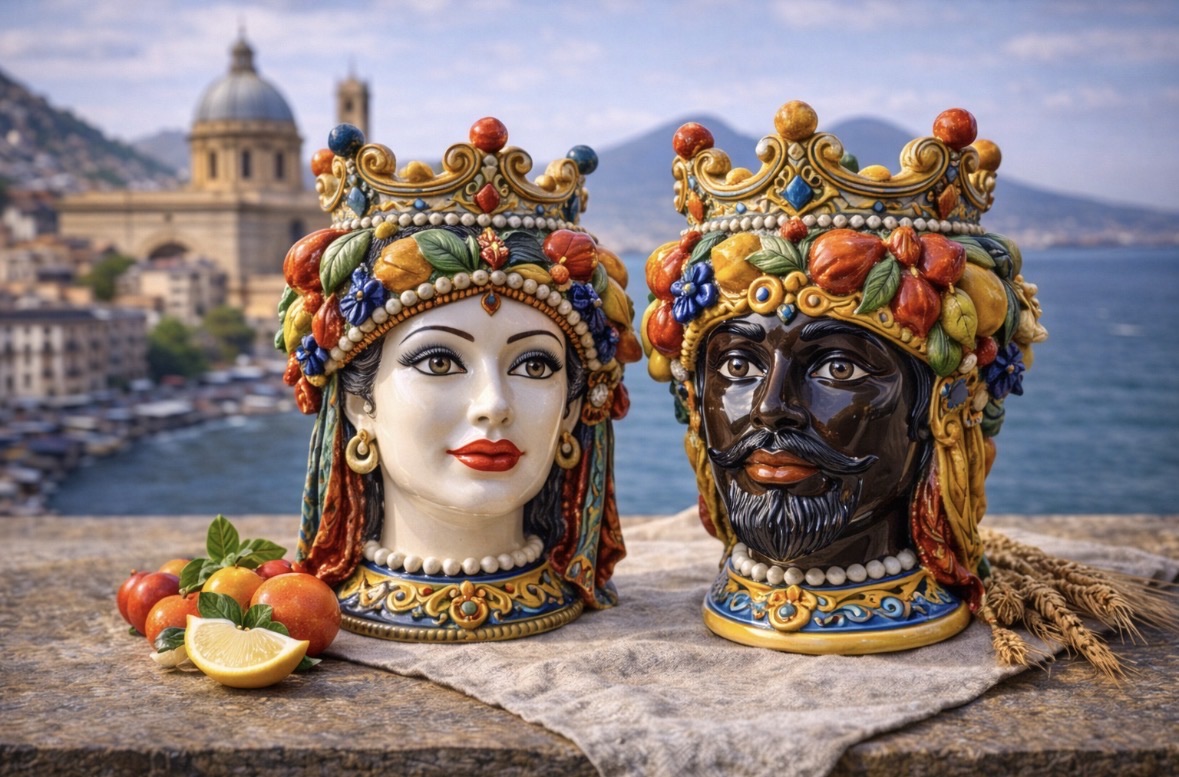
A ceramic vase shaped like a human head, male or female, often made in pairs. The features are striking: intense gazes, turbans, crowns, and painted jewelry. The surface is glazed and hand-decorated with vivid colors—green, blue, yellow, white, and black. Traditionally it is used as a container for aromatic or ornamental plants, especially basil. Each head differs in expression, decoration, and proportions.
It is an object that tells the story of Palermo through a legend of love, power, and identity. It is chosen by travelers who want to understand how a city transforms oral storytelling into a domestic form. It is ideal for those looking for a keepsake that combines beauty and unease, memory and everyday life.
Why it's special
The Testa di Moro reflects Palermo shaped by centuries of dominations and coexistence. It symbolizes absolute love, possession, revenge, and fertility. It speaks of a city that does not erase the complexity of its stories, but displays them in its homes. In this object lives the Palermitan idea that beauty can arise even from uncomfortable stories, and that memory is never neutral.
History
The Testa di Moro comes from a popular legend set in the Kalsa district of Palermo, dating back to the period of Arab rule (9th–11th century). The story tells of a young Palermitan woman who falls in love with a Moorish man; upon discovering that he is about to leave her, she kills him and uses his head as a vase for basil. The plant grows lush and fragrant, attracting the attention of the neighbors, who begin creating vases shaped like heads. From this symbolic episode emerged a ceramic tradition that, starting in Palermo, later spread throughout Sicilia, taking on different local stylistic variations.
Price
€40-€200
Where to find it
Artisan ceramic workshops Historic shops tied to Sicilian ceramic tradition Exhibition spaces dedicated to artistic craftsmanship
Discover Testa di Moro on Trouvenir →
11. Teste di Moro in ceramica
🏺 Craftsmanship
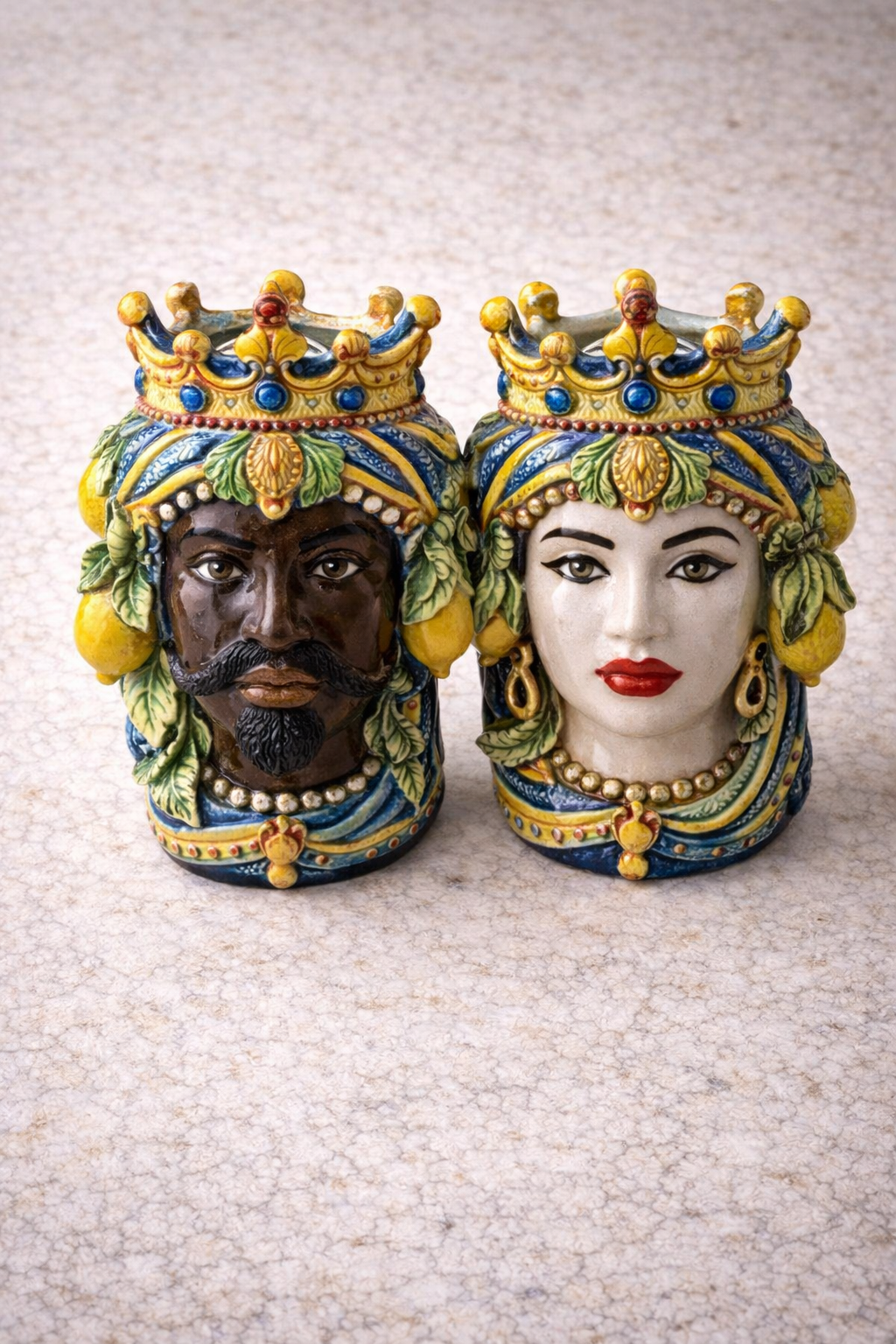
Le Teste di Moro sono vasi ornamentali in ceramica smaltata che raffigurano il volto di un uomo e spesso anche quello di una donna, entrambi sormontati da una corona che funge da vaso per piante o fiori. Sono realizzate e dipinte a mano, con colori vivaci e dettagli decorativi che richiamano lo stile barocco e la tradizione ceramica siciliana. Le dimensioni variano molto: da piccoli oggetti da scaffale fino a grandi pezzi pensati per balconi e terrazze. A Palermo e in tutta la Sicilia sono immediatamente riconoscibili e rappresentano uno degli oggetti più iconici dell’artigianato locale.
Why it's special
Le Teste di Moro sono diventate uno dei simboli visivi più riconoscibili della Sicilia e in particolare di Palermo. L’oggetto unisce artigianato ceramico, narrazione popolare e un immaginario estetico fortemente legato alla storia multiculturale dell’isola. La loro presenza sui balconi e nelle case riflette un gusto decorativo tipico del Mediterraneo, dove gli oggetti domestici hanno anche una funzione narrativa e simbolica. Oggi sono considerate un emblema dell’identità siciliana contemporanea, spesso reinterpretato anche nel design e nella moda.
History
La tradizione è legata a una celebre leggenda medievale palermitana ambientata nel quartiere della Kalsa durante la dominazione araba. Secondo il racconto, una giovane donna si innamorò di un uomo moro che però rivelò di avere una famiglia in Oriente; tradita, lo uccise e trasformò la sua testa in un vaso in cui coltivò del basilico. La pianta crebbe rigogliosa attirando l’invidia dei vicini, che iniziarono a commissionare vasi di ceramica a forma di testa umana per imitarla. Col tempo la storia si trasformò in un motivo decorativo diffuso, riprodotto dagli artigiani siciliani e diventato un classico della ceramica dell’isola.
Price
40–300+ € a seconda di dimensioni e lavorazione
Where to find it
A Palermo si trovano facilmente nelle botteghe di ceramica del centro storico, in particolare nelle strade attorno ai Quattro Canti, alla Vucciria e nei negozi artigianali vicino al Teatro Massimo. Molti negozi espongono coppie di teste di diverse dimensioni già pronte per essere usate come vasi decorativi. Alcuni pezzi provengono anche dalle botteghe di Caltagirone, città siciliana famosa per la ceramica artistica, e vengono venduti nelle gallerie e nei laboratori specializzati della città. È comune vederle anche sui balconi dei palazzi palermitani, piene di piante ornamentali.
Discover Teste di Moro in ceramica on Trouvenir →
12. Cannolo siciliano
🍽️ Food Specialties
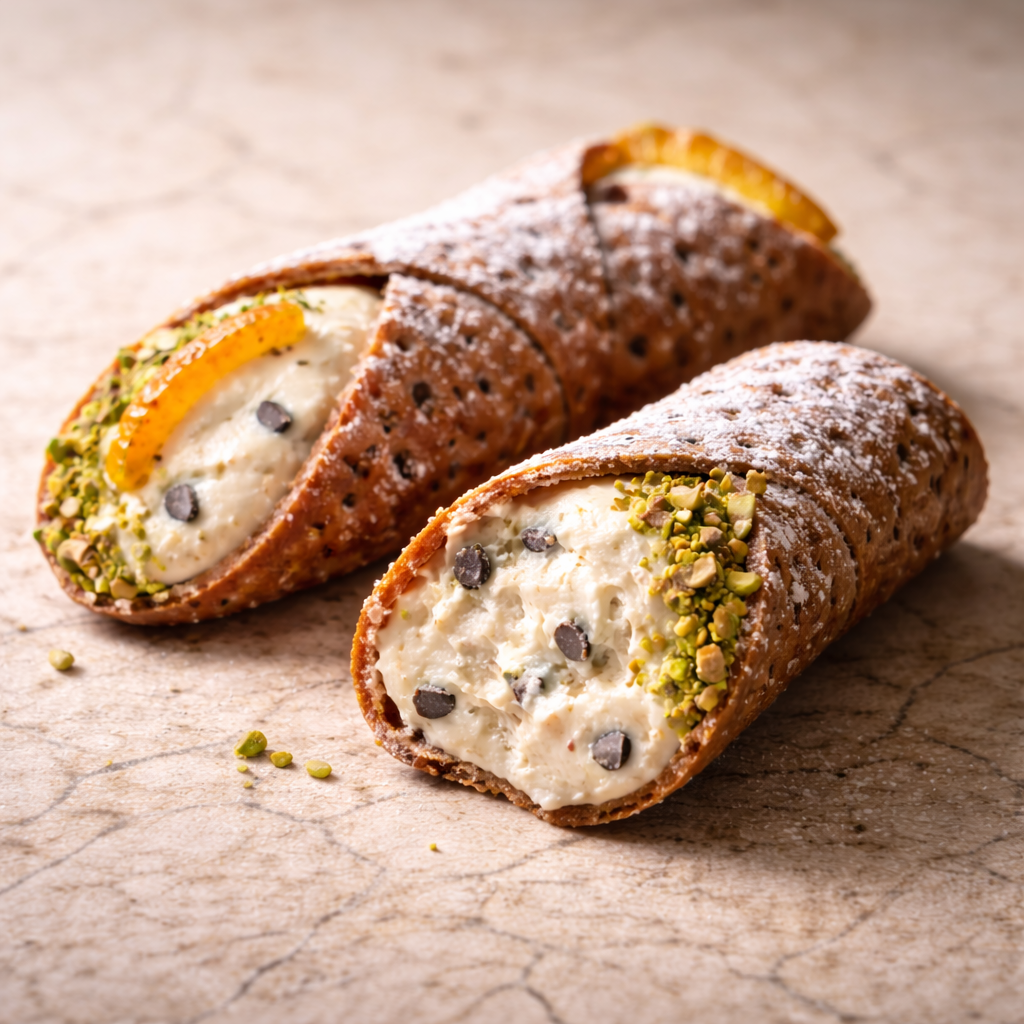
Il cannolo siciliano è uno dei dolci più iconici della pasticceria dell’isola. È composto da una cialda fritta croccante, a forma di tubo, riempita con crema di ricotta di pecora zuccherata. La farcitura viene spesso arricchita con gocce di cioccolato, scorza d’arancia candita o granella di pistacchio. A Palermo si trova in numerose varianti, ma la preparazione classica privilegia una ricotta fresca e profumata, riempita al momento per mantenere la cialda croccante.
Why it's special
Il cannolo è uno dei simboli più riconoscibili della cultura gastronomica siciliana e rappresenta l’importanza della pasticceria nella vita sociale locale. A Palermo il dolce è associato alle celebrazioni, alle domeniche in famiglia e alle occasioni festive. La sua fama ha superato i confini regionali diventando un emblema internazionale della cucina siciliana. Nonostante la diffusione globale, molte persone continuano a considerare Palermo e la Sicilia occidentale come il contesto autentico in cui assaggiarlo.
History
Le origini del cannolo sono generalmente collegate alla tradizione araba e medievale della Sicilia, quando l’isola era un importante crocevia culturale nel Mediterraneo. Una teoria diffusa colloca la nascita del dolce nell’area di Caltanissetta durante il periodo dell’emirato arabo, dove ingredienti come ricotta, zucchero e frutta candita erano già ampiamente utilizzati. In epoca successiva il dolce sarebbe stato adottato e diffuso nei conventi siciliani, dove le monache perfezionarono molte ricette di pasticceria. Con il tempo il cannolo si legò anche alle celebrazioni di Carnevale, prima di diventare un dolce consumato tutto l’anno.
Price
2–5 € al pezzo
Where to find it
I cannoli si trovano nelle pasticcerie storiche e nei bar di tutta Palermo, spesso esposti nei banchi dei dolci tradizionali. Luoghi celebri come Antica Pasticceria Cappello, Pasticceria Costa o le botteghe dei mercati storici li preparano quotidianamente. In molte pasticcerie la cialda viene riempita al momento dell’ordine, una pratica considerata essenziale per garantire la consistenza perfetta. Alcuni laboratori vendono anche confezioni da viaggio con cialde e crema separate.
Discover Cannolo siciliano on Trouvenir →
More souvenirs not to miss
Palermo has much more to offer. Here are the other authentic souvenirs catalogued by Trouvenir:
- Caponata palermitana (traditional preserve) — 🍽️ Food Specialties · €15-€40
- Cassata siciliana — 🍽️ Food Specialties · €15–€40 (a seconda delle dimensioni e della pasticceria)
- Frutta Martorana — 🍽️ Food Specialties · circa 10–25 € per una piccola confezione; 25–40 € al kg
- Marmellata di agrumi della Conca d'Oro — 🍽️ Food Specialties · €4-10
- Extra virgin olive oil from the Palermo countryside — 🍽️ Food Specialties · €15-€35
- Panelle — 🍽️ Food Specialties · €5-€15
- Sarde a beccafico (traditional preserve) — 🍽️ Food Specialties · €15-€40
- Sfincione palermitano (mix o condimento) — 🍽️ Food Specialties · €5-€12
How to recognise an authentic souvenir in Palermo
Authentic products from Palermo are found in artisan workshops, local markets, and directly from producers — not in tourist shops in the city centre.
Practical rule
if a product has no indication of origin, producer, or production method, it's probably not what it seems.
Use Trouvenir to find certified workshops near you, with details on products, prices, and authenticity.