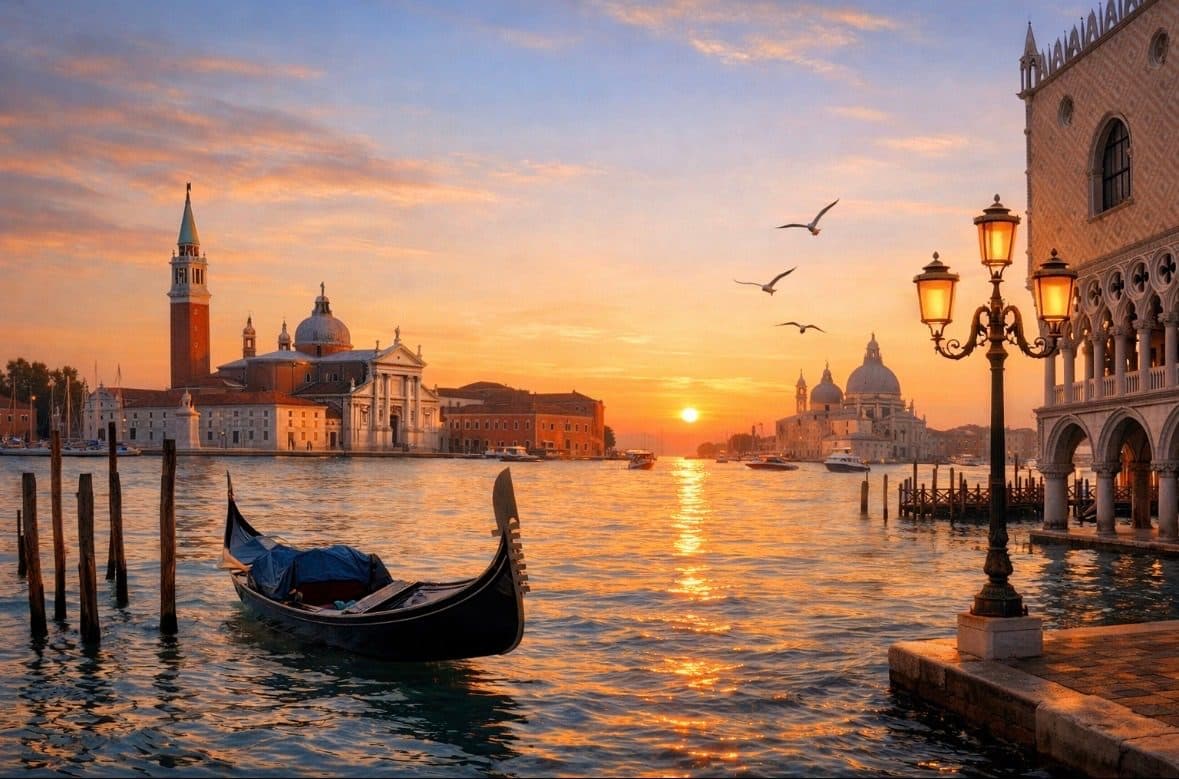
Venice is one of Italy's destinations with the deepest artisanal and gastronomic traditions. Every product here reflects local history, craftsmanship, and culture — something you won't find elsewhere with the same authenticity.
This guide collects authentic souvenirs selected by the Trouvenir app for Venice: local objects and specialties that truly capture the soul of the city, far from tourist stalls and mass-produced items. For each souvenir you'll find cultural context, price ranges, and where to buy with confidence.
1. Handcrafted Venetian marbled paper
🏺 Craftsmanship
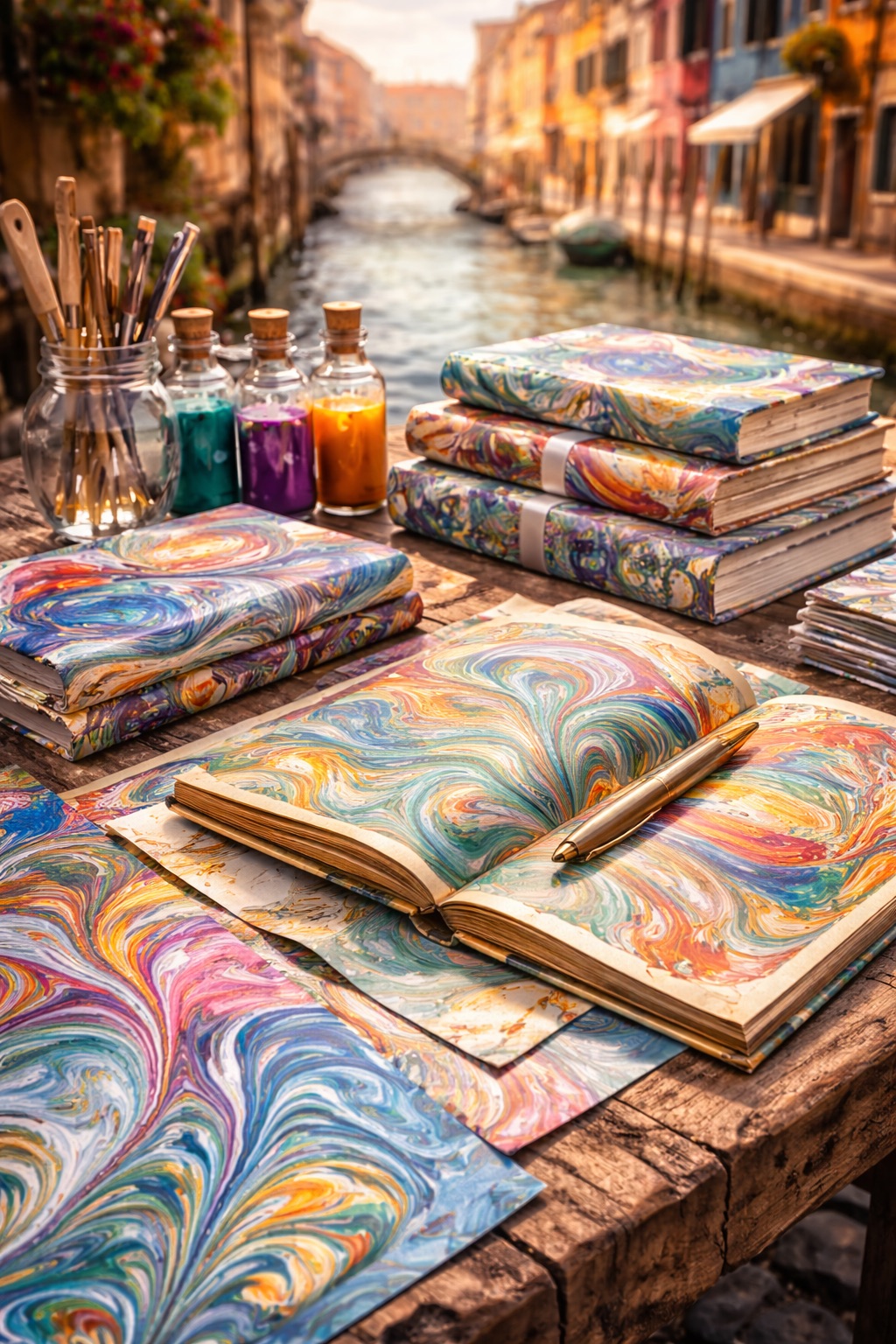
Paper decorated by hand using the “marbled water” technique. Used for notebooks, covers, and prints.
Why it's special
Connected to the Venetian publishing tradition, one of the oldest in Europe.
History
Venezia became a European printing center starting in the 15th century.
Price
€5-€10
Where to find it
-Artisan workshops -Historic stationery shops
Discover Handcrafted Venetian marbled paper on Trouvenir →
2. Venetian forcola
🏺 Craftsmanship
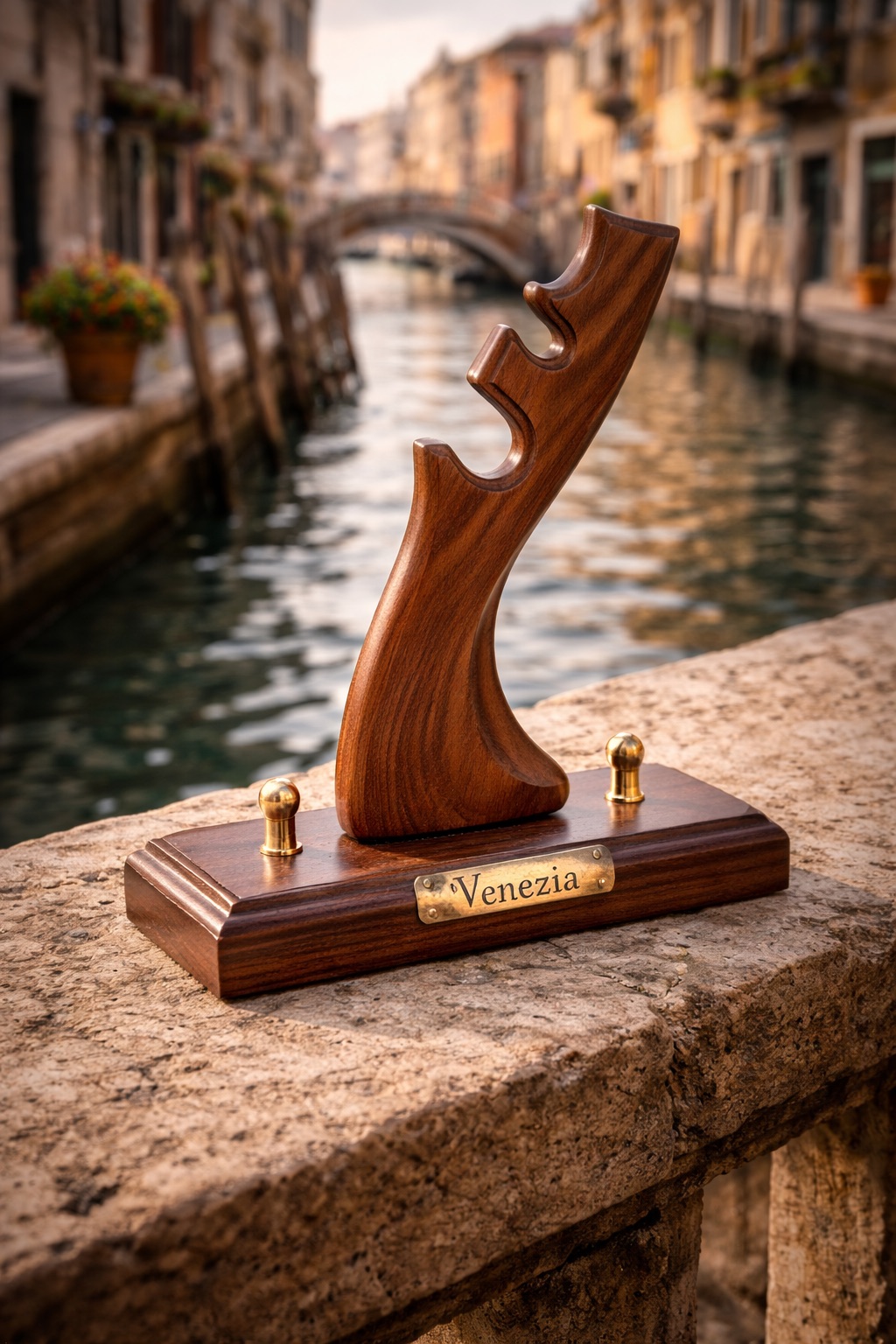
The Venetian forcola is the wooden support on which the gondola’s oar (or that of other Venetian boats) rests. Each forcola is hand-carved, unique, and designed for a specific type of boat and rower.
Why it's special
The forcola is:
- a symbol of Venetian maritime culture
- an example of artisanal ergonomics
- an object that unites function, sculpture, and tradition.
Every curve has a name and a precise function. It is considered a functional sculpture.
History
The forcola emerged alongside the modern gondola (15th–16th century). Over time it evolved into increasingly complex forms to adapt to the canals, maneuvering needs, and the Venetian rowing style.
Price
€80-€300
Where to find it
Workshops of Venetian remeri:
- Saverio Pastor - Dorsoduro
- Roberto Fontanella - Castello
Discover Venetian forcola on Trouvenir →
3. Miniature Venetian Gondola
🏺 Craftsmanship
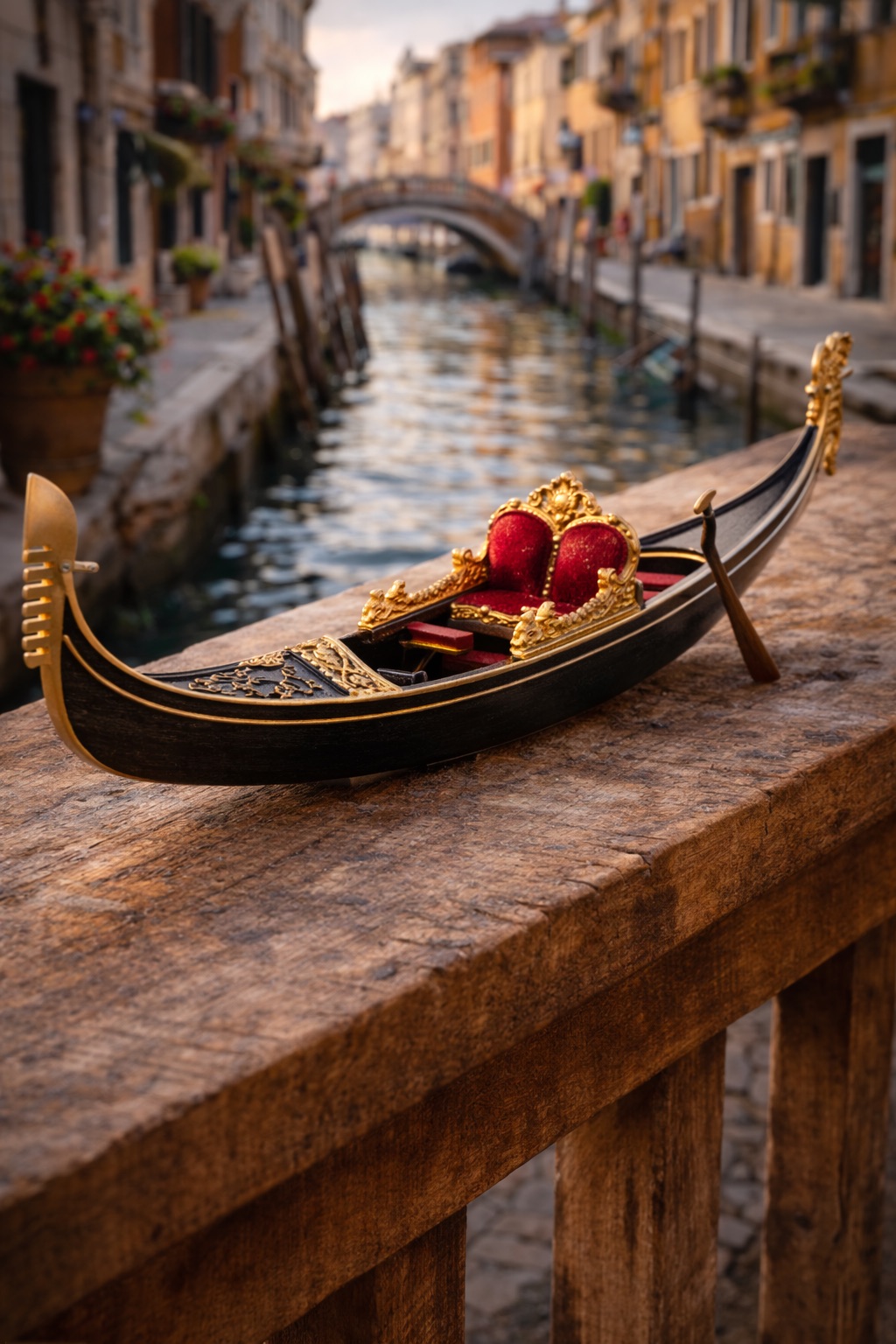
The miniature Venetian gondola is a handcrafted reproduction of the famous boat that symbolizes Venezia. Traditionally made of hand‑painted wood, it faithfully recreates the elements of the original gondola: the black hull, the bow iron (ferro da gondola), velvet-covered seats, and gilded decorations. It can serve as a decorative piece, a collector’s item, or an iconic souvenir rich in symbolic value.
Why it's special
The gondola is the ultimate symbol of Venezia and represents Venetian ingenuity adapted to life in the lagoon. Every detail of the gondola carries meaning:
- the bow iron symbolizes the sestieri of Venezia
- the black color comes from a historical law that regulated displays of luxury
The miniature version preserves this symbolic value, becoming an object that embodies the identity of the city.
History
Gondolas have existed in Venezia since at least the 10th century and were gradually refined over the centuries to navigate the narrow, shallow canals of the lagoon. Traditionally built in the squeri, the Venetian boatyards, they are still crafted today using techniques passed down through generations. Miniature versions emerged as an artisanal extension of this tradition, first as display pieces and later as artistic souvenirs.
Price
€30-€150
Where to find it
- Venetian artisan workshops specializing in model making and wooden objects
- Historic shops in the center of San Marco, Dorsoduro and Castello
- Studios that collaborate with squeri (traditional boatyards) or local craftsmen
Discover Miniature Venetian Gondola on Trouvenir →
4. Venetian Mask
🏺 Craftsmanship

The Venetian mask did not begin as a decorative object. It began as a social instrument. In a city where everyone knew each other, hiding was the only way to be free.
For centuries in Venezia, masks allowed people to step outside their social roles, mingle among different classes, observe without being recognized, and live without being judged. They were not used only during Carnival, but also in theaters, parties, public gatherings, and everyday moments.
In Venezia, anonymity has never meant escape, but possibility. The mask does not conceal out of fear, but by choice.
Why it's special
The mask represents anonymity as possibility. In a rigid society, it offered a temporary space of freedom and a suspension of social rules.
History
The tradition began between the 13th and 14th centuries. Its use became firmly established with Carnival, documented as early as 1296, though masks also appeared in theaters, parties, and public gatherings throughout the year.
Price
€20-€1000
Where to find it
Historic mask workshops in Dorsoduro, San Polo, and artisan shops in the historic center.
How to recognize an authentic one
- papier-mâché
- hand-painted
- artisan workshop
Discover Venetian Mask on Trouvenir →
5. Burano Lace
🏺 Craftsmanship
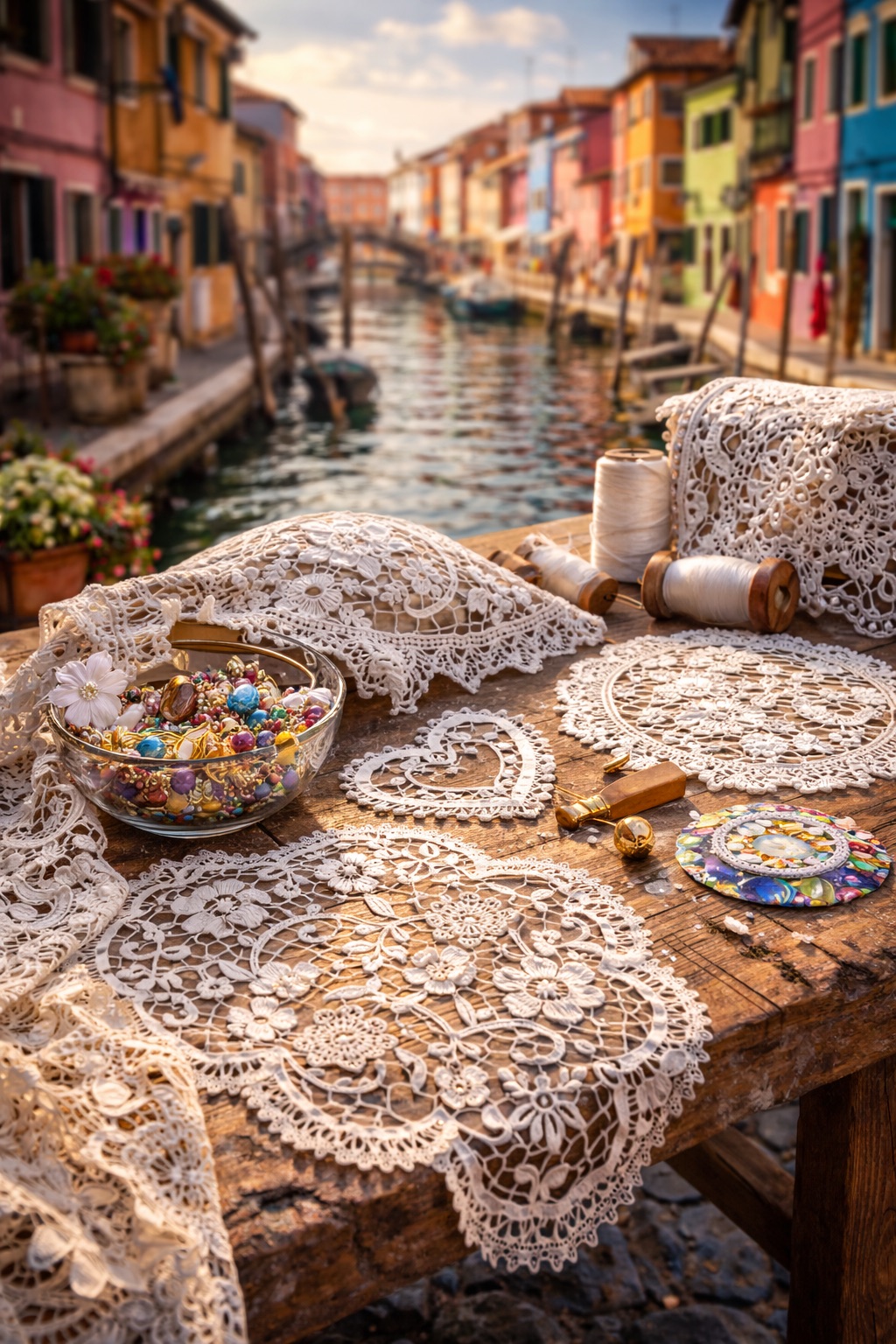
Lace sewn entirely by hand: doilies, tablecloths, collars, and decorative pieces.
Why it's special
A symbol of patience, Venetian women's tradition, and handcrafted artistry.
History
It dates back to the 16th century and was once famous in European courts.
Price
30-300 euro
Where to find it
Artisan shops Traditional textile workshops
Discover Burano Lace on Trouvenir →
6. Venetian silk shawl
🏺 Craftsmanship
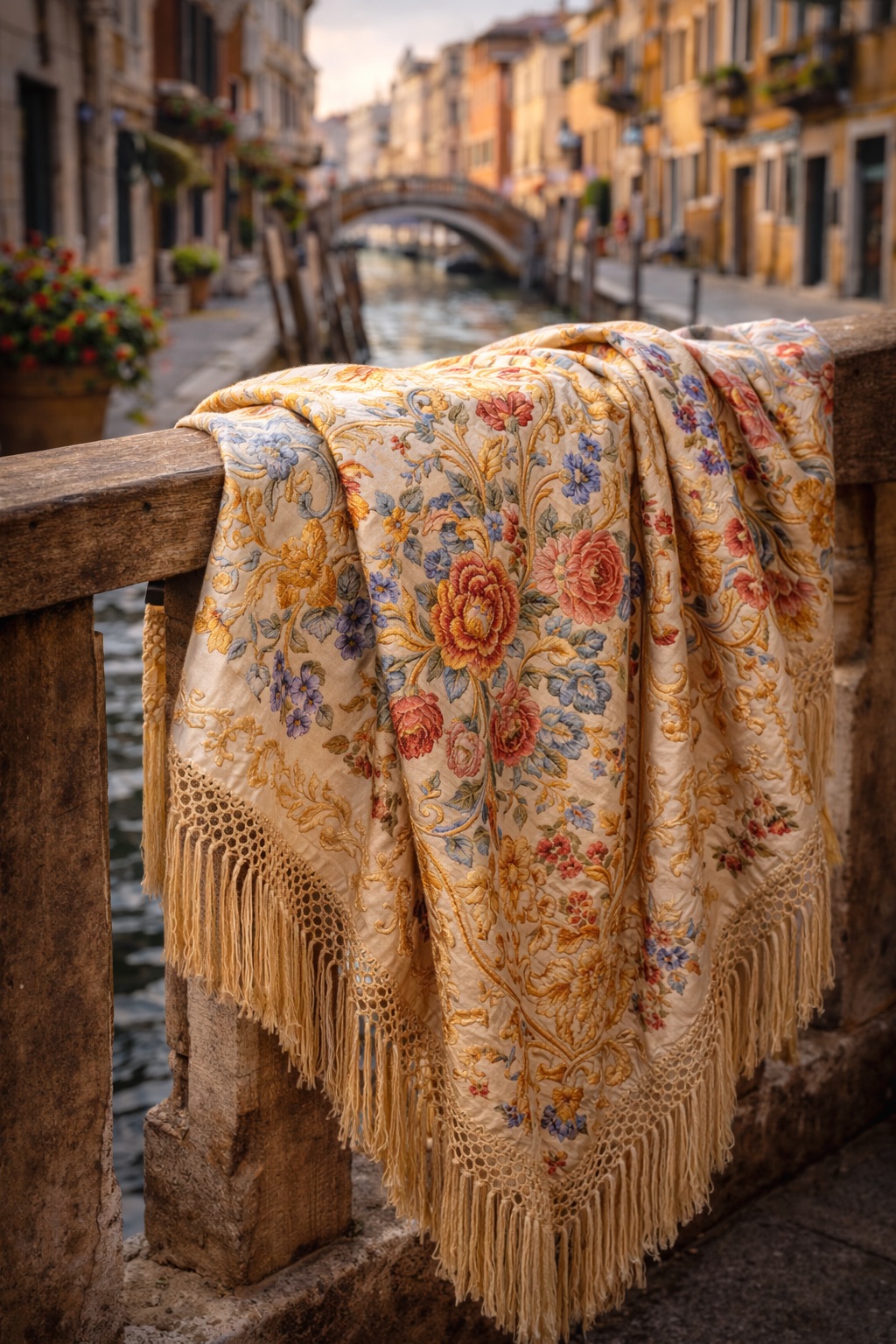
The Venetian silk shawl is an elegant, lightweight accessory made from high-quality silk and often embellished with artistic motifs inspired by Venetian tradition, such as floral patterns, arabesques, stylized gondolas, or references to Venetian painting and decorative art. It can be worn as a fashion accessory, used as a shoulder wrap, or displayed as a piece of textile art.
Why it's special
Venetian silk is part of the textile and fashion tradition of Venezia, rooted in the city’s historic role as a crossroads of trade between East and West. Silk shawls are not just garments but expressions of elegance, craftsmanship, and Italian style, often associated with the refined culture of European courts and nobility.
History
Silk, as a precious material, reached Europe through ancient trade routes, and Venezia became one of the main centers for importing and producing fine textiles during the Middle Ages and the Renaissance. Thanks to its strategic position and mercantile economy, Venezia developed advanced textile techniques and became famous for its luxury fabrics, including silk, which were exported across Europe and used in noble palaces.
Price
€80-€250
Where to find it
- Textile boutiques and fashion shops in the historic center of Venezia
- Artisan workshops specializing in silk fabrics and accessories
- Markets and craft shops in the sestieri of San Marco, Dorsoduro, and Castello.
Discover Venetian silk shawl on Trouvenir →
7. Historic Venetian Textiles
🏺 Craftsmanship
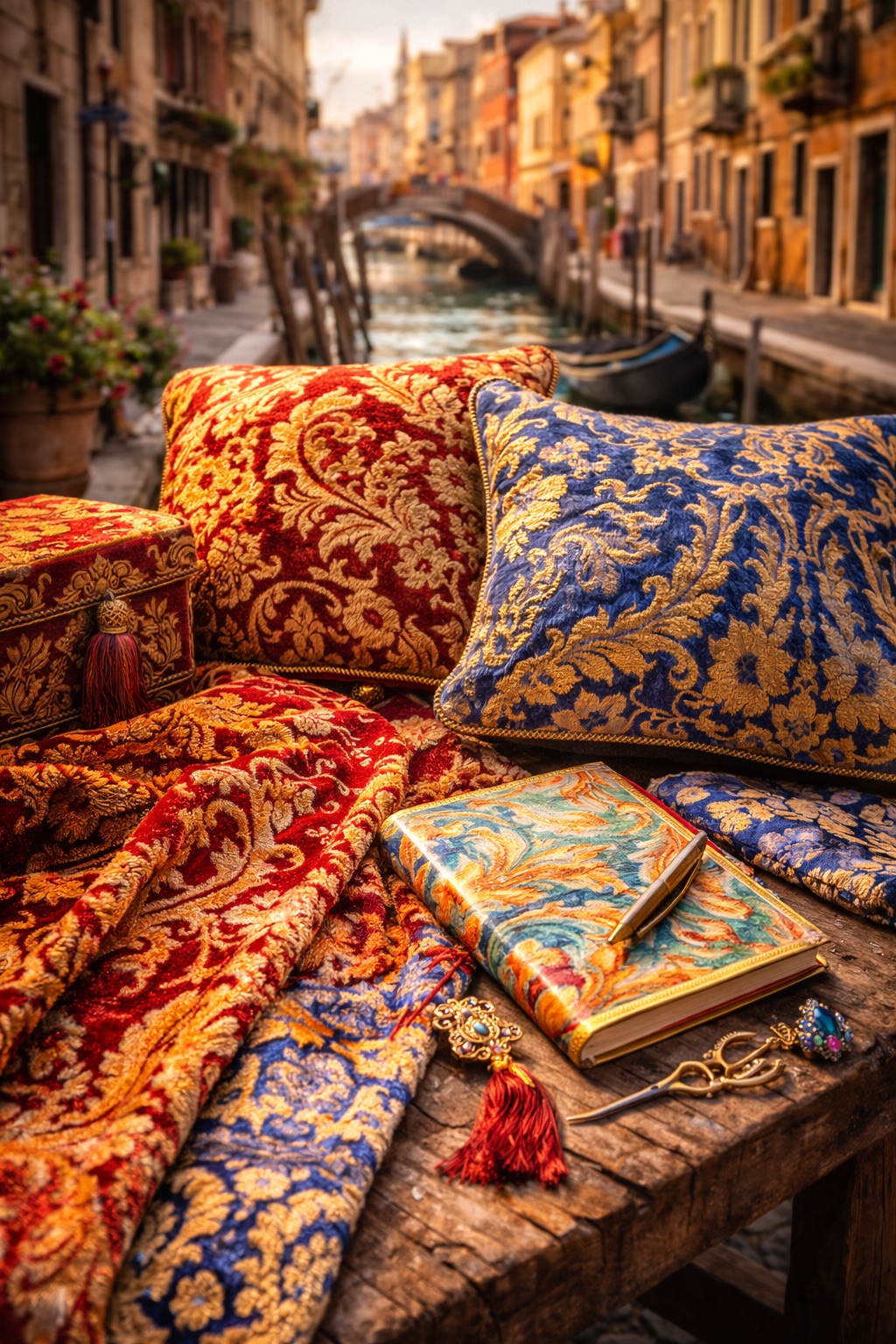
Historic Venetian textiles include figured velvets (soprarizzo and riccio), damasks, brocades, and decorative silks produced using Renaissance-era techniques. They are distinguished by the richness of floral and geometric patterns, deep color palettes, and the three-dimensional quality of their surfaces. Today they are crafted by artisanal workshops that revive archival designs and traditional looms, often used for high-end interiors, historical costumes, and decorative textile objects.
Why it's special
Venetian textiles reflect the deep connection between Venezia and the trade routes with the East. They were symbols of economic power and social prestige, used for noble garments, ecclesiastical furnishings, and palace decorations. Even today they embody the image of Venezia as a crossroads of luxury, cultural exchange, and refined craftsmanship.
History
Between the 14th and 16th centuries Venezia was one of Europe’s leading textile centers. Weavers’ guilds imported techniques and motifs from the Byzantine and Islamic worlds, developing an independent style marked by complex figured velvets and damasks. Textile production played a decisive role in the wealth of the Republic of Venezia.
With the commercial decline of the 17th century, production diminished but did not disappear: in the 20th century some manufactories revived the tradition by recovering historical archives and ancient looms. Today historic Venetian textiles are considered a craft heritage of historical continuity, combining philological research with contemporary production.
Price
€40-€600+
Where to find it
Specialized ateliers, artisan shops in the historic center of Venezia, and historic manufactories producing on jacquard or hand looms.
Discover Historic Venetian Textiles on Trouvenir →
8. Murano Glass
🏺 Craftsmanship
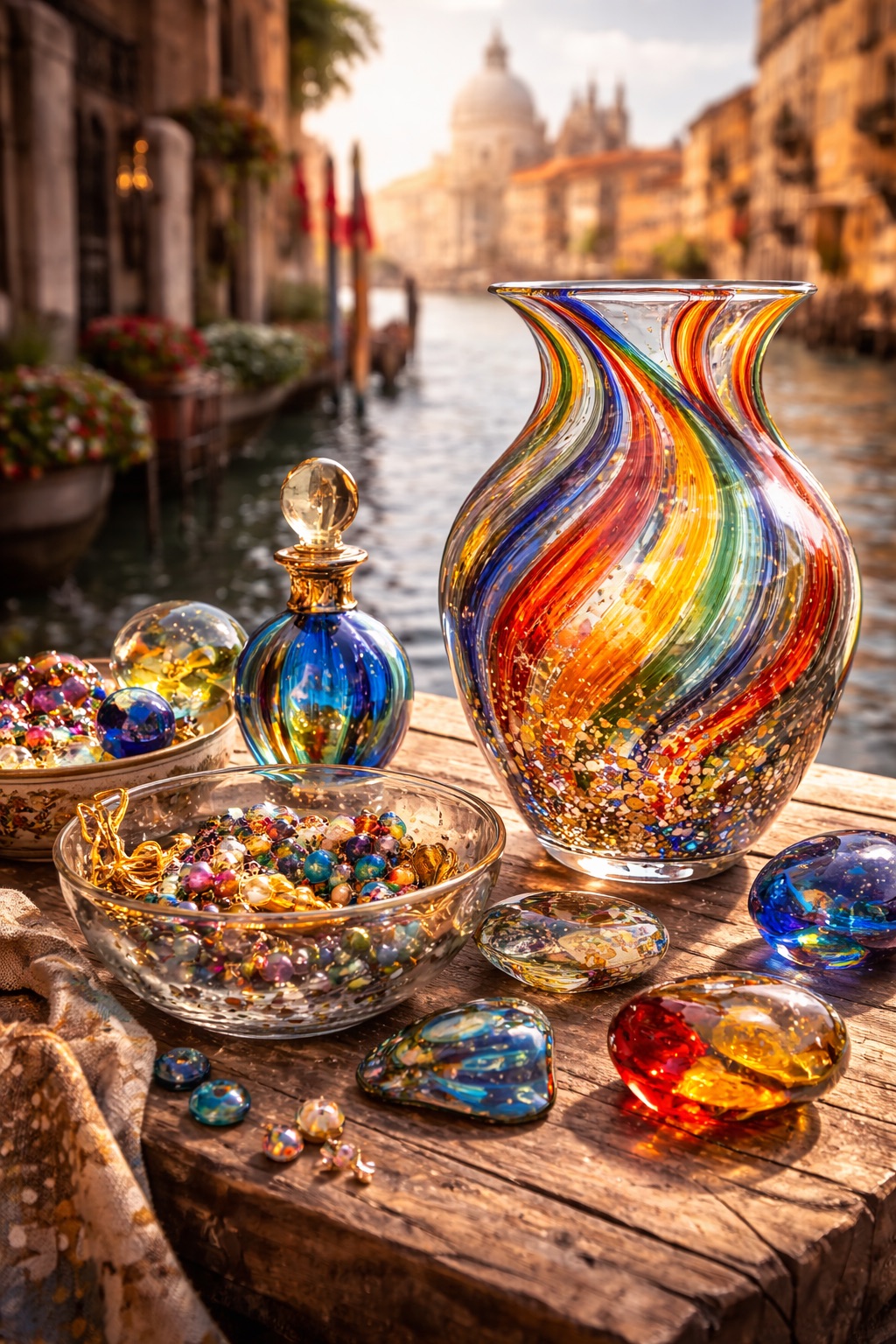
Objects in blown or handworked glass: vases, glasses, jewelry, paperweights, sculptures, chandeliers. Every authentic piece is crafted by the master glassmakers of Murano.
Why it's special
It is the symbol of Venetian craftsmanship around the world, protected by a mark of origin.
History
The art of Murano glass began in 1291, when glass furnaces were moved to the island to prevent fires in Venezia.
Price
€10 – €1.000+
Where to find it
- Murano Island
- Certified artisan shops in Venezia
Discover Murano Glass on Trouvenir →
9. Baicoli
🍽️ Food Specialties
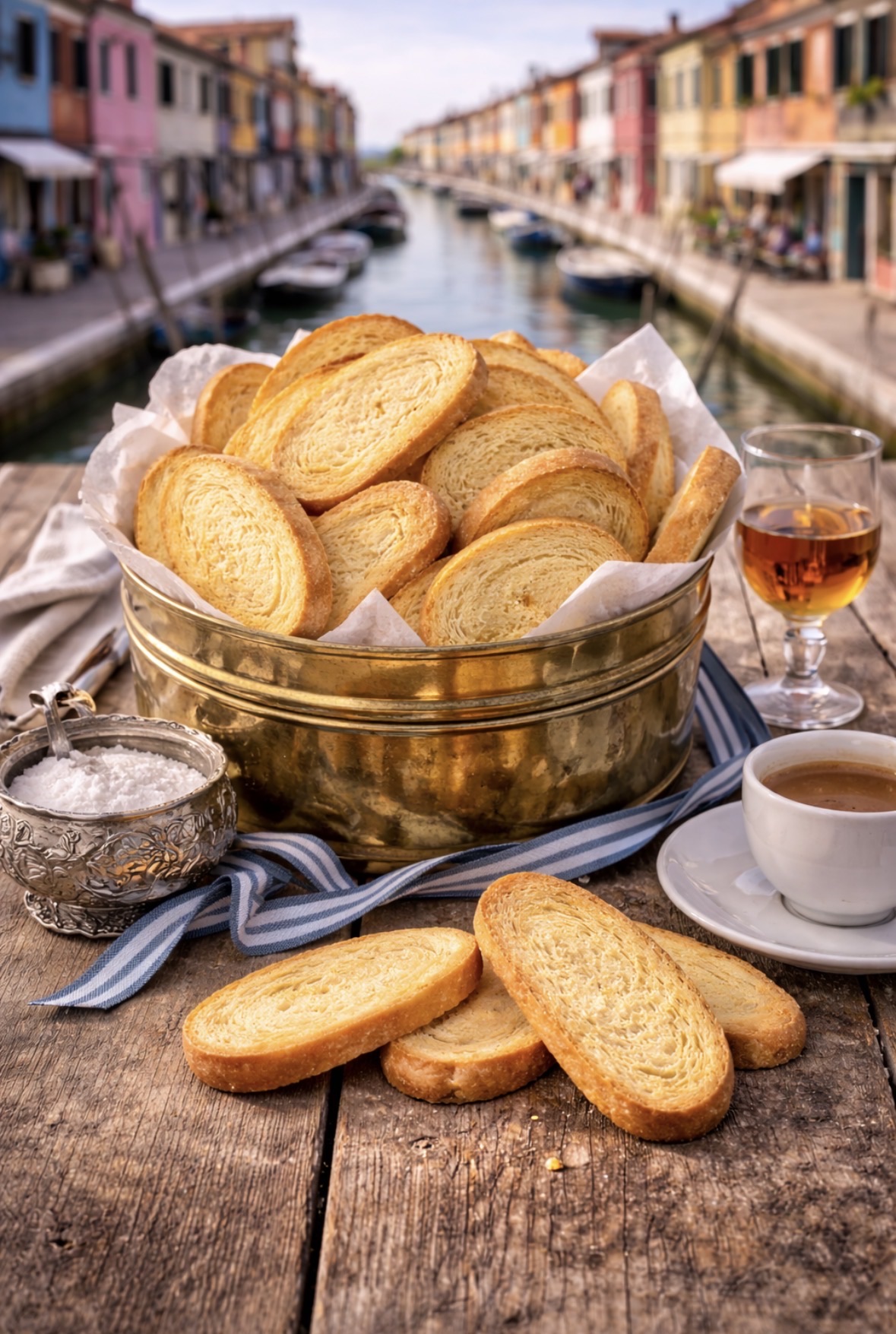
Baicoli are dry, light, crunchy, and thin biscuits typical of the Venetian tradition. Originating in the 18th century, these biscuits are made with simple ingredients such as flour, butter, sugar, eggs, yeast, and milk, and are baked twice to achieve their characteristic dry and fragrant texture.
Why it's special
Originally created as travel biscuits for the Venetian navy—thanks to their long shelf life without spoiling—baicoli are now a symbol of the local pastry tradition. They were eaten during long sea voyages and have become a classic accompaniment to drinks such as coffee, tea, hot chocolate, or zabaglione.
History
Baicoli were created in Venezia in the 1700s and take their name from their elongated shape, which in the local dialect resembles the profile of a small fish called baicolo. In the past they were stored in tin boxes decorated with Venetian scenes, which also made them a symbol of travel souvenirs.
Price
€8-€20
Where to find it
- Historic pastry shops and traditional bakeries in Venezia
- Specialty food shops and souvenir stores in the city center.
- Local markets and shops selling typical Venetian biscuits.
Discover Baicoli on Trouvenir →
10. Bigoli veneti
🍽️ Food Specialties
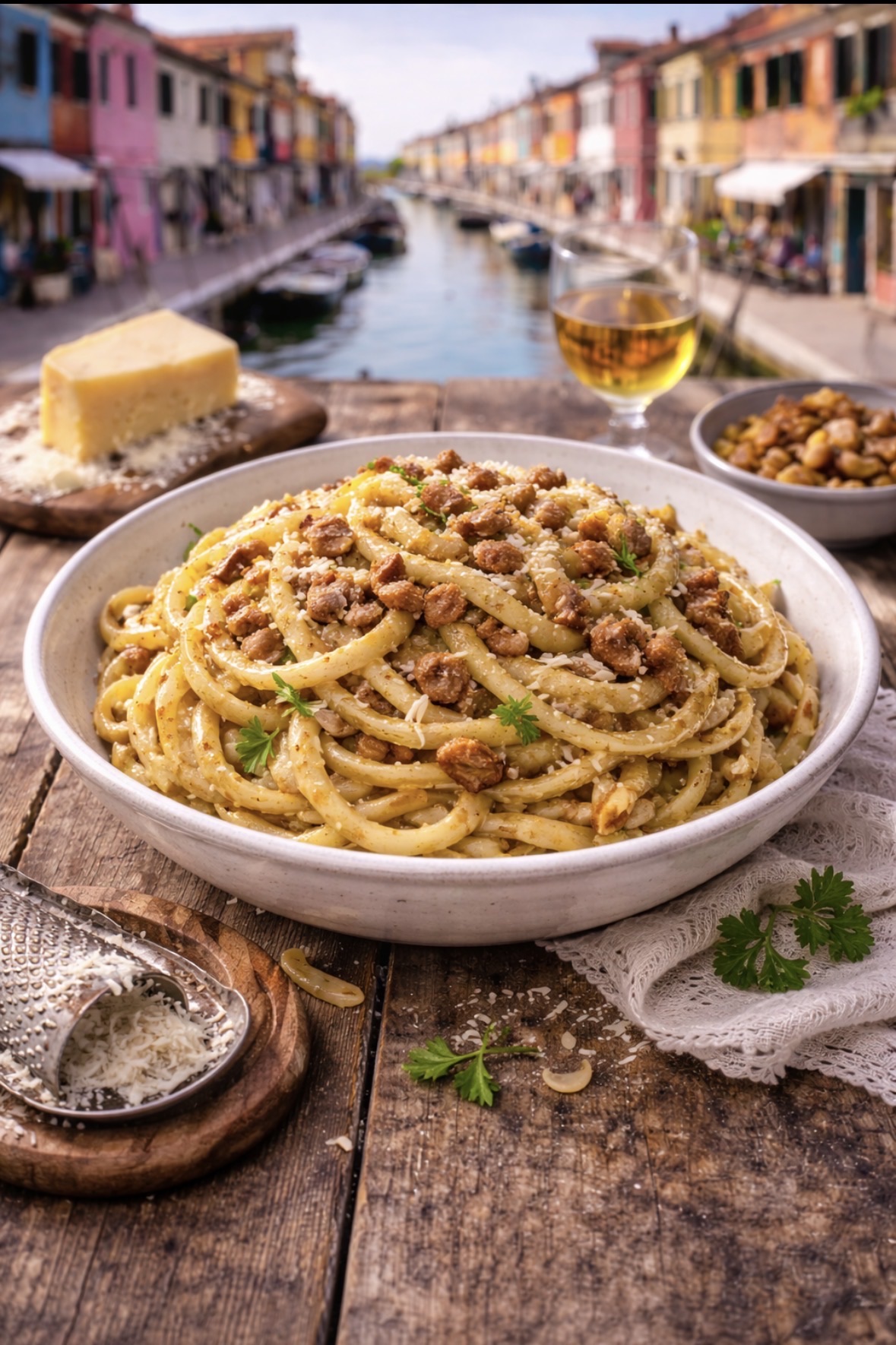
Bigoli are a long, thick pasta, similar to large spaghetti, typical of Venetian cuisine. Their texture is rough and porous, making them ideal for holding rich, flavorful sauces. They can be prepared with soft wheat flour or whole wheat flour, and sometimes with eggs or buckwheat flour in historical variations.
Why it's special
Bigoli are considered a symbol of Venetian cuisine and are often associated with traditional home-cooked dishes such as bigoli in salsa (with onions and anchovies), prepared on meatless days or during family gatherings.
History
Bigoli originate from Veneto and represent one of the oldest and most deeply rooted pasta traditions in the region. According to some sources, their origins date back as far as the Middle Ages or the 1300s during the Serenissima Republic of Venezia, while their production using a special press (called a bigolaro) dates to the 1600s thanks to the pasta maker Bartolomio Veronese, known as Abbondanza.
Price
€3 - €8
Where to find it
- Delicatessens and specialty Venetian food shops in Venezia and its province.
- Artisan pasta shops and local markets (e.g., Mercato di Rialto).
- Supermarkets or online stores selling traditional Italian products.
Discover Bigoli veneti on Trouvenir →
11. Bussolà di Burano
🍽️ Food Specialties
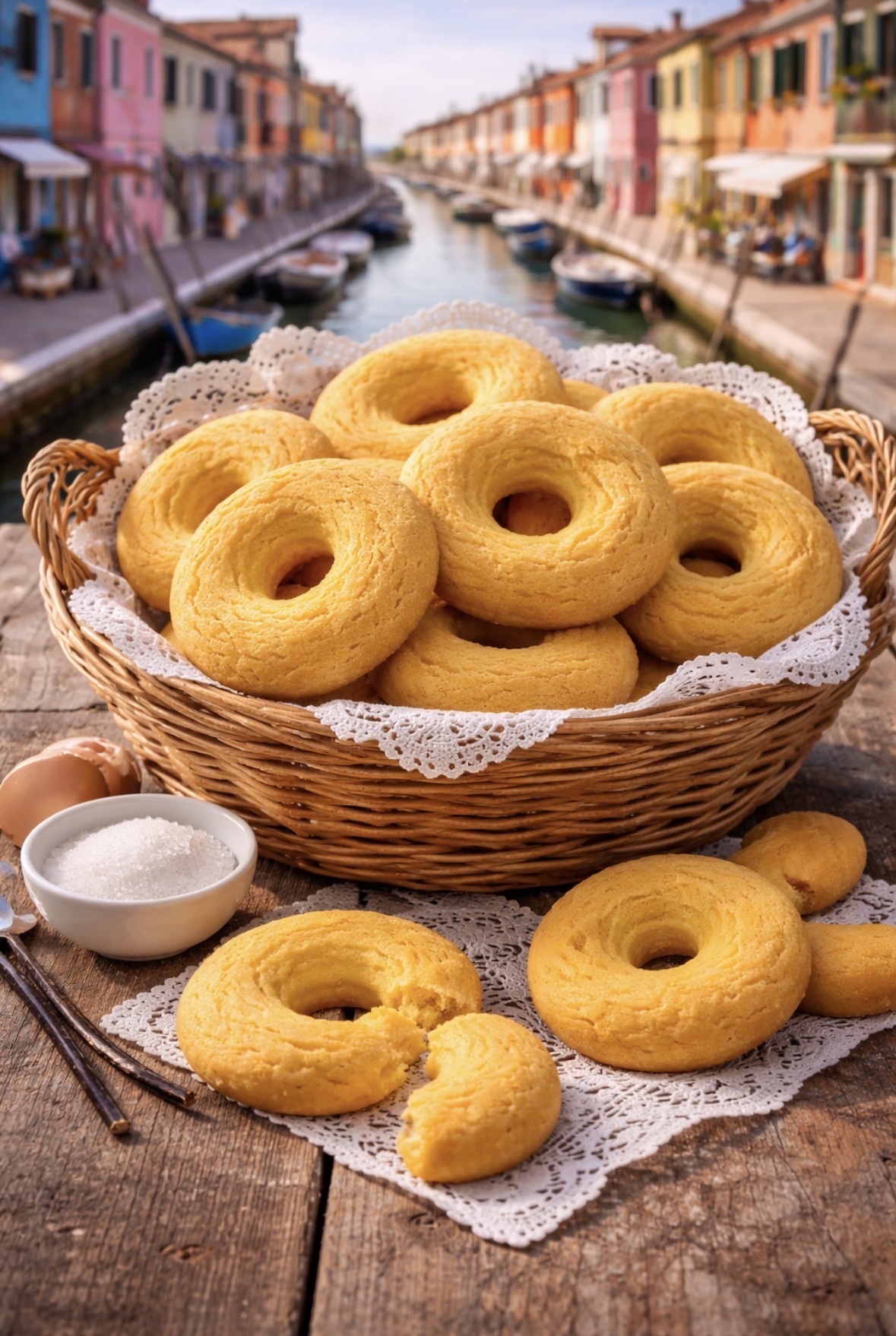
Bussolà di Burano is a traditional dry biscuit from the island of Burano (Venezia), known for its distinctive ring or “S” shape. It is made with simple yet rich ingredients: eggs, butter, sugar, and flour, without yeast. Its texture is crumbly yet firm, and its rich buttery, eggy flavor makes it perfect to enjoy on its own or paired with sweet wine.
Why it's special
Bussolà is a symbol of identity for Burano. It originated as a “survival” sweet: thanks to its long shelf life, it was prepared by the women of the island for their fisherman husbands, who took it with them during long fishing trips at sea. Today it represents the island’s gastronomic and family heritage.
History
The origins of Bussolà date back at least to the 18th century. Its ring shape symbolically recalls the donuts and ritual sweets found in the Venetian tradition. Passed down orally and later established in local tradition, it has become one of the most recognizable sweets of the Venetian lagoon.
Price
€8 - €15 al kg
Where to find it
- Historic bakeries in Burano
- Artisan pastry shops on the lagoon islands
- Venetian gourmet stores specializing in traditional products
- Some traditional markets in Venezia
Discover Bussolà di Burano on Trouvenir →
12. Dorona
🍽️ Food Specialties
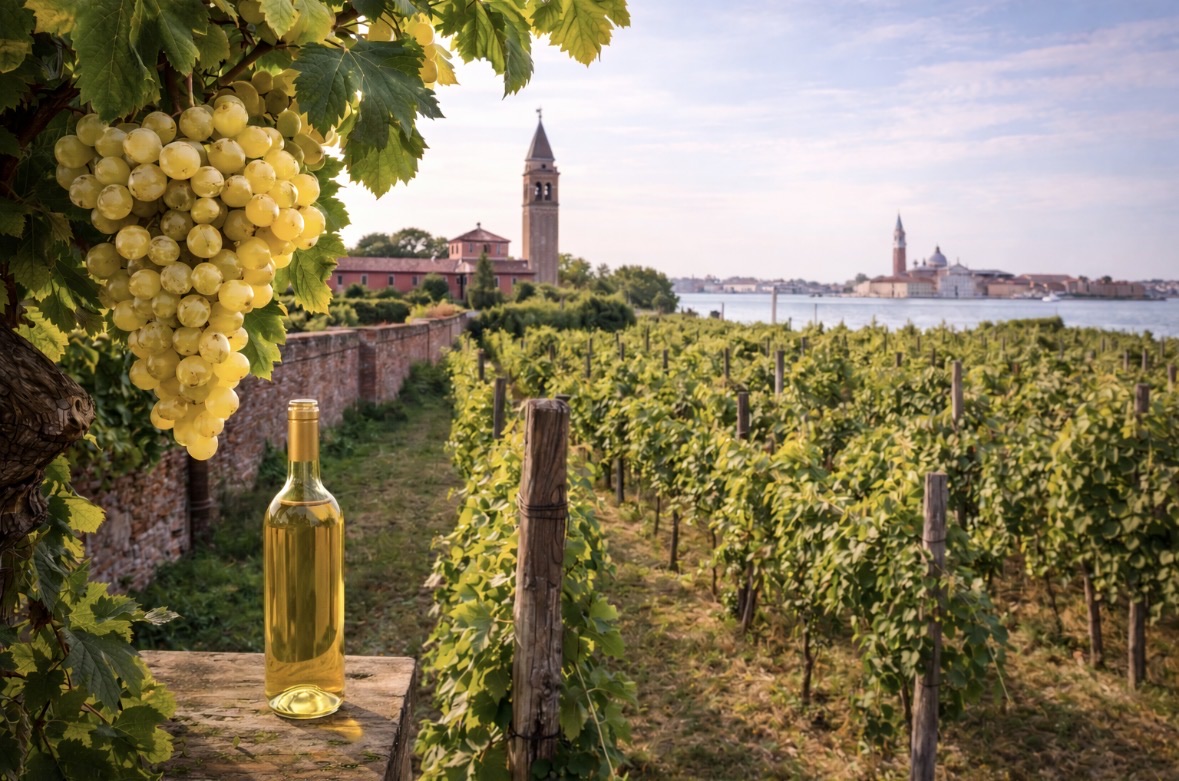
Dorona di Venezia (or Venezia Dorona) is a rare and prized wine made from an ancient native Venetian white grape variety. The name “Dorona” comes from the intense golden color of the grapes and the wine itself. It offers an elegant aromatic profile, with notes of ripe fruit, honey, lagoon herbs, and a distinctive marine salinity, shaped by the unique environment of the Venetian islands where it grows.
Why it's special
Dorona is more than just a wine: it is part of Venetian identity, a testament to the city’s ability to cultivate viticulture even within the unique environment of the lagoon. It is a perfect souvenir for those seeking a truly exclusive product that is deeply Venetian.
History
Dorona is a historic Venetian grape variety documented as far back as the Middle Ages. It was cultivated for centuries in the lagoon and appreciated by the noble families of the Serenissima. Over time it nearly disappeared, but in recent decades it has been rescued and revived thanks to agricultural preservation projects and cultivation mainly on the island of Mazzorbo (Bisol – Venissa) and in a few other lagoon areas.
Today it is considered a true Venetian oenological rarity, symbolizing the deep bond between wine and the history of the lagoon.
Price
€70 - 200
Where to find it
- Wineries and producers in the lagoon (especially Mazzorbo)
- Selected wine shops in Venezia
- High-end gourmet stores
Discover Dorona on Trouvenir →
More souvenirs not to miss
Venice has much more to offer. Here are the other authentic souvenirs catalogued by Trouvenir:
- Esse di Burano — 🍽️ Food Specialties · €8 - €15
- Fugassa veneziana — 🍽️ Food Specialties · €10 - €30
- Risi e Bisi — 🍽️ Food Specialties · €6 - €25
- Sale di Chioggia — 🍽️ Food Specialties · €4 - €12
- Sarde in Saor — 🍽️ Food Specialties · €8 - €18
- Zaeti — 🍽️ Food Specialties · €5-€15
How to recognise an authentic souvenir in Venice
Authentic products from Venice are found in artisan workshops, local markets, and directly from producers — not in tourist shops in the city centre.
Practical rule
if a product has no indication of origin, producer, or production method, it's probably not what it seems.
Use Trouvenir to find certified workshops near you, with details on products, prices, and authenticity.