Pane di Favara in Agrigento
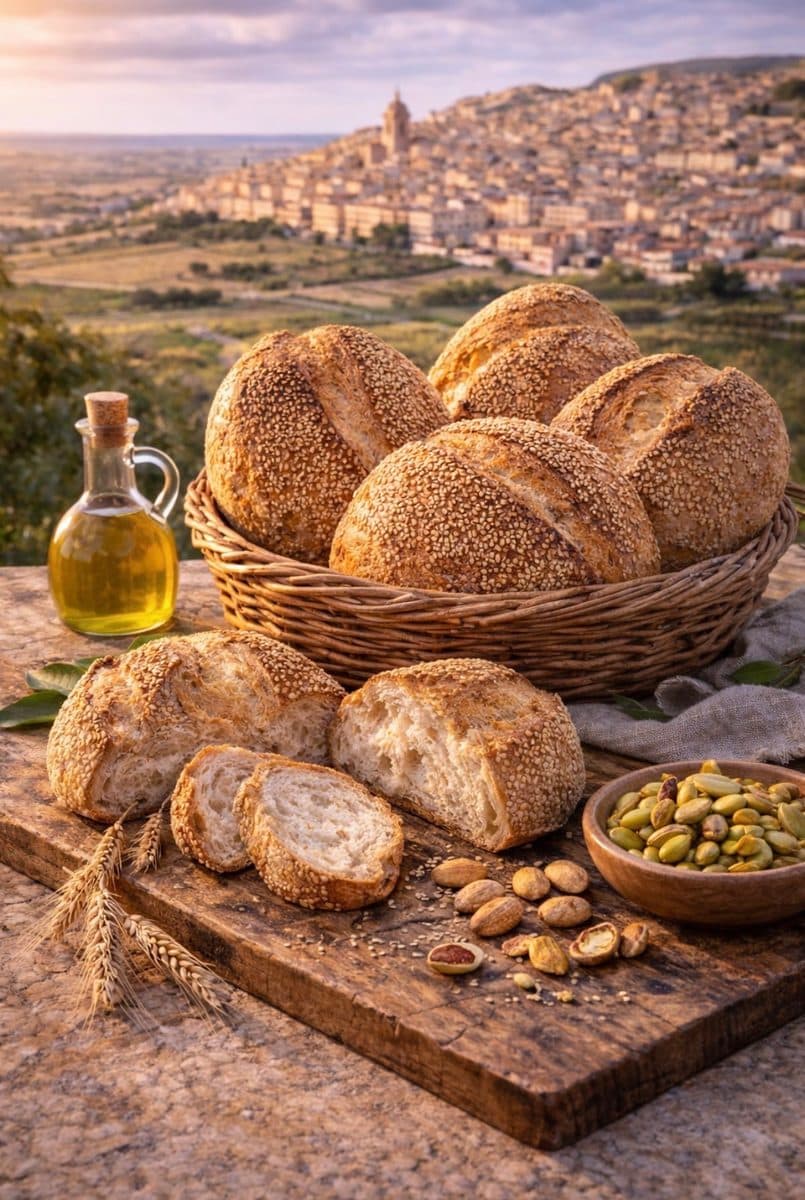
Pane di Favara is one of the truest symbols of the agricultural history of the Agrigento hinterland. Prepared with Sicilian durum wheat semolina, slowly risen, and baked in a wood-fired oven, it releases intense aromas and features a golden crust often embellished with sesame seeds. Born in homes and neighborhood ovens as the daily bread of farming families, it tells a story of sharing, work on the land, and long-established knowledge. Bringing it home means savoring a genuine fragment of the truest Sicily.
- pane tipico
- grano duro siciliano
- forno a legna
- favara
- cucina siciliana
What Pane di Favara is
Pane di Favara is a characteristic bread produced in the territory of Favara, in the hinterland of Agrigento, prepared with Sicilian durum wheat remilled semolina, water, yeast, and salt. Slow rising and wood-fired oven baking give it a thick, golden crust and a compact yet soft crumb, featuring the typical warm yellow color of semolina. The surface is often sprinkled with sesame seeds, a detail common to many breads of western Sicily. The aroma is intense and slightly toasted, with a full flavor that makes it suitable both to be enjoyed on its own and paired with cheeses, olives, and local dishes.
«Pane di Favara carries with it the idea of a culture built around wheat, the labor of the land, and the sharing of food. Remember that for many communities, bread is not just nourishment, but a symbol of family continuity and a connection to the territory. Gifting or sharing it means conveying a simple gesture deeply rooted in Mediterranean culture.»
Origin and history
The history of Pane di Favara stems from the agricultural context of the Agrigento hinterland, where durum wheat cultivation has played a central role in the economy and diet for centuries. In towns like Favara, families prepared the dough at home and took it to be baked in public ovens or neighborhood wood-fired ovens. The loaves were often large in size, designed to last for several days. Over time, artisanal bakeries have maintained these techniques, transforming the local bread into a recognizable product sought after by visitors as well.
From workshop to plate, with the people who make it
- FoodStreet food in Agrigento's alleysBakeries, bars and the monastery's biscuitsSee on GetYourGuide
 CraftSciacca coral in the workshopShape fossil coral into a small lucky hornSee on GetYourGuide
 CookingSicilian cooking in a home in FavaraA tailored menu made with local ingredientsSee on GetYourGuide
Affiliate links: if you book, Trouvenir earns a small commission at no cost to you.
Where to find Pane di Favara in Agrigento
We verified them before recommending them. Tap a shop to see it on the map.
Panificio La Piccola Palermo
Viale Aldo Moro, 177Verified by TrouvenirPanificio Olanda
Via Olanda, 122Verified by TrouvenirLa Boutique Del Pane Di Maria Agro'
Via Olanda, 116Verified by Trouvenir
More places to look
It is easily found in the artisanal bakeries of Favara and the towns of the Agrigento province, where it is often baked multiple times a day. Many historic ovens in the center still prepare large-format loaves according to long-established methods. It can also be purchased in delicatessens and local specialty food shops, sometimes packaged for transport. In local markets or small neighborhood shops, it is often sold still warm, straight out of the oven.
Pane di Favara
Not passing by a shop? Before you buy, check the name and production area on the label.
Search on AmazonAmazon affiliate link
No shop pays to be listed here. Opening hours and stock change: check Maps before you go.
Cultural significance
This bread represents one of the most everyday expressions of the cereal culture in the Agrigento hinterland. The province is historically part of one of Sicily's major durum wheat areas, and semolina bread has formed the staple food of the population for centuries. Pane di Favara is therefore linked to the memory of farming families, neighborhood bakeries, and the rhythms of home and community bread-making. To this day, many people recognize it as an identity-defining bread, distinct from industrial products and associated with the quality of local semolina.
More gastronomy from Agrigento
All
Frequently asked questions
What makes Pane di Favara special?
This bread represents one of the most everyday expressions of the cereal culture in the Agrigento hinterland. The province is historically part of one of Sicily's major durum wheat areas, and semolina bread has formed the staple food of the population for centuries. Pane di Favara is therefore linked to the memory of farming families, neighborhood bakeries, and the rhythms of home and community bread-making. To this day, many people recognize it as an identity-defining bread, distinct from industrial products and associated with the quality of local semolina.
Where to find Pane di Favara in Agrigento?
It is easily found in the artisanal bakeries of Favara and the towns of the Agrigento province, where it is often baked multiple times a day. Many historic ovens in the center still prepare large-format loaves according to long-established methods. It can also be purchased in delicatessens and local specialty food shops, sometimes packaged for transport. In local markets or small neighborhood shops, it is often sold still warm, straight out of the oven.
How much does Pane di Favara cost?
€3-€6 a pagnotta
Why choose Pane di Favara as a gift?
Pane di Favara carries with it the idea of a culture built around wheat, the labor of the land, and the sharing of food. Remember that for many communities, bread is not just nourishment, but a symbol of family continuity and a connection to the territory. Gifting or sharing it means conveying a simple gesture deeply rooted in Mediterranean culture.
Take Trouvenir with you
iOS and Android. Free.