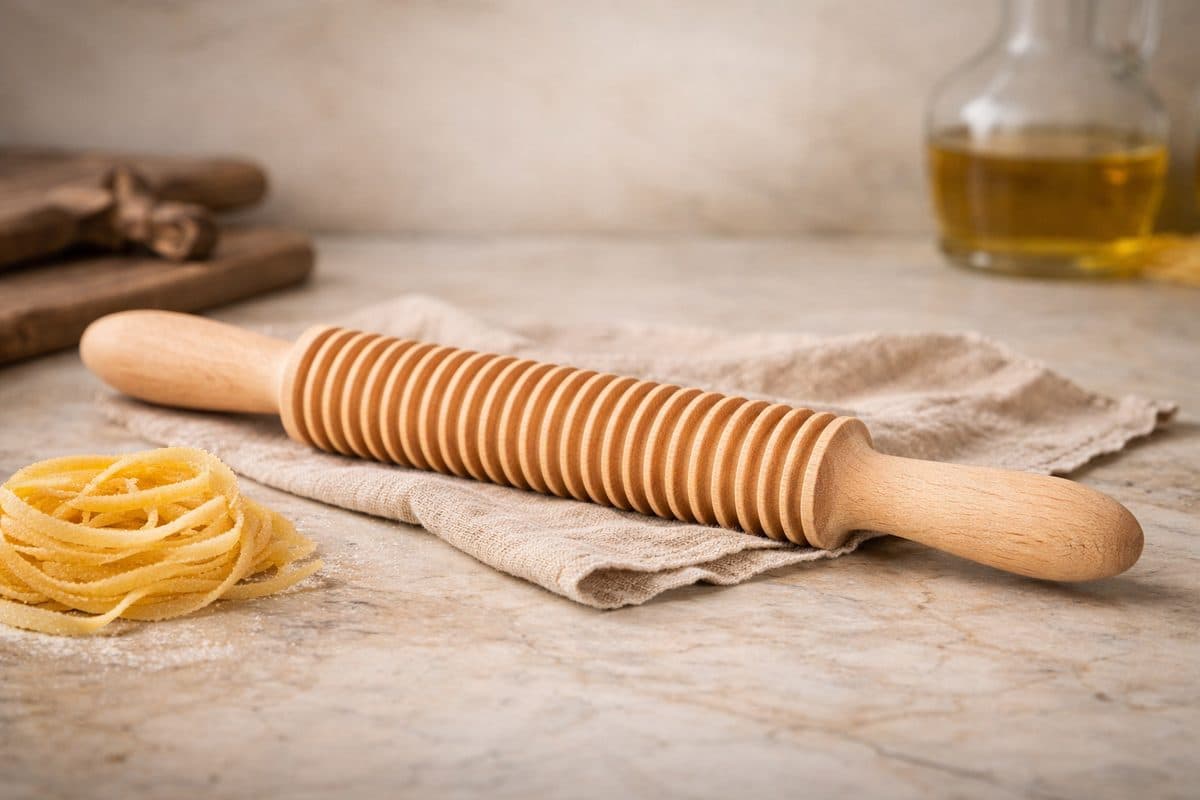
Rolling pin for tagliatelle in Bologna
The Bolognese rolling pin is the symbolic tool of handmade pasta sheets, long and simple like the history it represents. With this wooden cylinder, sfogline still roll out very thin sheets of dough today from which tagliatelle, tortellini, and lasagne are born, icons of Emilian cuisine. Taking it home means preserving an ancient gesture, made of patience and domestic mastery. More than a simple kitchen tool, it is a genuine fragment of Bologna's gastronomic culture.
- Cucina del territorio
- Da portare a casa
- Fatto a mano
- Per chi cucina
What Rolling pin for tagliatelle is
The Bolognese rolling pin is a long wooden cylinder, generally made of beech or maple, used to roll out egg pasta dough by hand. Unlike small household rolling pins, it can exceed 80–100 cm in length and is designed to work large, very thin sheets of dough on the classic wooden pastry board. It is the essential tool of sfogline, the women in Bologna who preserve the art of handmade fresh pasta. In its essential shape and without handles, it represents an ancient utensil that has remained almost unchanged over time.
«This object tells the Bolognese idea of cooking as a manual gesture and handed-down knowledge. The rolling pin reminds us that famous dishes like tagliatelle do not come from a machine but from a repeated, patient, and precise movement. It carries the image of the sfoglina working the dough on a large wooden table, often before the eyes of passersby. It is a small invitation to slow down and rediscover the value of artisanal food preparation.»
Origin and history
The use of the long rolling pin is linked to the development of fresh egg pasta in the Emilian plain, where flour and eggs were easily available in farmhouse kitchens. Already between the 19th and early 20th centuries, preparing dough on large wooden tables was a daily practice in Bolognese homes. Over time, the figure of the sfoglina has become almost iconic, especially in the city's markets and historic trattorias. Even with the arrival of pasta machines and modern tools, the rolling pin remains the most respected method to obtain pasta dough just like it has been done for generations.
From workshop to plate, with the people who make it
Affiliate links: if you book, Trouvenir earns a small commission at no cost to you.
Where to find Rolling pin for tagliatelle in Bologna
We don't have verified shops for this souvenir yet. Here is where to look.
It can be found in classic kitchenware shops, specialty food stores in the historic center, and covered markets such as Mercato delle Erbe or the Quadrilatero. Some sfogline and cooking schools in the city sell rolling pins similar to the ones they use in fresh pasta classes. It is also easy to find in shops specializing in handcrafted wooden items. The best models are often made by small local artisans or carpenters.
- Look for a single beech or maple cylinder with no handles, up to 80–100 cm long.
Rolling pin for tagliatelle
Not passing by a shop? Before you buy, check the name and production area on the label.
Search on AmazonAmazon affiliate link
Cultural significance
In Bologna, the rolling pin is much more than a utensil: it is the symbol of handmade pasta culture. The knowledge of the sfogline, handed down above all within the family, is considered an identity heritage of the city and Emilian cuisine. The rolling pin is used to prepare some of the most representative pastas of the area, such as tagliatelle, tortellini, lasagne, and tortelloni. The ability to roll out a very thin and uniform sheet of dough is often seen as a sign of domestic and culinary mastery.
Featured in these guides

Frequently asked questions
What makes Rolling pin for tagliatelle special?
In Bologna, the rolling pin is much more than a utensil: it is the symbol of handmade pasta culture. The knowledge of the sfogline, handed down above all within the family, is considered an identity heritage of the city and Emilian cuisine. The rolling pin is used to prepare some of the most representative pastas of the area, such as tagliatelle, tortellini, lasagne, and tortelloni. The ability to roll out a very thin and uniform sheet of dough is often seen as a sign of domestic and culinary mastery.
Where to find Rolling pin for tagliatelle in Bologna?
It can be found in classic kitchenware shops, specialty food stores in the historic center, and covered markets such as Mercato delle Erbe or the Quadrilatero. Some sfogline and cooking schools in the city sell rolling pins similar to the ones they use in fresh pasta classes. It is also easy to find in shops specializing in handcrafted wooden items. The best models are often made by small local artisans or carpenters.
How much does Rolling pin for tagliatelle cost?
15-60 €
Why choose Rolling pin for tagliatelle as a gift?
This object tells the Bolognese idea of cooking as a manual gesture and handed-down knowledge. The rolling pin reminds us that famous dishes like tagliatelle do not come from a machine but from a repeated, patient, and precise movement. It carries the image of the sfoglina working the dough on a large wooden table, often before the eyes of passersby. It is a small invitation to slow down and rediscover the value of artisanal food preparation.
Take Trouvenir with you
iOS and Android. Free.