 15-60 €
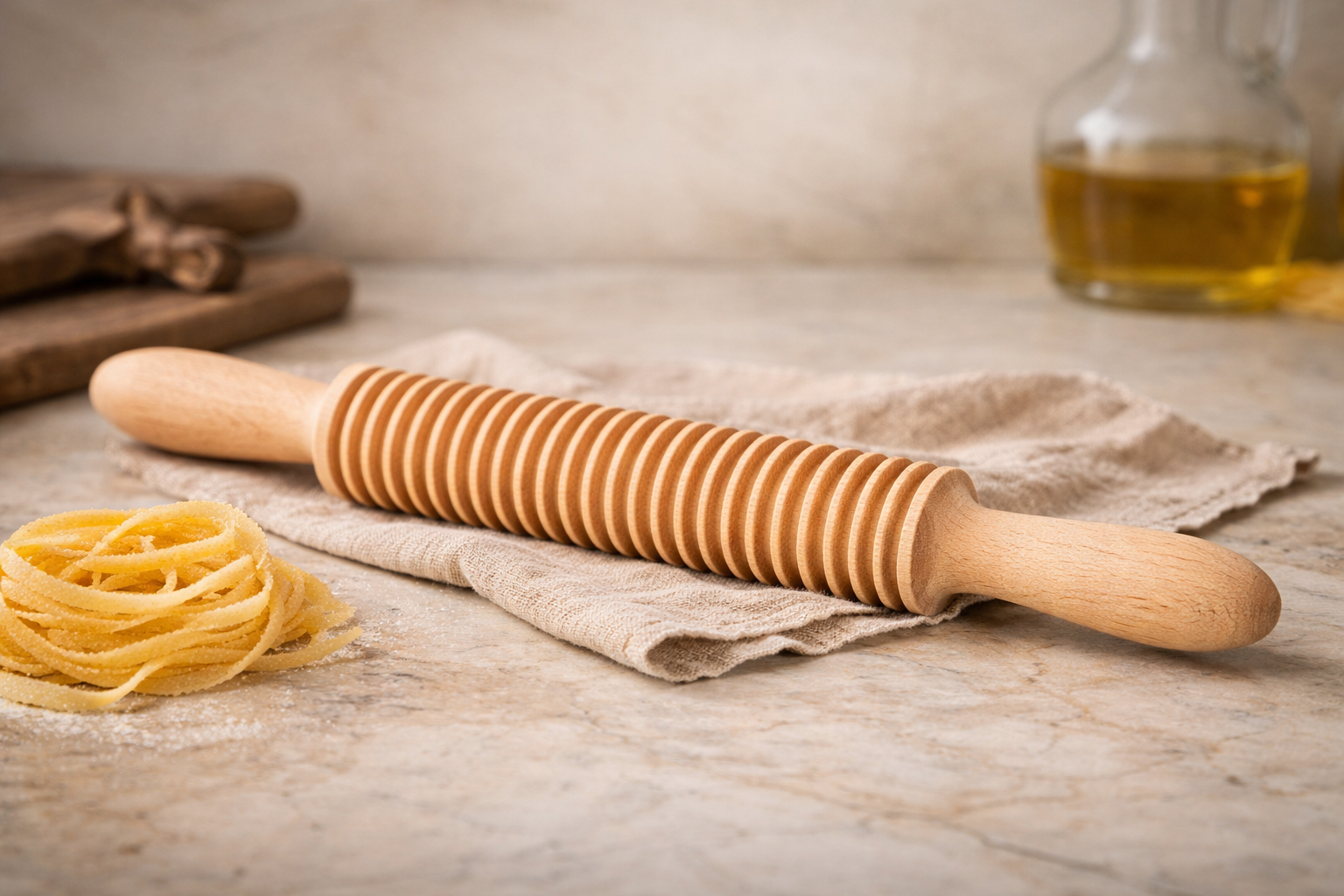
Rolling pin for tagliatelle in Bologna
Why
Taking home a Bolognese rolling pin means bringing home a culinary gesture, not just an object. It is an ideal souvenir for those who love cooking, collect traditional utensils, or want to recreate at home the experience of making fresh pasta learned during a trip to Emilia. Even if it is not used every week, the rolling pin often becomes a storytelling object in the kitchen: it recalls Bologna every time pasta dough is rolled out or when it is shown to guests. Unlike many decorative souvenirs, it is an authentic tool tied to a living tradition that still animates the city’s markets, workshops and home kitchens today.
- Tradizione culinaria
- Da portare a casa
- Fatto a mano
- Per chi cucina
Verified shops arrive in the app
Description of Rolling pin for tagliatelle
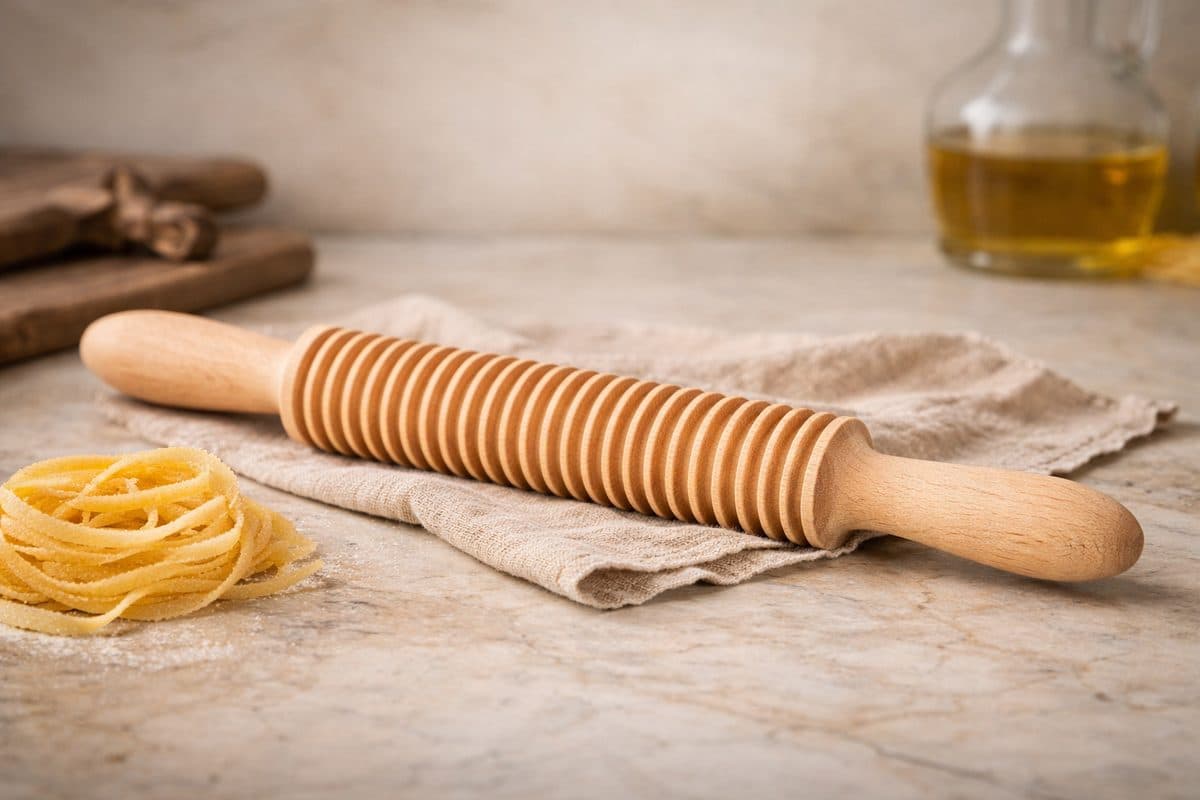
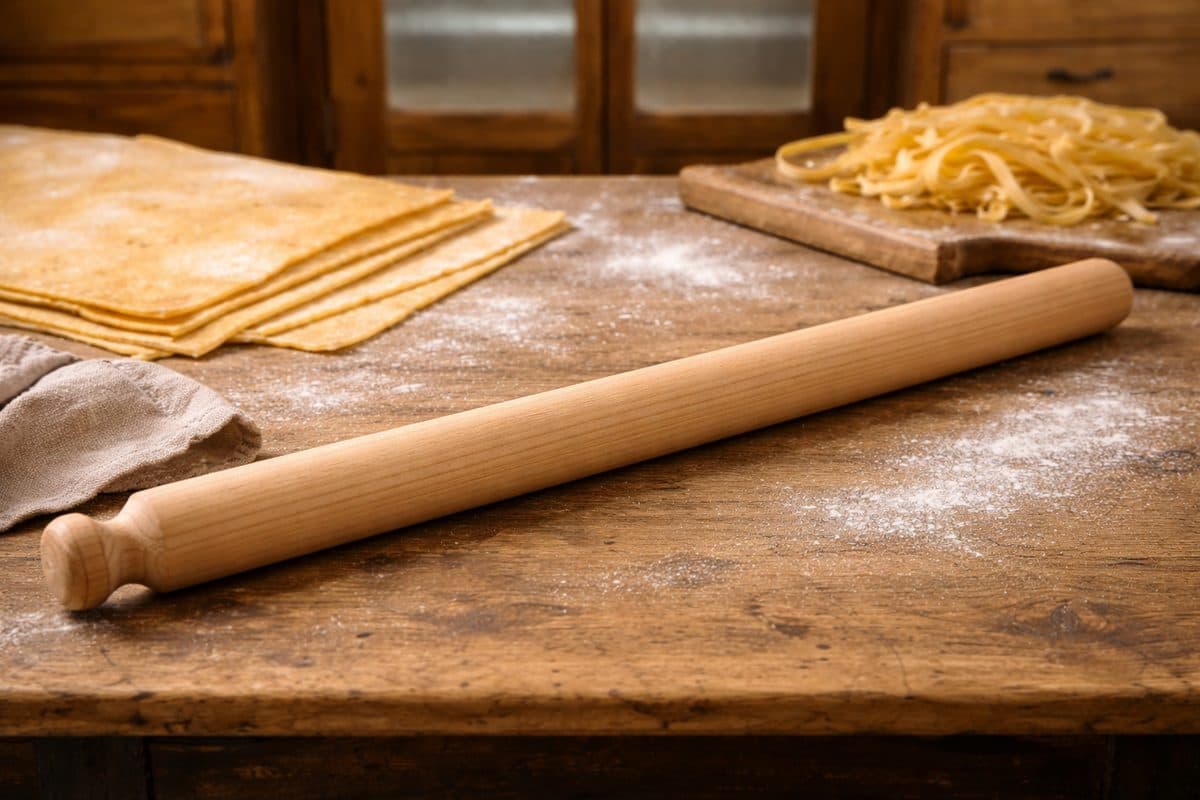
The Bolognese rolling pin is a long wooden cylinder, usually made of beech or maple, used to roll out egg pasta dough by hand. Unlike small household rolling pins, it can exceed 80–100 cm in length and is designed to work large, extremely thin sheets of dough on the traditional wooden pasta board. It is the essential tool of the sfogline, the women in Bologna who preserve the art of handmade fresh pasta. In its simple handle‑less form, it represents an ancient utensil that has remained almost unchanged over time.
Cultural significance of Rolling pin for tagliatelle
In Bologna the rolling pin is much more than a kitchen tool: it is the symbol of the culture of handmade pasta sheets. The tradition of the sfogline, passed down mainly within families, is considered an important part of the city’s identity and of Emilian cuisine. With the rolling pin they prepare some of the region’s most representative pasta shapes, such as tagliatelle, tortellini, lasagne and tortelloni. The ability to roll an extremely thin and even sheet of dough is often seen as a sign of domestic and culinary mastery.
Content reviewed by the Trouvenir editorial team against authenticity and provenance criteria.
Unlock the full story
Sign in for free to read why it's special, its origins and the cultural meaning of this souvenir.
Where to find Rolling pin for tagliatelle in Bologna
It can be found in traditional kitchen utensil shops, in food specialty stores in the historic center, and in covered markets such as the Mercato delle Erbe or the Quadrilatero. Some sfogline and cooking schools in the city sell rolling pins similar to those they use in fresh pasta classes. It is also easy to find in shops specializing in handcrafted wooden items. The best models are often made by small artisans or local woodworkers.
Get the full verified list - map, hours, reviews - for Rolling pin for tagliatelle in Bologna.
More authentic souvenirs of Bologna
Not sure your Rolling pin for tagliatelle is the real deal?
Upload a photo of the Rolling pin for tagliatelle you found: the AI compares it against Trouvenir's verified souvenir database and returns origin, history and authenticity score.
- Compared against the Trouvenir database
- Clear authenticity assessment
- Hints on where to buy it
Go deeper on Rolling pin for tagliatelle
Unlock the full editorial dossier, certified shops with maps and opening hours, and related cultural paths.
- Certified shops nearby
- Full origin story
- Related souvenirs & paths
Free · iOS and Android · No subscription
Questions about Rolling pin for tagliatelle
What makes Rolling pin for tagliatelle authentic?
In Bologna the rolling pin is much more than a kitchen tool: it is the symbol of the culture of handmade pasta sheets. The tradition of the sfogline, passed down mainly within families, is considered an important part of the city’s identity and of Emilian cuisine. With the rolling pin they prepare some of the region’s most representative pasta shapes, such as tagliatelle, tortellini, lasagne and tortelloni. The ability to roll an extremely thin and even sheet of dough is often seen as a sign of domestic and culinary mastery.
Where to find Rolling pin for tagliatelle in Bologna?
It can be found in traditional kitchen utensil shops, in food specialty stores in the historic center, and in covered markets such as the Mercato delle Erbe or the Quadrilatero. Some sfogline and cooking schools in the city sell rolling pins similar to those they use in fresh pasta classes. It is also easy to find in shops specializing in handcrafted wooden items. The best models are often made by small artisans or local woodworkers.
How much does Rolling pin for tagliatelle cost?
15-60 €
Why choose Rolling pin for tagliatelle as a gift?
Taking home a Bolognese rolling pin means bringing home a culinary gesture, not just an object. It is an ideal souvenir for those who love cooking, collect traditional utensils, or want to recreate at home the experience of making fresh pasta learned during a trip to Emilia. Even if it is not used every week, the rolling pin often becomes a storytelling object in the kitchen: it recalls Bologna every time pasta dough is rolled out or when it is shown to guests. Unlike many decorative souvenirs, it is an authentic tool tied to a living tradition that still animates the city’s markets, workshops and home kitchens today.
Take Trouvenir with you
iOS and Android. Free with a one-time Premium option. No subscription.