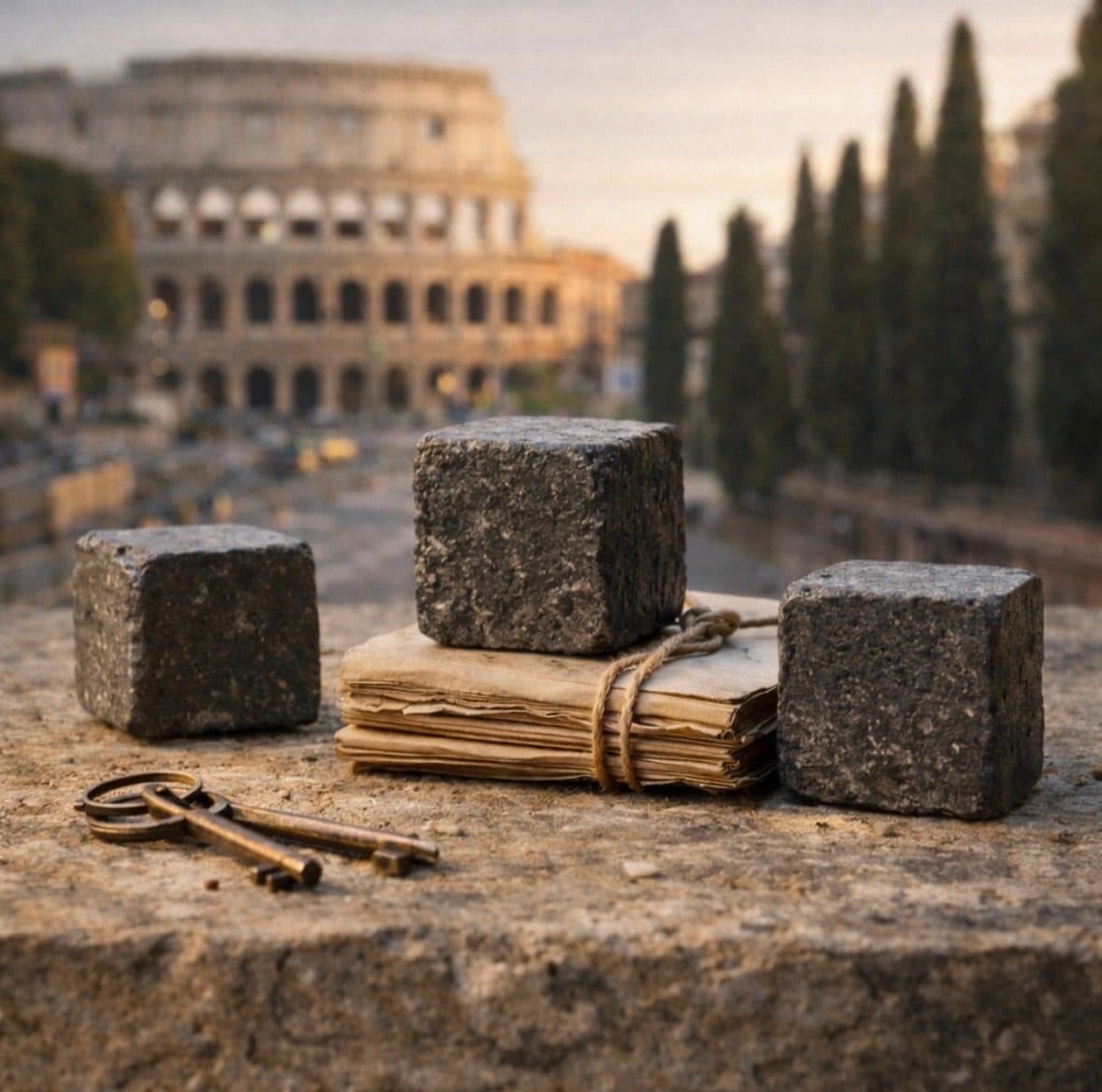
 €10-€60
Roman sampietrino in Rome
Why
Bringing home a sampietrino means keeping a fragment of the city’s very material, not just an image of Rome. It is a particularly fitting souvenir for those who love urban objects, architecture, or the history of cities, because it tells how Rome is built and lived in every day. Unlike purely decorative items, it has a physical and symbolic weight that immediately recalls walks over the sampietrini of the historic center. It also works well as a paperweight or a small minimalist décor element, remaining part of daily life rather than just a shelf souvenir. For travelers attentive to local context, it represents a tangible way to carry with them the real texture of the city.
- roma
- pavimentazione storica
- basalto
- urban design
- memoria urbana
Verified shops arrive in the app
Description of Roman sampietrino
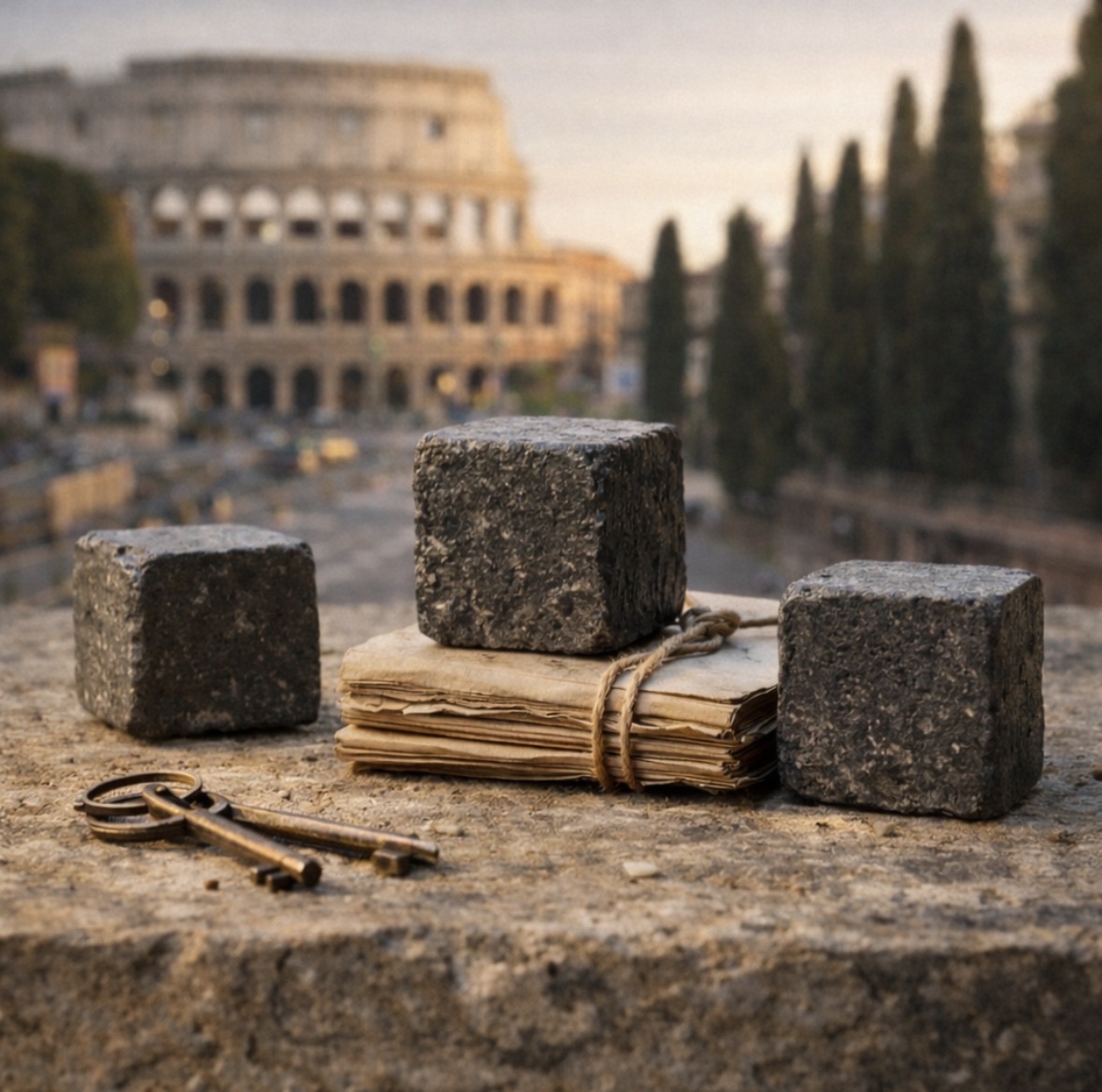
The sampietrino is the small cube of dark basalt that paves many of Rome’s historic streets. Walking through the center—from Trastevere to the Pantheon and along the alleys near the Tiber—it’s impossible not to feel its uneven surface underfoot. Born as a functional element of urban paving, over time it has become a true material symbol of the city. Today some sampietrini are recovered or reinterpreted as decorative objects, paperweights, or small pieces of urban design.
Cultural significance of Roman sampietrino
The sampietrino represents everyday Rome—the Rome of streets walked daily by residents, pilgrims, and travelers. It is not a monument but a shared surface: millions of footsteps, historical events, religious processions, and political demonstrations have taken place on these stones. For many Romans it is part of the city’s sensory experience, from the sound of cars to evening walks through narrow streets. It is also a symbol of the city’s material resilience, made of simple yet extremely durable elements.
Content reviewed by the Trouvenir editorial team against authenticity and provenance criteria.
Unlock the full story
Sign in for free to read why it's special, its origins and the cultural meaning of this souvenir.
Where to find Roman sampietrino in Rome
They can mainly be found in urban design shops, artisan workshops, and museum bookstores that sell objects linked to the identity of Rome. Some studios create paperweights or small sculptures using real sampietrini removed during road works. Neighborhoods such as Trastevere, Monti, and the area around the historic center host several shops offering these reinterpretations. They are rarer in standard souvenir shops, as they are often sold as design objects or pieces of urban memory.
Get the full verified list - map, hours, reviews - for Roman sampietrino in Rome.
More authentic souvenirs of Rome


Not sure your Roman sampietrino is the real deal?
Upload a photo of the Roman sampietrino you found: the AI compares it against Trouvenir's verified souvenir database and returns origin, history and authenticity score.
- Compared against the Trouvenir database
- Clear authenticity assessment
- Hints on where to buy it
Go deeper on Roman sampietrino
Unlock the full editorial dossier, certified shops with maps and opening hours, and related cultural paths.
- Certified shops nearby
- Full origin story
- Related souvenirs & paths
Free · iOS and Android · No subscription
Questions about Roman sampietrino
What makes Roman sampietrino authentic?
The sampietrino represents everyday Rome—the Rome of streets walked daily by residents, pilgrims, and travelers. It is not a monument but a shared surface: millions of footsteps, historical events, religious processions, and political demonstrations have taken place on these stones. For many Romans it is part of the city’s sensory experience, from the sound of cars to evening walks through narrow streets. It is also a symbol of the city’s material resilience, made of simple yet extremely durable elements.
Where to find Roman sampietrino in Rome?
They can mainly be found in urban design shops, artisan workshops, and museum bookstores that sell objects linked to the identity of Rome. Some studios create paperweights or small sculptures using real sampietrini removed during road works. Neighborhoods such as Trastevere, Monti, and the area around the historic center host several shops offering these reinterpretations. They are rarer in standard souvenir shops, as they are often sold as design objects or pieces of urban memory.
How much does Roman sampietrino cost?
€10-€60
Why choose Roman sampietrino as a gift?
Bringing home a sampietrino means keeping a fragment of the city’s very material, not just an image of Rome. It is a particularly fitting souvenir for those who love urban objects, architecture, or the history of cities, because it tells how Rome is built and lived in every day. Unlike purely decorative items, it has a physical and symbolic weight that immediately recalls walks over the sampietrini of the historic center. It also works well as a paperweight or a small minimalist décor element, remaining part of daily life rather than just a shelf souvenir. For travelers attentive to local context, it represents a tangible way to carry with them the real texture of the city.
Take Trouvenir with you
iOS and Android. Free with a one-time Premium option. No subscription.