 €150-€2000
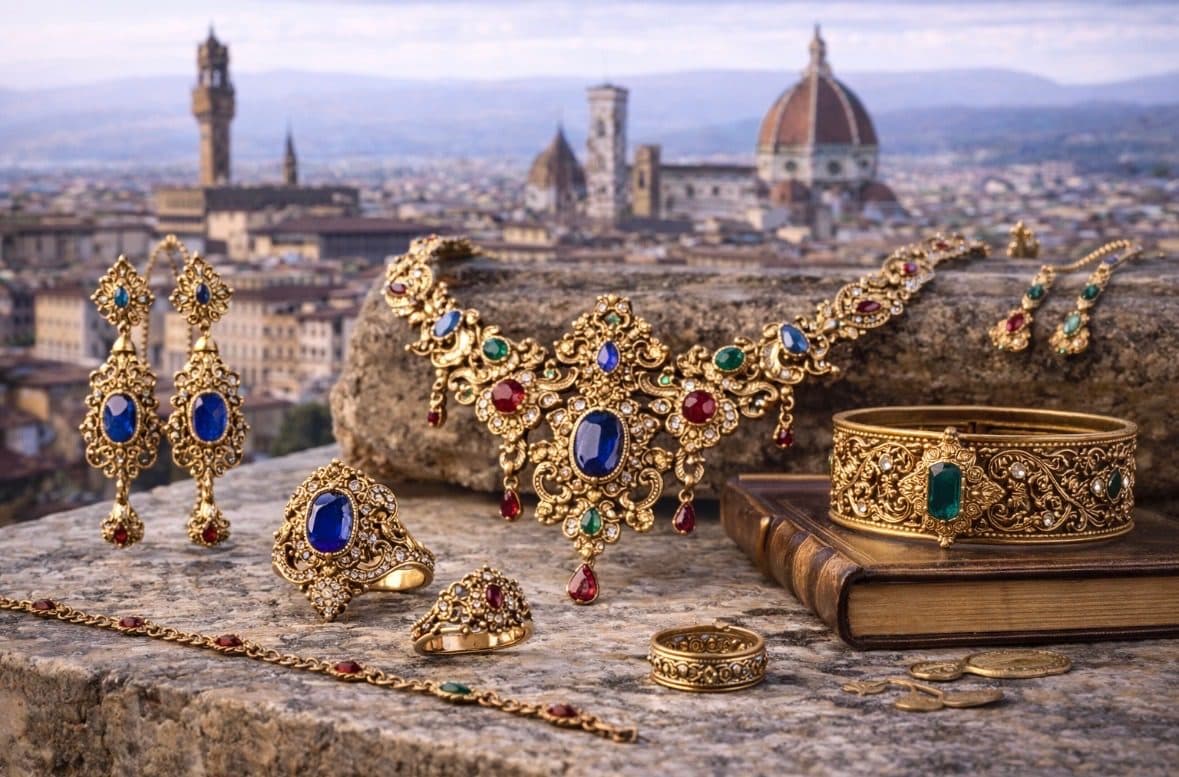
Florentine goldsmithing in Florence
- Fatto a mano
- Tradizione secolare
- Da regalare
- Pezzo unico
Verified shops arrive in the app
Description of Florentine goldsmithing
Goldsmithing in Florence was not born to shine. It was born to measure.
The Florentine jewel is controlled, precise, structured. It does not seek spectacle, it avoids excess, it does not play with theatricality. It is planned, drawn, constructed.
Here, gold is not display. It is disciplined matter.
Rings, bracelets, necklaces, brooches, cameos, small objects in precious metal follow a logic: balance between form and function, between decoration and structure.
The Florentine signature is: • clean • measured • proportioned • never baroque • never loud
Even when it is rich, it remains composed.
Cultural significance of Florentine goldsmithing
In Florence, gold is not status. It is measure applied.
In a city that built its identity on form, proportion, and the discipline of gesture, goldsmithing becomes: • an exercise in precision • a training of the eye • an education of the hand
The jewel is never “free.” It is always controlled.
It follows the same logic as the Renaissance: • the body is proportion • architecture is balance • the object is structure
Here even the precious obeys a rule.
Content reviewed by the Trouvenir editorial team against authenticity and provenance criteria.
Unlock the full story
Sign in for free to read why it's special, its origins and the cultural meaning of this souvenir.
Where to find Florentine goldsmithing in Florence
📍 Key area: Ponte Vecchio
Ponte Vecchio is historically the center of Florentine goldsmithing. It is not a coincidence, not marketing: it is a medieval continuity.
Beyond the bridge: • goldsmith workshops in Oltrarno • studios in Santa Croce • small artisans in the historic center
The real workshops: • still work at the bench • do repairs • create custom pieces • do more than just display windows
Often the workshop is behind the counter.
Get the full verified list - map, hours, reviews - for Florentine goldsmithing in Florence.
More authentic souvenirs of Florence

Not sure your Florentine goldsmithing is the real deal?
Upload a photo of the Florentine goldsmithing you found: the AI compares it against Trouvenir's verified souvenir database and returns origin, history and authenticity score.
- Compared against the Trouvenir database
- Clear authenticity assessment
- Hints on where to buy it
Go deeper on Florentine goldsmithing
Unlock the full editorial dossier, certified shops with maps and opening hours, and related cultural paths.
- Certified shops nearby
- Full origin story
- Related souvenirs & paths
Free · iOS and Android · No subscription
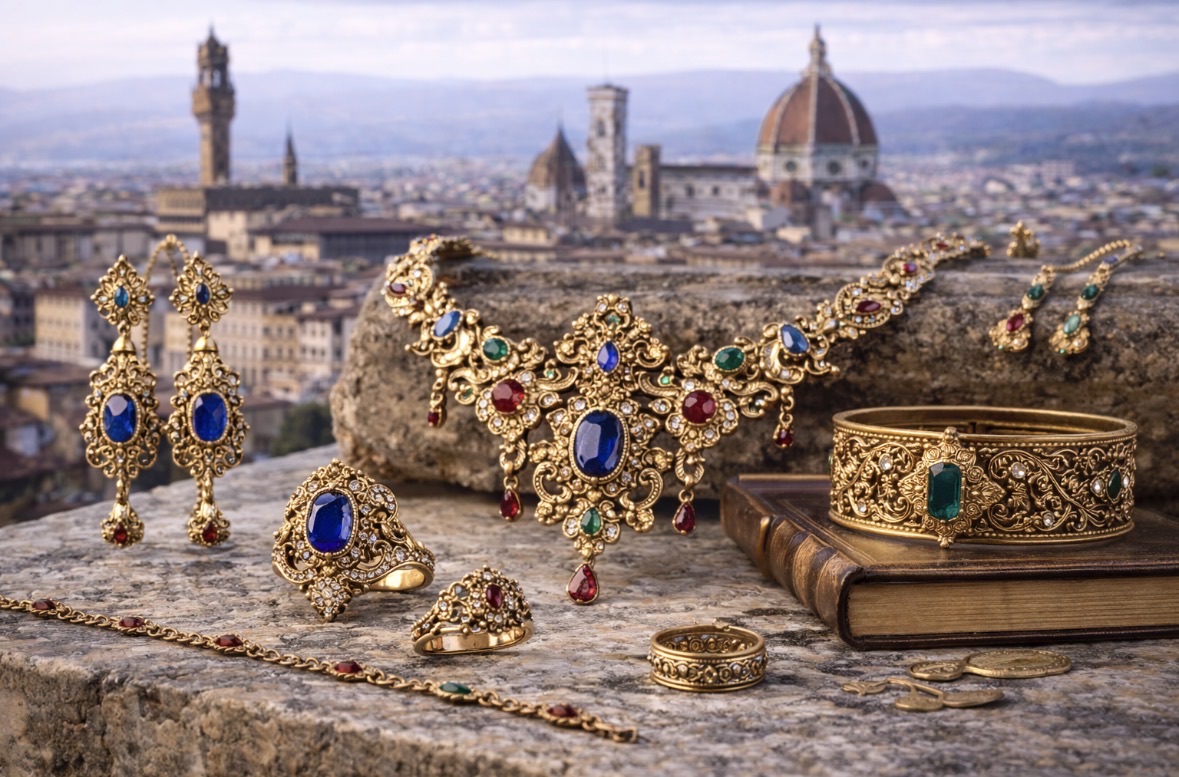
Questions about Florentine goldsmithing
What makes Florentine goldsmithing authentic?
In Florence, gold is not status. It is measure applied. In a city that built its identity on form, proportion, and the discipline of gesture, goldsmithing becomes: • an exercise in precision • a training of the eye • an education of the hand The jewel is never “free.” It is always controlled. It follows the same logic as the Renaissance: • the body is proportion • architecture is balance • the object is structure Here even the precious obeys a rule.
Where to find Florentine goldsmithing in Florence?
📍 Key area: Ponte Vecchio Ponte Vecchio is historically the center of Florentine goldsmithing. It is not a coincidence, not marketing: it is a medieval continuity. Beyond the bridge: • goldsmith workshops in Oltrarno • studios in Santa Croce • small artisans in the historic center The real workshops: • still work at the bench • do repairs • create custom pieces • do more than just display windows Often the workshop is behind the counter.
How much does Florentine goldsmithing cost?
€150-€2000
Why choose Florentine goldsmithing as a gift?
Because it embodies a local story and recognisable cultural value.
Take Trouvenir with you
iOS and Android. Free.